

Creating Physically Beautiful Books with Jessica Walker
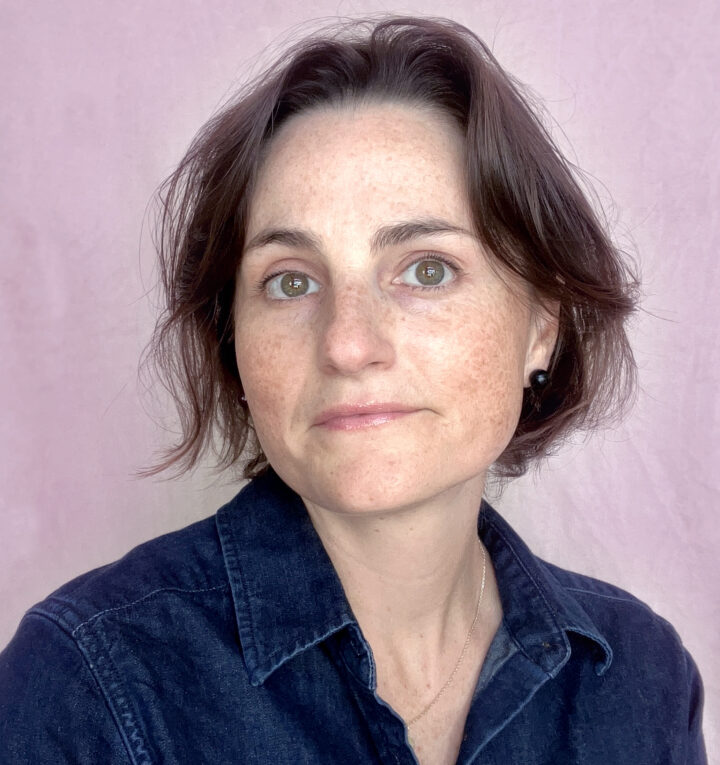
Jessica Walker is a multidisciplinary artist, illustrator, filmmaker, and educator, she is an assistant professor of fine arts at Parsons and has exhibited films, books, and 2D media in solo and group shows in New York, Los Angeles, San Francisco, Boston, and Australia. Her work is housed in the permanent collections at the San Francisco Museum of Modern Art Research Library, Yale University Haas Family Arts Library, and the University of Washington Art Library. Her new book is a debut novel called The Secret Astronomers, published by Viking Books Children’s Books. It won the Best YA Book Award at the 2026 Barnes & Noble Children’s & YA Book Awards. The award is voted on by Barnes & Noble booksellers nationwide.
Powered by RedCircle
Marion: Welcome, Jessica.
Jessica: Hello. I’m so excited to be here. Thank you for having me.
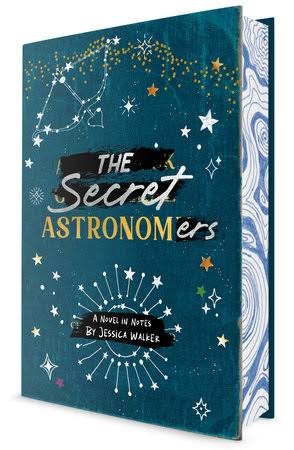
Marion: Well, I’m delighted to have you here. And as I said before, The Secret Astronomers is a debut novel. I want to start with the physical beauty of the book, and I’m sure everybody does, and that everybody says what I’m about to say. which is that I’m certain I’ve never seen anything as lovely. From the cover design to the endpapers to the drawings on the outsides of the pages, on all three exposed sides that look oh so much like what a young person might draw on the exterior three sides of the exposed pages of a text.
But that exterior is just a gateway to the wonders inside. The book’s text is a series of notes that and illustrations across the pages of an actual ancient astrophysics textbook that tells the stories of two girls who find each other by leaving those notes in the margins of this old textbook.
The word layered does not quite cover it, but let’s talk layers anyway. Which layer of this idea came to you first?
Jessica: Well, I think there’s always been this desire, for me anyway, because I grew up as a kid, going to the library and leaving secret notes inside of books for other people to find. I think the layer that I want to talk about is just wanting to find people in unexpected places that connect with you through some kind of random idea. And I wanted this book to feel like you had stumbled across this ancient book in the library and cracked it open and found a secret world inside that you maybe weren’t supposed to see, but you did anyway. So I think it’s just about discovery and surprise. And that’s what happens when you create things that are multi-layered.
Marion: Yeah, it’s so interesting, the notes inside of books. A friend of mine is an antiquarian book dealer, and he collects what he finds from donated and purchased books. And he has quite an astounding astonishing collection, a very emotional, very beautiful, some of them very passionate notes that people have left in books. And I think it’s its own art form. So you, as a kid, are you still doing this, leaving notes in books?
Jessica: Not lately, no. I haven’t been doing it lately, but I think also, you know, my mother was appalled by the idea that anybody would write inside a book. And you know, kind of deface it and destroy it was just like a crime. And I get that, you know, like I think that on some level, maybe it comes across as destroying the book, but I think it’s just like what artists do. They transform spaces in unexpected ways. And so, yeah, I don’t do it so much lately, but I think it was just something I did as a kid because you never know who you’re going to find looking at the same things you’re interested in, you know, like how I grew up before the internet. So like, how did you find people that were interested in the same things you were interested in? Probably in books, you know?
Marion: So, yeah. Yeah, probably in books. And that’s exactly one of the many wonders of it. And I’ve read that you and your family make flip books, comic books, graphic novels, and journals at your kitchen table press. So is that where this got transferred to? Take us there to the table. Is it something that you do regularly, occasionally? Just give us a visual of that. I think everybody listening… will probably say, why don’t we do that?
Jessica: Well, I have two kids. I’ve got a 10-year-old and a 6-year-old. And I’m always drawing. I don’t know if it’s because I’m a nervous person and that’s how I get my nerves out or it’s just fun for me. I’ve always drawn. I’ve always illustrated and doodled. And I tell people all the time in meetings, I promise I’m listening to you, even when I’m drawing in my sketchbook. So I think it’s just my way of being comfortable in the world.
My kids love comic books. They love Dogman. They love all of the things that are funny and weird about, you know, comics. And so I think it’s a way to get them into books and to get them thinking about telling their own stories. And yeah, I’m always trying to pressure them into making art. But not too much because I want them to like it. And, you know, whatever your parents like, you don’t end up liking.
Marion: Yes, I think that’s true. Somebody gave me a great tip when my child was very young to just get a stack of sketchbooks and just keep handing them over in the car with lots of crayons. And I have them all.
Jessica: Oh, that’s great.
Marion: They’re wondrous. They’re so revelatory. They’re so weird and fabulous. And that’s what I love about them, of course. So I think… it’s a really great way to negotiate life. Yeah. So in The Secret Astronomers, you situate the story in Appalachia and you percolate up through these gorgeous pages, a story of two girls who discover each other by leaving those notes in this old textbook. And in that explore possibly the most salient topic of our time, that of our differences and the issues they present. In this case, and I’m not giving away anything here, How those differences can be bridged with curiosity, empathy, and compassion.
This makes this the book for right now. So my audience is writers. And one of the things they think about a lot is when their book is going to land in the world and how to consider that while writing. You know, writers get very uptight when they, oh, who am I writing this for?
When’s it going to be? So what were your considerations in terms of topic and timing?
Jessica: Well, this is the first time I’ve ever done this. So I was really interested in creating something that I think I would have wanted to see as a kid growing up in Appalachia. I think it’s a place that’s often misunderstood, misrepresented through popular media. And I wanted to make a story that would make people look at this place again, with maybe a deeper set of circumstances, that. really brought them into the characters and this really unique place that is so complex and beautiful and weird and funny and all the things that complex cultures are.
Marion: So what was your consideration in terms of when it would land? You know, did you say, the world is full of differences now and we’re really not grappling with them well and I’m going to write into that space? Or was this an Appalachian-based story so that difference… And there are so many differences that you write into here. Difference became, you know, it’s just inherent in growing up in Appalachia. So what were you thinking in terms of when this book was going to land in the world?
It just seems to me that it’s the book for right now because we are othering everybody.
Jessica: That’s right. We are so polarized in our politics that we almost can’t have conversations with people who don’t share our same values, who don’t share the way that we look at the world and experience the world. I grew up in rural Virginia, in a place where most of my family votes for people I don’t vote for, I would say. And I still love talking to them, and I still love them, and they’re my family, and I… don’t think they’re wrong for the things they believe. And yet I’ve moved away.
I live in a city. I am an artist. I may not speak the same language as them, but at the end of the day, we’re really able to connect because we love each other. And I think that, you know, as a kid growing up there and then I moved away, the day I turned 18, I got in my car and drove to San Francisco.
Marion: Mm-hmm.
Jessica: And the two characters in this book, one is from San Francisco and the other is from West Virginia. In some ways, the two characters are my own internal voices. I think I’ve been both of these characters in my life. The one that kind of made fun of where I was from was a little bit not exactly excited to tell people where I was from. And then after being away from Appalachia and living in other parts of the world, I finally started to realize Actually, it’s such a unique and amazing place and it’s just different, you know?
And so I think that’s probably what I’m thinking about in terms of these two characters and how I wanted it to land.
Marion: It’s wonderful. I love the honesty about how these are the two people who live inside you, who were you, who are you. And having them have a dialogue is a fascinating thing. And those of us who are from places that we once were embarrassed by or a bit chagrined by or didn’t understand and then moved to a place like San Francisco, which is also hard to wrap one’s mind around, those two people having that conversation, that’s fascinating. is a debut novel. You’re not brand new to the book world, having illustrated baby feminists and baby feminists too.
Two books you worked on with writer Libby Babbitt-Klein, which allow us to imagine that any baby can grow up to be a world-changing person. This is just like my favorite thing ever.
And in these, you depict such luminaries as Ruth Bader Ginsburg and Malala Yousafzai and Mia Hamm as infants. Such a fabulous concept, so utterly inspiring. And I wonder about the connection between that and this work, this debut novel. The world of American astronomy is only about 20% women. In this book, these two secret pen pals use the aliases Copernicus and Kepler. They’re both girls. And much like in your books, Baby Feminists and Baby Feminists 2, we feel the pull to become our greatest selves. It’s a very generous energy that you provide. It’s provocative, encouraging, and it’s not mere storytelling. Before we went live, I said to you, you know, you didn’t write a bedtime story here.
Jessica: And we agreed.
Marion: And I think the writers listening would benefit from hearing from you about that energy of encouragement that you literally quilted into this book, both in the language and in the picture, in the drawings, and that intent that we can bring to work when we think about our readers. So talk to me a little bit about what your intent was here.
Jessica: This is a great question. The intent is for the reader to come with a certain understanding of a place and to change their idea about that place. And it could be someone from there or it could be someone not from there. And I think that The intent for my reader, I’m trying to think about, like, you kind of tied it to baby feminists. I have to tell you, baby feminists, Libby came to me wanting to write baby feminists and said, hey, you work at Parsons School of Design.
Can you connect me with an illustrator so I can make this book? And I said, I could, but this is such a fabulous idea. I think I would really like to try it.
To put something together for you?” And she said, great, we’ll draw something. And so I did. And then we made the book together. And I think I can’t really speak too much to the intent because for me, it’s like, I want to try something brand new that I’ve never done before. And I was really terrified of writing because I was never told that I was a very good writer. And I was always very timid about my writing. Like I’m a horrible speller. I’m not really great at academic papers.
I’ve always not been good at writing in a sense of what other people expect it to be. And then all of a sudden, I got this idea for The Secret Astronomers, and my agent was like, just tell the story that you know. Write about what you know. And I felt so encouraged to write something that felt just like my authorial voice.
That’s lovely. The intent, really. I don’t know about the intent. It’s just kind of like I was doing what I wanted to do for the first time, I guess.
Marion: I think it’s the greatest rule we can give to a writer. I think when we think about who’s going to read it, I think when we think about when it’s going to land, I think when we think about, I want to be a bestseller, we just ruin the experience, quite honestly. But if somebody says to you, just do what you do and let’s see what it looks like, It’s going to come from your very self. So I love that agent. And I can’t help wondering how in the name of all that is holy, you pitched this book to an agent.
Well, it’s got, no, it’s kind of, it’s like, I kept thinking about the pitch because I love a good pitch, but damn woman, this must’ve been a hell of a pitch. What did you say?
Jessica: Well, so I come from a design school, I teach at Parsons, and I had this idea that I was going to do this whole research project about how we should look at the scientists that are searching for extraterrestrial intelligence and how open they must be in being able to connect with life forms hundreds of light years away, and just how optimistic they must be that they can create systems of communication to contact and communicate with these life forms. Like, that level of optimism is the same level of optimism that we need to connect with one another across our value systems.
And so that’s really where this idea came from, and I pitched this whole research project to SETI, the Search for Extraterrestrial Intelligence, and they were like, this is a weird idea, no.
LAUGHTER And so I was like, well, I guess I should just like make a book about it. And then I had done Baby Feminists and I was like, I told my agent, Hannah, I had this weird, crazy idea. And she was like, yes, do that, do that. And I just went to her and said, I think it should be this story about, you know, Appalachia and alien, you know, not really aliens, but just like this idea of communication across the universe and across to our other person we’re talking to in the room, you know?
And she somehow believed in this. She was like, you got to just sit down and sketch it out and figure it out. So I got an old textbook. I started playing around with the pages.
It just came very naturally to me because I’m like a, like I said, I’m a sketch doodler person. So I just wrote the thing in the margins, playing around with it. And then She somehow pitched it to, you know, publishing houses because that’s what agents do. They’re amazing. And luckily, I didn’t have to be a part of that. So to answer some of your question, there is some magic that agents do in order to get your work out there in the best light.
Marion: They are. They’re like, I think this is the right word. They’re like transducers. They just totally create the energy that is needed around the topic, around the product. But they… translate our ideas into a saleable, you know, because books are, after all, to publishers, they’re widgets, they’re things that they sell. And you can be the most creative person in the world, but they still need to know it’s going to sell. So I love the fact that it’s like, no, they were the extraterrestrials. But I also love the concept of the level of optimism, the level of optimism it takes to go off into the extraterrestrial world, the level of optimism it takes to go into an old textbook in a library and start leaving notes to someone you haven’t met.
That optimism of discovery that we’re going to discover something here is still very much alive, I think, in this book. And at its heart, of course, The Secret Astronomers is a coming of age novel for young adults. And I love the young adult market and everybody knows that most of the readers are actually adults, which I find just fascinating that the biggest readership in the young adult market is adults. And it’s not surprising. And it’s not surprising that this book will get a large adult readership too.
But why do you think or why for you was coming of age an irresistible place to write into?
Jessica: I think… When you’re 18, 19 years old, you’re making decisions that impact the rest of your life and kind of, I don’t want to say set you on a path for who you’re going to become, but kind of in a way they do. Like, this is the time when you’re first getting to do things on your own and you get to recreate yourself. Maybe you didn’t like that version that you were when you were 16 or 17 and then all of a sudden, wow, I’m on my own and I can kind of be who I want to be.
And… I think we never lose fascination with that time. And I’m certainly still going back to that time in my life to think about the decisions and choices I made that got me here. And I give that version of myself a lot of…
There’s a lot of joy in that for me to think about that person who was 18 making those decisions and somehow I’m… now doing the thing that I want to be doing most in the world, which is like living in New York City and making books and being a mom, being an artist, like this is the world I wanted to live in. And I think that 18 year old made it possible.
Marion: I think you’re right. And I think going into that space and looking at it as such allows us to to understand that while, yes, it’s not all completely set in stone, but that we do get that great opportunity to create ourselves if we haven’t liked or even if we did like who we were. It’s a wonderful market. I love the celebration of good young adult novels that just allow us to explore that so much. Do you think you’ll stay in the young adult world?
Jessica: I am really enjoying it and loving it. And I want to say yes. I think it’s just where I feel naturally inclined to be. And I like what you said about the young adult audience includes a lot of adult readers. I love that adults are connecting with this book. And I love that I hear from adults and their kids that are connecting together through the book. And I think that’s what this genre, this age kind of allows is that connection, that multi-generational connection. intergenerational connection, which is exciting for me.
Marion: Yeah, it is exciting. I think it’s that hand, you know, one hand into another hand, that connection intergenerationally, I think is fascinating and so important. And the Secret Astronomers won the best YA book award at the 2026 Barnes & Noble Children’s and YA Book Awards. The award is voted on by Barnes & Noble booksellers nationwide, meaning these are people who know books. It’s a huge accomplishment and congratulations. It’s just wonderful. And I wonder about being understood. Your message landed with these people who know young adult readers, who know books.
As a visual artist, perhaps you feel your work is understood, or maybe you don’t really know how it’s being understood since it’s hanging somewhere that you’re not standing there listening to people kibitz in. I don’t really know. I’ve never really asked a painter or a visual artist, you know, hey, do you think your work is understood?
But here, There’s that recognition of, yes, we get it. So can you just talk a little bit about that, about being heard, being understood in terms of being an artist?
Jessica: Well, I’m very lucky that I get to teach Gen Z every day. I think it connects me to a generation that I’m not a part of, but that I just think they’re brilliant and they can keep me on my toes. And it’s really a gift that I get to work with them. So teaching in the classroom, teaching college kids, I mean, I can’t imagine doing anything else, really. Like, it’s just a source of so much learning.
So in terms of being heard or understood, I was in the art world for a long time before I kind of ventured over into this illustration writing thing. And yeah, you don’t really ever get an opportunity like it seems like you do as an author to ask that question of like, who’s understanding this?
Who’s resonating with this? So this is actually, yeah, kind of a new thing to have this like real world feedback that is like so rewarding and honestly surprising. I had no idea that people would react this way. And I’m so happy that they are and very, very thankful.
Marion: Well, it’s deserved. Absolutely. So as we wrap this up and talking, the people who are listening, the writers who are listening, always want to know about how you do the work. And so you have students who are Gen Z. You have kids. You have family. Do you have friends? Did you show your work? Do you share your work? Do you ask for… responses from people. Some people have beta readers. Some people have, you know, they don’t show anything except to their agent. Talk to me about getting feedback along the way, if you got any.
Jessica: It was really hard for me to get started because I almost felt like I needed permission or a system or somebody to say, like, here’s how you do this. And there was really no one to do that, which I learned. Like, I kept asking. I teach at a university. And I asked the creative writers, like, how do you do this?
Marion: And nobody had an answer.
Jessica: They were like, you write it.
Marion: Hard share.
Jessica: I know. Caffeine. Yeah. Yeah. Yeah.
Marion: Oh, my.
Jessica: I think I was looking for something that doesn’t exist, maybe. But I have to say, I’m getting ready to start this process again, working on a new project. And my entire family is out of the apartment for one Glorious week there at camp and traveling. And I moved all of my writing stuff to the dining room table because the light is so much better here than where I usually write in the basement. And I’ve locked myself in my apartment all week and it’s been amazing. And it’s just me and the cat, and.
some days are better than others. Some days you get the, you know, you have the best intentions. I’m going to get so much work done today and it just doesn’t happen. And I just think I’m giving myself a lot of grace that that’s just the way it is sometimes.
And then other days it is like something is right with the universe and everything makes sense and you’re solving the puzzle and it all comes together and it feels so good, but you’re just never going to have two days in a row that are the same.
So, yeah.
Marion: That’s a generous answer. I so appreciate that. I think everybody else listening will also breathe a huge sigh of relief knowing that you and the cat and the dining room table are having good days and bad days. But we’re very, very grateful that there’s another project coming along. Thank you so much, Jessica. It’s been just such a pleasure to talk to you. The book is Well, the book is perfect. And I just wish you sell a billion of them. I love it. So thank you so much for the conversation. And thank you for the book.
Jessica: Thank you so much. This is wonderful. You’re most welcome.
Marion: The author is Jessica Walker. See more on her at hellojessicawalker dot com. The book is The Secret Astronomers, published by Viking Books Children’s Books. Get it wherever books are sold I’m Marion Roach Smith, and you’ve been listening to Qwerty. Qwerty is produced by Overit Studios in Albany, New York. Reach them at Overit Studios dot com. Our producer is Jacquelin Mignot. Our assistant is Lorna Bailey. Want more on the art and work of writing? Visit Marion Roach dot com, the home of The Memoir Project, where writers get their needs met through online classes in how to write memoir. And thanks for listening. Don’t forget to follow QWERTY wherever you get your podcasts and listen to it wherever you go. And if you like what you hear, please leave us a review. It helps others to find their way to their writing lives.
Want more?
Start here to understand the breadth of all the classes we teach.
Want to jump right in? Here’s a sampling of our classes.
Memoirama: Live, 90 minutes. Everything you need to write what you know.
Memoirama 2. Live, two hours. Limited to seven writers. What you need to know to structure a book.
How to Write Opinion Pieces: Op-eds, Radio Essays and Digital Commentary: Live, 90 minutes. Get your voice out into the world.
And keep in mind that we are now registering names for the next Master Class. Live, once a month. Limited to six writers. Get a first draft of your memoir finished in six months.