

Rock Bottom at Friendly’s, with Cara Benson
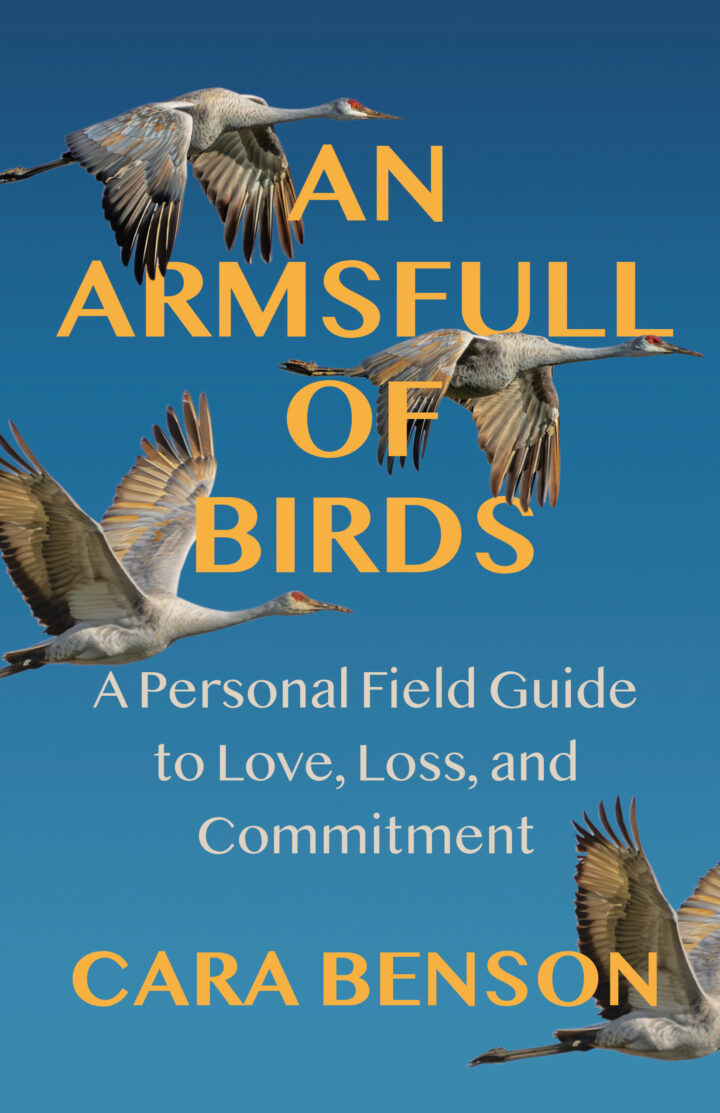
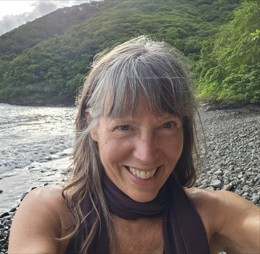
Cara Benson’s writing has been published in The New York Times, Boston Review, Orion Magazine, Sierra Magazine, The Brooklyn Rail, Terrain, and selected for Best American Poetry. She has received a New York Foundation for the Arts Fellowship and the bpNichol Award. Benson wrote a series on walking in the woods for the Best American Poetry website and taught poetry in a New York State Correctional Facility for eight years. Her new book is a memoir called An Armsfull of Birds: A Personal Field Guide to Love, Loss and Commitment, just out from Health Comunications Inc., and distributed by Simon & Schuster.
Powered by RedCircle
Marion: Welcome to QWERTY, the podcast for writers on how to live the writing life. I’m Marion Roach-Smith. Each episode, I talk to writers from all genres to discover what makes a good read. And along the way, we discuss their writing process, discover their tips, and talk about what matters most to writers. So step away from the computer or typewriter for a bit and join us.
My guest is author Cara Benson, whose writing has been published in the New York Times, Boston Review, Orion Magazine, Sierra Magazine, the Brooklyn Rail, Terrain, and selected for Best American Poetry. She has received a New York Foundation for the Arts Fellowship and a BP Nickel Award. She wrote a series on walking in the woods for the Best American Poetry website and taught poetry in a New York State correctional facility for eight years. Her new book is a memoir called Arms Full of Birds, a personal field guide to love, Loss and Commitment, just out from Health Communications, Inc., and distributed by Simon & Schuster. Welcome, Cara.
Cara: Thank you, Marian, for having me. It’s a real honor to be here with you. We in the memoir world worship you, just so you know.
Marion: Oh, that’s very kind of you. That’s very nice. And I worship you. This book is beautiful. That’s all. That’s all. I’m just going to say it. It’s beautiful. I guess another interviewer might be a little less biased, but I’m just so biased. And you’ve taken on an extraordinary number of sub themes. And we’re gonna talk about that, but I wanna talk about just set up for people where this book really begins, because all memoir includes transcendent change. And yours is remarkable. Your biographical material referred to you as a former low bottom addict, a phrase not all of our listeners might know. So can you please set that up for us?
Cara: Low bottom for me is that I was, we have a phrase, unemployed and unemployable. I’d been fired. I had sold all of my belongings to get a drink or a drug each day. And I learned to dig through garbage cans on the Upper East Side of Manhattan in order to find things to sell on the Lower East Side of Manhattan in order to, again, get a drink or a drug that day. And I crawled through subway tunnels. I was walking around with black eyes and concussions.
It was a very violent and ragged bottom. Some people get to recovery when they have their third DUI, but they still have cars in the garage and a relationship and a home over their head.
I had lost everything and was face to face with my own death, in fact.
Marion: Yeah.
Cara: That’s pretty low.
Marion: Yes, it’s an extraordinary phrase. I was unfamiliar with it, but I think that covers it. And your vivid portrayal of addiction coupled with the terror of domestic violence is one of the most vivid I’ve ever read. And whenever I have on a memoirist, I always ask them this question. So let’s lead off with this. What are we asking a memoir writer to do when we ask her to go back into trauma? Are we asking her to reanimate it, relive it, or coolly stand back and write about it from here, do you think?
Cara: I think it depends, actually, on… where the writer is now. I think it depends on what the writer’s goals are. I think it also depends on if there are other things that are going to be coming into the book. For me, I knew that I had places to go in the memoir. I needed to get to the relationship with John, my partner, and get to the high action, if you will, of the story. And so going into my past was not something that I was going to reanimate for a lengthy period of time.
I also think that we need to be careful in reentering trauma, that we are not re-traumatizing ourselves or a reader, which is something we can’t fully control, but we can be conscious of.
In other words, is it gratuitous or does it serve a purpose?
Marion: It’s a great answer and it’s a great question. because gratuitous, like gratuitous sex scenes, gratuitous drug addiction scenes over and over and over, you know, once the reader knows something, they want you to move on. And I teach this to my students all the time. As soon as the reader says, oh, she’s an addict, we want to move on. It’s not that we can’t bear it. It’s that we want to know then how does that affect your decision-making? How does it affect where you live? We want the story to move forward.
So you went into this knowing that you had a lot of territory to cover and you made a wise decision. It’s a vivid portrayal and then the story moves on. And it’s not solely in any way a recovery memoir, not a bit. It is a literary memoir that covers addiction, recovery, losing a partner to suicide and climate grief. And we’re going to take those apart a bit, but first living this remarkable life you are living. one now a full commitment to the natural world, tell me how you were able to take a story with so many enormous themes and imagine all of this under one through line, because it works.
My audience is writers and they too have big lives, sometimes to the point where my students tell me they’re gonna take each on as a separate memoir. And I invariably say, no, try to find a common roof under which they all live. You did. So let’s teach this a bit. Start with how you first envisioned this big story as one story.
Cara: It grew into the bigger story that it became. I didn’t initially think that I was going to include anything of recovery or include anything of my past as an addict and alcoholic. But my partner, John, and I met in recovery. So when I got into the telling of the story, I realized that, well, I can’t not write about where we met. And so the memoir grew, if we think of it in concentric circles, it grew another sphere out from the initial story of… just John and me meeting, falling in love and me losing him.
It grew into the fact that we met in recovery, which necessarily included the fact that I needed to be in recovery.
So that grew. And then my recovery after losing John became so dependent upon the natural world. And it was true in my story, is true in my story that, climate grief exacerbated my personal grief. So I couldn’t really write about the story of healing after losing John without including what came up for me and witnessing the effects of climate change on my immediate surroundings. So it took another leap and expanded yet another concentric circle. And I think… I’ll say this, that the through line then became to me looking at all of these things through the lens of relationship and commitment.
And that was when it really solidified into, oh, that’s what I’m doing here. I’m writing about the holy trinity of relationship with self, relationship with other, and relationship with planet. And that’s what really organized the book for me.
Marion: Oh. I love this answer so much. And I can see the concentric circles. This is what I think allows those people listening to write their own stories is when they can see something. Did you by any chance draw concentric circles? Are you a scribbler? Are you a etcher? Did you plot this out on a piece of paper as a visual thing? Or do you use like a cork board or a dry board or something? Was a concentric circle thing ever… visualized for you?
Cara: No, actually that came to me in my answer to you now.
Marion: I love that. It makes such sense. I can see it nesting. They nest within each other, but they’re absolutely interdependent. And it’s so hard for some people not to just break them out and make them separate when they’re so obviously breathing together the way they are in your story. So I would argue that the structure you utilize thoroughly supports this cohesive story, using your argument, showing us your argument and the strong sub-themes. It’s a time-tested structure, you alternate time zones, but you never lose us or give us whiplash. So let’s talk structure. Was this the first structure you tried?
Cara: Yes and no. No in the sense that I knew that I was always gonna be moving around in time. the way that memory works, the way that grief is repetitive, the way that my life feels like I live it in a circular sphere, that things recur for me. I knew that I was going to move around in time. And what I didn’t know was where those different threads would start and how and when and if they would meet up. I always knew that I’d need to give the reader a break from some of the heavy material when John goes missing and the discovery of what he had done.
So my first vision was that that through line, that thread, that storyline would be balanced by walking in the woods and the healing part of nature.
What I didn’t realize when I got back into the story and that when I discovered that I would go back into my past and my low bottom as I spoke about addiction, that that would be the initial story line and material that readers might need a respite from and that meeting and falling in love with John was the joy and the pleasure to go back and forth between those two. So it was a discovery for me how what would be threaded and what those timelines would be. But I always knew I’d move around in time.
Marion: I love the joy and discovery of writing when you think that you’re telling one story and you end up telling something else. Emphasis being there, they’re in there. But, you know, instead of if a story is a piano concerto, you know, you think you’ve got the melody and then suddenly… The melody is something else, but the base is still the same. This thing about commitment, this idea, how do we live in a committed way with the world when there’s so much grief, when there’s so much contact with grief.
And I think that we do it one decision at a time. And one of your decisions, which is going to sound so tiny, but it was so striking to me, as I read about your path to sobriety, is your path through friendlies.
And it is via friendlies that returns you to hiking, when after getting sober, you join a group and go hiking in New York’s Adirondacks, eventually leading you to becoming what is known as a 46er, meaning you’ve climbed every one of the 46 peaks in those hallowed mountains. But I want to talk about friendlies and the decision we make as memoir writers about what to leave in and what to take out. You could have said you were a waitress. We didn’t need to name names, but including Friendly’s, establishing the quotidian of it.
I mean, it’s not a national chain, but they’ve got 100 locations on the eastern seaboard. It’s identifiable. We know what Friendly’s is. So talk to me about choosing identifiers like this to characterize you and how they ground a piece.
Cara:
The name of the restaurant is irresistible because it was—
Because it was so antithetical to who I was at the time. I was not very friendly.
Marion: I wanted you to be the one to say it. I didn’t want to say, Jesus, you were a holy terror while you were working at Friendly’s.
Cara: You kind of were. That was the joke of the time, you know, and that was, believe me, even at the time that provided no… no end for source of humor in my life at the time. Like, are you kidding me? I’m a waitress at Friendly’s. That’s ridiculous. And so because it was so rich and poignant in my life, it felt like it would be a rich and poignant part of the story. It always has been as part of my story. When I talk about my recovery story and it felt like, yeah, it’s just too juicy to leave out of the book.
Marion: It’s just too juicy to leave out of the book. When I first saw it in its first reference, I was like, No. And then as it becomes this place where these people hang out after their AA meetings and it becomes this place that it’s just, it’s perfect. Honest to goodness, we couldn’t wish for a better name, juxtaposing it with the moods you were frequently in. Yeah, it’s lovely. And everybody needs to read the book to understand what we’re talking about because it’s deliberate on your part and it works so well.
It so percolates up the strain and stress of being you. I just loved it so much. So as you progress through life, you become a poet and a well-published poet. And whenever I have on a poet, I always ask them about the skillset it allows for writing prose. So what would you say you’re packing as a prose writer that you bring from your poetry?
Cara: The first thing that comes to mind is lyricism, the rhythm of language. This is something I was just teaching the other night. The rhythm of language can propel our prose forward faster if we feel that our language is lacking, look to see how repetition might push something forward. Rick Moody talks about language as an engine. His short story, I think, Boys, and just the repetition of boys come into the house, da-da-da-da. Just having a refrain, I think, is something that comes out of poetry, and it’s something that I use at a number of different points in the book.
And it really, I think… it makes the story sing to my mind. That’s something that comes out of poetry for me. Another thing is, I think the, I mean, this sounds so ridiculous to say, because obviously all writers are paying attention to language, but poets all the more so.
Having been trained to work so economically with word choice and in such smaller spaces as a poet, I did that with almost every word choice in the book. I was very deliberate with my word choices, not in a way that to me felt overwrought or overworked, but that felt fluid and natural. I wasn’t afraid to mix high art and low, you know, I was really willing to use the, the panoply of options available to me from Our Gorgeous Language and, While all writers do that, I think that really, for me, comes out of my initial training as poet.
Marion: I love that, and I see it. The writing is gorgeous, and I caught some syncopation in sentences, some internal rhyming in sentences. The speed with which we go through as you wait to find out what has happened to John. The tempo, the slow sentences of terror. of not knowing. I found myself speeding up and slowing down with you. And I think it’s something we can’t teach enough, that when you want to scare people, or when you want to get their heart racing, or when you want to show them dancing, or when you want to, that you need to utilize the language.
Do you go back and read poetry while you’re writing? What do you read while you’re actively writing?
Cara: Well, I’ll confess I usually read Guilty Pleasures when I’m actively writing. I love that answer. Like what?
For me, I’m a sucker for mountain expeditions that go horribly wrong.
Sorry. It’s just so, so surprising. I really like that answer. Yeah. It’s true. If you look at my bedside table right now, they’re there. They’re invigorating and comforting simultaneously. Comforting because I’m not in a blizzard disaster, what have you, at any particular moment, and invigorating because… I know that as a current hiker and mountaineer that I’ll be returning to the environment shortly. So I love reading those. But I will say that while writing this particular book, I had a number of books on hand that feel and felt kindred, kindred spirits to this book.
And one is Wild by Cheryl Strayed, Terry Tempest Williams, When Women Were Birds, but also more so maybe Erosion, her essays of undoing And then anything by Anne Lamott really feels like it also flavored the book. So while I wasn’t actively reading them while I was writing the book, I did refer back to them at different points for inspiration. That’s great.
Marion: I love that. I put myself on a strict diet of not ever memoir when I’m writing a piece of memoir, but of sort of literary fiction. I try to make sure I can remember how to move people in and out of rooms and how good characterization looks by a great writer. But I won’t read memoir. And I always instruct people not to read memoir when they’re writing memoir because they tear their hair out. You know, they think, but she had a bigger life than I did.
Or, you know, she was a better drunk than I was. It’s like, no, no, don’t do that to yourself. read something else. So I like the mountaineering that goes terribly, horribly wrong. Oh my. So in recovery and working hard to do so, you make a real bond with John, whose love for birds comes in your book title through the copy and in your chapter titles. They start with different bird species and a lovely and apt description of that species that puts the lens on the nose of the reader as to what territory this chapter will cover.
It’s a terrific device. And I know birds, I’m a birder. And my favorite thing in my entire world is my bird bath because watching them take baths makes me laugh out loud. So I do my backyard birding for the most part. But you utilize these species They’re not technical definitions. They’re very loving definitions of what the birds are. I mean, they’re not, you know, just straight how many feathers they have or how they’re built. But each of these choices of this chapter titles, each of them seems right on brand for the territory of these chapters.
And this is one of those devices that can make or break a book. And this one’s perfect. So talk to the writers listening about making that decision of using that interspecies connection to write through. And start, if you would please, by talking about John and his birds.
Cara: John was utterly dedicated to making sure that we had bird feeders around our house and that they were filled. He could go for six months to eight months to 10 months without ever buying a new piece of clothing for himself. But like clockwork every two weeks, he’d come in with a 40 pound bag of bird seed over his shoulder and and mix up a special blend to make sure that his feathered friends would come close, that he could see them from the various places in the house where we could see the feeders.
He was devoted and it was part of his larger curiosity about the world. He taught me birds just by happenstance, by osmosis, because he had his bird book in the house.
And, Benz, look, come here, goldfinches. Oh, come here, rose-breasted grassbeak. Oh, look, it’s the tufted titmouse. And he’d giggle like a little boy. He-he-he-tit. And I started learning the birds with him. And so… When he passed, the birds became a way that I stayed connected with him. When I moved to a new house, one of the first things that I did then was put up a bird feeder. And when the birds came to visit me, I felt like they were an opportunity to pause. And perhaps, I mean, we talk about…
in the grieving world that birds are, because they have flight, they’re in that in-between space. Maybe they occupy that, you know, the veil space, the liminal space between matter and spirit, or at least they are symbols of that anyway.
So it became right at the ready to use them as symbols of our communication and symbols in the story.
Marion: Yeah, they beautifully step in and do the work, the connective tissue work, There are so many ways you could have done this. You could have used interstitials between chapters. You could have done a profile of each bird species. But leading the chapter off with it, I found I went into the chapters thinking and finding the connection between the geese or the owl or the black-capped chickadee and you and John, and then you on your own with John in your heart. It was very affecting and appropriate, I thought.
Yeah. There are many layers of grief in this book, most profoundly the loss of John to suicide, after which you move into a home of your own, as you said, and venture out into the woods. And that’s when a new form of grief becomes real to you, that of the stressors we humans have put on the natural world, which, as you write, began breaking your already broken heart all over again.
Your neighbor is a logger and the chainsaws are on. Ultimately, you come to realize that the lessons learned from loving John could be applied to your relationship with the non-human world. And you do interesting things. You squirrel away oak acorns for reforestation, and you maintain those feeders for the birds John adored, as you mentioned, and your life becomes this field guide. And I found myself saying field guide is the perfect subtitle for this book. And it’s sort of a field guide for how to live with a commitment to the planet, despite the chainsaws, the pollution, the toll that human beings take.
So you mentioned commitment before in your coming to that, but let’s dig into that a little bit more. You asked the question whether we can commit to that which we are on the verge of losing. And I wanted to know, at what point did you understand that commitment was the endpoint of this book?
And you answered this to a certain degree earlier, but I wanted to really dig into that, that aha moment that we have when we say, oh, I see, this is where this book will be coming on home.
Cara: Yeah, I think that’s a great question. I’m not sure if I have a definitive answer for it, but to say that I discovered it as I was writing, that that would come into the story. I’ve been a climate activist, a social justice activist. You had mentioned the prison work that I’ve done, teaching poetry in prison. I’ve been an activist for decades. And so I’ve known that affecting change is not an overnight thing and that it’s easy to get burned out and that it really takes a sense of dedication.
You know, they say, well, if you’re not paying attention, you know, if you’re not angry, you’re not paying attention. And actually, I understand that. But I’ve always known that it’s really more a sense of dedication or commitment to be able to be in something for the long haul.
And Discovering that that was the lesson of my relationship with John, digging in when I write in the chapter when, before he passed, that I knew that I was fully in no matter what was going to happen, that when I was up against it in the living of facing climate grief while I was grieving John, I realized, oh, it’s the same thing. I need to double down and say, I will not give up. I’m here. And so when did that come to me that that would be the point, if you will, of the story?
I think it was something that I discovered as I got through the chapters on the other side, and that’s where I was going to head.
Now, having said that, I actually think I’m lying because…
Marion: Ah, writers.
Cara: Because it is something that while I did discover it in the writing process, it was more in the outlining process. So we sold this book on proposal, which is rare for memoir for someone who’s not a celebrity, if you will. Yeah. And so I had that. lens in the proposal before I had fully written the book. So that came to me in the creation of the overview of the book and in the outline of the book. So it wasn’t in an act of discovery, but not in the full writing process.
Marion: That’s interesting. And I like that you sold it on a proposal. So as we wrap this up, let’s just take that on for a about your publisher, and you said they’ve treated you very well. And so they’re Health Communications, Inc., who are distributed by Simon & Schuster. So that is rare to sell a proposal for a memoir. So talk to those listening, give them a little hope, tell them something about your publisher or about the power of that proposal that will make them look up from their typewriter for five minutes and think, I could do this too.
Cara: To be honest, that was the only way that I would have written the book. I knew or I had a strong feeling that I wasn’t going to be able to put myself through reliving all that I had been through, losing John, and go through that writing process if I didn’t know that it was going to be out in the world. So I think that it really more came out of my insistence that if I’m going to write it, it needs to be sold first. And I got an agent who loved the writing sample. I also, I had it really well put together in my proposal and the outline, the chapter list. And a real vision for the book was very clear in the proposal. And I had also published an essay, a personal essay, in Orion Magazine around that time that was in the world of the memoir and was working through the lens of using birds and John’s bird book to tell some of the story.
So those two things combined, I think, were what really showed Darcy Abini, my editor, and Christian, the publisher, that… it was worth waiting for and that I could pull it off.
Marion: Yeah. Publishing a personal essay is one of the strongest things a person can do to show a publisher that you’ve got the goods. I’m so glad you did, Cara. It’s a joy to talk to you. The book is a beautiful read. Thank you so much for coming along today.
Cara: Thank you, Marion. It’s been a real pleasure.
Marion: The author is Cara Benson. See more on her at carabensonwriter dot com. The book is An Arms Full of Birds, a personal field guide to love, loss, and commitment, just out from Health Communications, Inc., and distributed by Simon & Schuster. Get it wherever books are sold. Reach them at Overit Studios dot com. Our producer is Jacquelin Mignot. Our assistant is Lorna Bailey. Want more on the art and work of writing? Visit Marion Roach dot com, the home of The Memoir Project, where writers get their needs met through online classes in how to write memoir. And thanks for listening. Don’t forget to follow QWERTY wherever you get your podcasts and listen to it wherever you go. And if you like what you hear, please leave us a review. It helps others to find their way to their writing lives.
And keep in mind that we are now registering names for the next Master Class. Live, once a month. Limited to six writers. Get a first draft of your memoir finished in six months.
Want more?
Start here to understand the breadth of all the classes we teach.
Want to jump right in? Here’s a sampling of our classes.
Memoirama: Live, 90 minutes. Everything you need to write what you know.
Memoirama 2. Live, two hours. Limited to seven writers. What you need to know to structure a book.
How to Write Opinion Pieces: Op-eds, Radio Essays and Digital Commentary: Live, 90 minutes. Get your voice out into the world.