

Writing Lessons: When Are You Ready To Write Memoir?
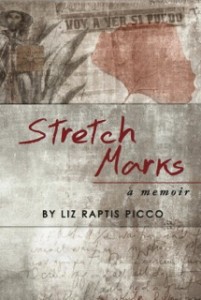 Next in this new series called Writing Lessons, our teacher is Liz Picco, taking on the gnarly topic of when to start writing memoir. When are you ready? My advice is to listen to Liz. She knows. I know she does because we had a good long email correspondence back and forth, and what she said really impressed me. Liz joins a bunch of fine writers you will meet here, all of whom are going to teach us a thing or two about writing memoir. The pieces in the Writing Lessons series include a piece on how to write memoir, an excerpt, and a chance to win the featured book. Read all the way through for more.
When Are You Ready to Write Memoir?
by Liz Picco
You can’t rush memoir. Trust me, I tried. I raced through my journals and transcribed hundreds of entries without pausing to reflect on the tumultuous events they contained. Years later, a certain date on an entry or the dark inky desperation along the margins still riddled my body with alarm. Caution: bad moment ahead. I speeded up. Shirking the time to reflect altogether, preferring not to take the microscopic view on my feelings. I wrote to put it behind me. I wanted to move on.
I wasn’t ready.
Time and distance helped me take inventory of myself, gain perspective, and hone my writing chops. There is no shortcut. It’s no surprise, looking back, why I racked up twenty-seven rejections on my first round of submissions. Stunned and disoriented at the time, I had no choice, but to pause and stare for long periods. I kept coming back to the same question: why was I writing Stretch Marks. For quite some time, I had no answer.
I wasn’t ready.
I took several writing classes during this fallow period and read, reread, and studied memoirs. I learned and practiced the craft of creative non-fiction while deepening my knowledge of the writing life, its process, and its rhythm. I pored over blogs, beefed up my writing book collection, and attended author readings with more regularity while I reread my manuscript. Again, years later, it gradually dawned on me that I was a character and had to present myself to the reader as a specific, legible protagonist. I was the tour guide navigating the reader precisely towards the sounds, smells, taste, and sights that bring the story alive.
I was ready.
I revised my second draft with a cadre of books, companions really, i.e., Vivian Gornick’s, The Situation and the Story, Mary Karr’s, Lit, and Marion Roach Smith’s, The Memoir Project rested on my lap or the left hand side of my desk, splayed open, the center margin decorated with nut and cookie bits and the occasional fruit stains. Then luck graced me when a few of my former classmates formed a writers’ group and invited me to join them twice a month. A serious, dedicated table full of writers hungry to be published. They took me to task for glossing over scenes and narrative, missing opportunities to foreshadow and drop in back story, details that engage the reader. No sidestepping allowed. I dug deep and dredged up tissue boxes of emotions while I excavated my past. My memories.
Writing Stretch Marks forced me to pause and figure out my thoughts and feelings. With more distance between my past, I set aside my defensiveness while I examined my past. I made sense of events that left me traumatized and mired in doubt. I leaned into it. I worked at healing and forgave myself as well as others, which in turn revealed a softening that led to compassion and a sense of humor in my writing. A lightness and clarity accompanied the arduous revisions. As I wrote, it seemed, I no longer excavated, but with a delicate touch, wiped away dust from the nooks and crannies of my truths.
Stretch Marks, an excerpt
We arrived in Santa Cruz with a new sense of appreciation and approached our small town with a lens of curiosity, taking nothing for granted and enchanted again with sunsets on obscure little beaches and bicycle rides through neighborhoods canopied by stout maple trees. We made a pact to avoid falling back into old ruts and habits; instead we’d make time to visit bookstores and art galleries, we’d maintain our daily exercise regimen, and pause in our day to people-watch over coffee or a beer with the same enthusiasm we’d had traveling in México.
Friends welcomed us back into the fold, excited to hear about our adventures, catching us up on life and gossip, but thankfully skirted the topic of children. I’m embarrassed to admit that I selfishly didn’t reconnect with all of our friends—those who had babies, toddlers, or were in any stage of pregnancy were off limits. I’d rather undergo a root canal sans anesthesia than withstand the stories, photographs, and videos of their baby’s head crowning while a sage midwife coached them at home, in their bathtub, to the sounds of Enya or Kokopelli flutes. The thought of watching my friends with their kids, up close, mortified me. It hurt, and I don’t mean my feelings. It physically hurt, like a scalding bucket of water thrown on me. I’d feel sunburned for days. Give me time, I’d plead with Marty, who finally threw his hands up in the air and grew used to me ditching him whenever there was a family sighting. He’d stay to congratulate and fawn over our friends’ kids, pretending I was somewhere else, and promised that we’d get together. Soon. Soon equaled never. No way. No how. When I’d reappear with a flimsy excuse, he’d scowl and tell me he hated lying to our friends. My apologies were wearing thin.
Deep down inside, though, I didn’t care if our friends felt slighted. After one cautious visit or two, I knew the powerful floodgates of motherhooditis would give way. I’d come back from México tanned, fit, with a resolve to create a new life, but beneath my brittle veneer, nothing had truly changed. Why did I have to sacrifice my feelings, I reasoned, just to be polite? Marty countered that I couldn’t keep running away and hiding from life. Oh yeah, says who? Somewhere along the way, I’d cloaked myself with this rationale: my hideous suffering had earned me the right, like a warrior’s trophy, to pick and choose, include, exclude, and limit those friends who were fortunate to have a healthy reproductive system. They could have children, but not my friendship. Now, I look back at that time and shudder at my coarse attitude. My gracious and loving friends never held it against me. When I was finally able to reemerge, years later, I placed the blame squarely on my shoulders and told them it was all about me. A woman gone over the deep end by the loss of a daughter and a dream.
About Liz Picco
AND THE WINNER IS…
I hope you enjoy Writing Lessons. Featuring well-published writers of our favorite genre, each installment of the series will take on one short topic that addresses how to write memoir, and will include a great big book giveaway.
It’s my way of saying thanks for coming by.
The contest for this book is now closed. Please see the next installment of Writing Lessons.
The winner of Liz Picco’s fine book is Annette Osborne. Congratulations, Annette! I’ll be in touch to send your book.
Thank you Liz Picco for stating so eloquently that the import act of reflection should not, and indeed, cannot not be rushed or bullied. To do so makes the piece more of an autobiography than the art of memoir. I look forward to reading your book soon.
Thanks so much for chiming in, Patricia! Bullied is spot on in describing, at times, my approach when impatience won over. Thanks for reading, Liz
Reading this gave me permission to consider that maybe it’s not time and I’m not ready to write my memoir yet.
I commend you for taking the time to pause and consider. It takes more courage than we realize. The time will come, though! Thanks so much for reading, Liz
I needed to hear that it’s ok to let stories sit with you, that maybe they will be written about later, their significance will come to light over time and thought. I would LOVE to read her book as I am also from Santa Cruz and my family is considering a return ourselves. Her story of reconnecting/not reconnecting with old friends resonates with me.
Thanks for your candor, Annette! Just wanted to let you know that if you don’t win a copy of Stretch Marks, you can borrow it from any Santa Cruz Public Library. Much appreciated, Liz
This post reminded me that memoir is a story – everyone’s life is a story – and it’s not just simply remembering the facts. Sounds like a great read!
So true, Aneta–It’s not just the facts! And the best thing is that we all have stories. I do hope you’ll read mine. Thanks so much, Liz
Here’s what I think is the most important lesson in this post: the list of endeavors Picco undertook during her fallow period.
“I took several writing classes … and read, reread, and studied memoirs. I learned and practiced the craft of creative non-fiction … I pored over blogs, beefed up my writing book collection, and attended author readings … while I reread my manuscript.”
And then she was ready to revise.
You zeroed right in, Sarah! I couldn’t have revised and honed Stretch Marks on my own–impossible.Thanks for reading, Liz
I loved this article. Thank you. I learned that I do not believe I’m ready to write a memoir yet.
Thanks, Pilar! Yes, timing is important and I hope that time arrives for you. Writing one’s story is incredibly empowering. I appreciate you taking the time to read, Liz
You had me quickly. I think I would quickly cloak myself with a hard veneer if I couldn’t have the life I always wanted – babies. I can’t wait to read this. Thank you for the opportunity to win your book!
Thanks, Amym! Your comment is a writer’s dream–to hook the reader immediately and then not let you go until after the last word. I appreciate you reading, Liz
For ten years I have been “excavating” journals – it became a project.
For the past year, I have been softening and “wiping away the dust” from my truths. I am ready – not for a project – but to write memoir.
Liz’s reminds me to be the “tour guide” (love that phrase) “navigating the reader precisely towards the sounds, smells, taste, and sights that bring the story alive.”
For the year ahead her phrase will sit on my desk and collect cookie crumbs. Thanks for a great lesson.
Ah, Linda thanks for–“For the year ahead her phrase will sit on my desk and collect cookie crumbs.”! Sounds like you will make a wonderful tour guide. Please let me know when you’re ready to have someone read your story. Good luck, Liz
Your honesty is what gives me courage to go on. I am not a memoir writer, nor do I have the desire to do so, but I want to take more risks in my life, in my art. Your example shows me that in spite of/because of challenges I should go on and risk it. Do the hard labor and share with appropriate people.
Your honesty is what gives me courage to go on. I am not a memoir writer, nor do I have the desire to do so, but I want to take more risks in my life, in my art. Your example shows me that in spite of/because of challenges I should go on and risk it. Do the hard labor and share with appropriate people.
So good to hear from you, Mandy! Ay Chica, you’ve always been an inspiration to me–whether you’re dancing up a storm, transforming metal, or embracing your family and friends. Thanks so much for reading, Liz
Thank you so much Liz for your densely packed words of wisdom.
As a memoir writer myself, the passage that resonated deeply with me was the following:
“Again, years later, it gradually dawned on me that I was a character and had to present myself to the reader as a specific, legible protagonist. I was the tour guide navigating the reader precisely towards the sounds, smells, taste, and sights that bring the story alive”.
I like your notion of ‘leaning in’ rather than away from the feelings and plunging into the inner journeys that yield perspective. This tenacious pursuit of perspective in turn allows for lightness and humor in the writing. Your book is certainly a testament to taking that time to hone content into craft.
Having had the pleasure of your companionship and kind hand while I journeyed through the completion of my own memoir, I can absolutely assert that you are indeed an expert on what it takes to ‘lean in’.
Always a balm to read your words,
Eanlai
Oh, Girleen, thanks for being my fellow writing warrior! I’ve been blessed in walking the same path with you. You’re next! Abrazos, Liz
I love the way your article flowed, Liz– and the not ready, not ready, ready structure. This is very helpful information. As I read your article, I reflected back
on how it was for me writing so intimately about my father’s dying and death (Losing a Parent, HarperCollins1991) and then years later writing about my spiritual journey (How Did I Miss All This Before?)– your insights about the writing process are right on! Thank you for your honesty and wisdom.
I truly appreciate your comments, Alexandra! I reread and studied “The Infinite Thread” after I lost my mother and couldn’t return to my revision. Gently, your words guided me when loss and grief derailed me. Thanks for visiting! Abrazos, Liz
Stretch Marks has taught me the art of looking at life’s twists and turns with
humor. It is a constant reminder of the multifaceted sides of our emotions that can make us scream, cry, smile, and eventually laugh. Liz Raptis Picco’s writing sheds light on the forever changing lights at the end of the tunnel.
Thanks so much for your wonderful comments, Amy! I especially loved your last sentence and am thrilled my story hooked you. That is a writer’s dream. I appreciate you reading, Liz
Liz,
Thanks for sharing your process and journey in writing Stretch Marks. You’ve made clear that in writing a successful memoir the author needs both to master the technical details involved in writing—learn, learn, learn—and delve into the personal work needed to open layered feelings to the reader.
Your small excerpt from Stretch Marks has hooked me. I can’t wait to read it.
Good to hear from you, Mary! Having a serious group of fellow writer’s is also key when trying to balance the technical and personal work. I’m touched that my excerpt has hooked you, that’s quite a compliment.! Thanks so much for visiting, Liz