

How to Write Into the Themes of Right Now, with Shelley Noble
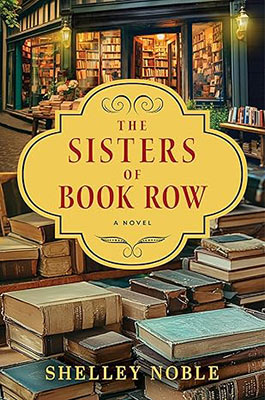
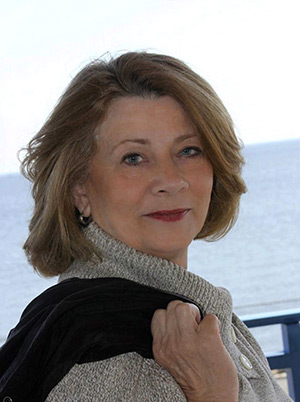
SHELLEY NOBLE IS KNOWN for her gripping historical novel, The Tiffany Girls, in which she unearths a previously little known true story of the women artists responsible for much of Tiffany’s glasswork, as well as for her historical mysteries. She is a former professor, dancer, and choreographer. Shelley’s new historical novel could not be more timely. Titled The Sisters of Book Row, it digs into early 20th century American book banning during a time in our country when even classic literature or fine art could send a person to jail. Sisters of Book Row is just out from William Morrow. Listen in and read along as we discuss how to write into the themes of right now.
Powered by RedCircle
Marion: Welcome, Shelley.
Shelley: Thank you for having me. I’m so glad to be here.
Marion: Thank you for agreeing to be here. I’ve previously interviewed more than several historical novelists on QWERTY, and every time the work they have presented seems prescient. It speaks to the time in which it is published. And I know that’s not always the case with historical fiction. But when it is, I suspect it’s not a coincidence. And I want to talk to you about knowing what’s coming and writing into that.
So, just to give the listeners a little context, The Sisters of Book Row places us in 1915 amid the Comstock laws, a series of federal anti-obscenity statutes that covered and prevented many things, including access to abortion, access to reproductive health information, crusaded against what was considered medical quackery, and enabled book banning, all under the name of Anthony Comstock, Secretary of the New York Society for the Suppression of Vice.
Huh. Wow. A lot of this seems very contemporary. So you seem to possess a precision instrument on you for knowing what we will care about, when. So talk to me about writing into the here and now of America. How did you know to do so in this case?
Shelley: I didn’t at first. I had just finished The Colony Club, which is about the philanthropic club that’s still in existence in Manhattan. And I was looking, I had another book to do and I was looking for things to do. And I like to do that neighborhood kind of story. And my editor or agent said, “Oh, you should write something about books. Everybody’s reading about books.” And I said, “Well, okay.” And so I’m looking at things about books. And this was so long a wait to get to this actual subject. I ran into a newspaper article or a magazine article about the Cohen sisters, who are contemporaries. And they took over their father’s bookstore, the Argosy Book Store, a very famous bookstore, and are now running it as the three of them. And I thought, well, that’s good. Three sisters who run a bookstore.
And then I just started looking at things and looking at things. And I remembered there was a place in Manhattan where there were booksellers and did a lot of rare and used books, Book Row. So now I have two pieces. And I’m going, when is a good time to do Book Row? Well, we know a lot of things about that area now. And those sellers after the 30s. And I like to stay around the turn of the century. And so I started looking around. And then I ran across this article about Margaret Sanger on the way to being arrested for the fourth time by Anthony Comstock in 1915. And I went, I’ll do that.
Marion: I’ll take that.
Shelley: Yeah. So and then I got really sort of creeped out because I thought, are they going to go for this? Because, you know, we’ve been seeing a lot of book banning lately over ridiculous things, I think, my opinion.
Marion: Yes, my opinion too. I agree.
Shelley: So I packaged it into a roundaboutness, but of course, silly me, everybody went, “Oh, that’s the one, do this.” And so I did it. And, you know, you pay attention and there’s so much stuff out there to write about.
Marion: There is. There is. There is. And we sometimes, I think we marvel, and appropriately, by the way, we marvel at historical fiction writers who can feel something coming. And I think that it’s a wonderful thing. And I think you deliver so much of a message with this, with these three Applebaum sisters whose defiance in the face of censorship provides stunning inspiration, the kind of inspiration we really need now. So that’s great. I love it.
So, whether writing fiction or nonfiction, Let’s talk about those sisters. It’s essential to make one’s characters different in ways that not only allow readers to keep them straight, but more to the point, to be able to go with them into the story. And characterization is never achieved merely by height and weight and eye color, of course.
And the three distinct Applebaum women are exceedingly well-drawn individuals, as well as sisters, on a shared mission. So when you’re considering characters, are you listening to something within? I mean, some fiction writers say their characters actually speak to them. Or are you drawing from historical figures or personal relationships you’ve had? I guess what I’m asking about is some guidance for those listening, the writers who are listening in, as to how best to characterize your characters.
Shelley: I live with them for a while before I start writing. But I think the key for me is to listen to them. I know they’re coming out of my head, but I’m taking in new information all the time. I do a huge amount of research. I would have been one of those crazy ladies in somebody’s library, you know, re-sorting everything all the time for my livelihood. So I live with the people of that period, and in this case, Booker Row. And I just plot myself in the middle of the scene like the muted, gagged narrator. And I live with these people in their story as much as I can. And then, you know, there’s so much literature. I mean, three sisters. I mean, think of all the books written about three sisters, which becomes a problem because you don’t want to be too much like all the other three sisters in history.
So, you know, they need to be distinct. And I learned a lot of this from dance because, you know, you’re never upstage to the soloist. So I use three points of view and I always try to use multiple points of view because you get everybody’s story and everybody’s take on how they’re seeing their story.
Marion: “You never upstage the soloist.” I just love when writers reveal that they draw holistically from the many things that they do. The done and experienced. So, are there any other lessons from dance and choreography that you apply while writing fiction?
Shelley: Strangely enough, maybe not so strangely, but yes. Actually, there’s so many comparisons that you can make. Just start with a street scene. How do you move people? You know, in theater, well, in dance anyway, right stage always crosses downstage toward the audience in front of left stage. I don’t know how it came about, but that’s the way it is. So if I’m doing a street scene, like Celia’s coming home in this particular story and meeting all the people on the street, how to differentiate them, how to show the ones that are going to be a part of the story and then still be able to show the people that aren’t going to be a huge part of the story without it just becoming this big muddle. And then just the idea of rhythm and dance. Each scene, each scene, segment has to have, for me, a rhythm.
When you catch that rhythm, the story starts to speak back to you.
Marion: Oh, I love that. The whole idea of syncopation in sentences has always fascinated me, as well. So rhythm within a scene and rhythm within sentences. I teach memoir writing to people and when I talk to them about syncopation, I frequently get some pretty blank looks, but I think that I wouldn’t get one from you. So that’s lovely. And the picking up the pace. Yes, of course. And slowing down the pace from dance. Oh, that’s just wonderful. Anything else that comes to mind from dance?
Shelley: Well, it’s similar, but the difference in time, like I write with a lot of long descriptive sentences and I also write with short phrases, which sometimes gets me in trouble. And sometimes I give the copy editor half and then I take the other half as fragments, as sentences. And you can see in an entrance who’s going to carry the meat of that particular moment and who’s just passing through or who’s just commenting. So I think that’s really that syncopated thing is what you’re talking about is how the rest of the sentences, and the rest of the characters, directs the energy and the eye and the feeling toward the one that’s important for that time.
Marion: Lovely. I completely and absolutely see it. And I’ve never seen it while envisioning a stage full of dancers, but I will, from now on, and I’m deeply grateful. And I suspect everyone listening will too. That’s lovely. So I’ve read about the Comstock laws in the last few years. They’ve been back in the news, of course, as several states have tried to revive them to prevent the mailing of materials regarding contraception and abortion. And I must admit, that in doing the reading and reporting for this interview, I went down quite the rabbit hole on Anthony Comstock, for whom the Comstock laws are named. I honestly, at one point I said to my husband, “You’re going to have to come and get me because I’m now fascinated.”And I think that I might not have emerged except for this deadline of this interview, I think I’d still be reading. So, I know from being a nonfiction author myself that this can be quite a challenge, to pull oneself out of the libraries or archives.
And you just admitted a few minutes ago that you would be one of those people. I, too, would be one of those people. Somewhere in the back carrel, just by myself, reading for the rest of my life. So I’d like you to talk to the writers listening about setting parameters for research and deciding… when you’ve got what you need to at least start writing? How and when do you pull yourself up from the research and start writing?
Shelley: Okay, that’s a tough one. I do a lot, a lot, a lot of research before I begin the story because I’m kind of a glommer, you know, and they used to say pantsers and plotters or something. I’m a glommer. I glom this little piece like chewing gum stuck in the other little piece. And when I have a great big ball of wax, I start looking at what the challenges and what the possibilities are. And I continue to research throughout the book. I’m not one of these who says, you know, change the dress, change it to keep the story. I really need to set my place. That’s probably from being a dancer. I’m a visual, tactile learner. So I have my setting. And when I know what the story is, I like, I don’t know, move between my characters, sort of forming how they’re going to react or not react or surprise me, and then I have to figure out why they did that.
But I know this is a thing of mine, not a peeve, but those people who say, oh, my characters, just tell me what to write. I wish I had those characters. I have some very ornery fights with characters. Now, it’s all coming from somewhere in my subconscious and my research. But I think if you continue to research, here’s another thing about research. I never researched more than a couple of years max past my storyline. So I probably get some things wrong. I mean, we know how it turned out, right? If you write historical fiction, you know where we ended up. So I don’t want to know much more than my characters know because I find that really taints the scene, or it has the possibility of, and you want to take the scene with modernisms. So that’s a little parameter I set for myself.
But I try to keep the momentum of the story going while throwing in the extra real historical details.
Marion: That’s lovely. And I think that’s smart as hell to not research too far past the time about which you’re writing. You know, we’re not trying to be right. We’re not trying to predict the future here. We’re trying to give an accurate portrayal of the moment. That’s actually a lovely piece of advice.
So, I don’t know if you are the queen of feminist historical novels, but I think you should make room for the crown. Or get your next haircut, get ready for the crown. Because you’ve previously covered, as you referred to before, the founding of the first women’s club in Manhattan, established during the Gilded Age, where women could stay overnight without accompaniment of men. They could discuss ideas and take on social issues. That’s the 2024 novel, The Colony Club. And Tiffany Girls, published in 2023, filled in that history for me of that fifth floor studio moment.
Of the women’s division of the Tiffany Glass Company, which fascinated me. Since I have to tell you that the only reference I have ever seen to those women is on a small sign in the Metropolitan Museum of Art next to a window in the American Wing. And I always wondered about them. And every time I go to the MET and I go back and I look at that and I think, who are those women? And then I read your book. So wonderful. So define for me, if you would, how you might name it, like your brand. Is feminist historical novels your brand? Is it your politics, your soul, your signature to write about women who work for change? How do you think of this territory of yours?
Shelley: I’m afraid it might be all of the, what you just said. But I also write, I haven’t for a few years, but contemporary women’s fiction. I also wrote historical mysteries. I’ve been here for a while. And it all boils down to me as it takes a village, first and foremost. We’re all making history all the time. We just never know if it’s going to end up being something that affects the future in a grand way. Most of us don’t. I mean, you know, don’t win a battle or something. And I think this novel, The Sisters of Book Row, takes place in 1915. All these things were happening. They still didn’t have the vote. Daisy Harriman in The Colony Club didn’t even think about, just beginning to argue about whether women should vote or not. And then Tiffany Girls, no one even talked about it. And that was, you know, not that long ago.
So I think that’s something about how little people change their little bit of the world. And because women are underrepresented in history, and I’m a woman, so I just sort of went that way.
Marion: Mm-hmm. And we’re grateful you did. The reminder that if we do what we can is what I find so important. I wanted to say precious, but precious is the wrong word. But dear to me from your books that if we do what we can, we can fight back. I think there’s an awful lot of conversation right now in the world. I’ve been at luncheons where people say, I don’t, “What should we do? What should we do?” Do what you can is what your novels tell us. These women… all did what they could. The founding of The Colony Club is a fascinating story. The Tiffany Girls is something we can actually look at and marvel at. And this, The Sisters of Book Row, allows us to understand that kind of defiance.
Shelley: And just one thing, it’s like the fascinating part, you said, that’s what draws me to certain things, is it was such a fascinating time, whatever time it was, and people doing these amazing things. We never think about. We’re so inundated all the time. For me, it’s a gift. One I scream and tear my hair about, but it is a gift to discover these people.
Marion: Well, it’s a gift that you’ve delivered them to us, and we’re deeply appreciative. So these three recent novels, Tiffany Girls, Colony Club, and now The Sisters of Book Row, were published in almost three consecutive years. It’s a fine pace, but it’s hard. but not all of what you do. As you mentioned before, you’ve published what you refer to in your bio as “beach reads,” and there are 17 of them and four historical mysteries. Wow. So, talk to the writers listening about doing the work. Please give us a sense of your… discipline, if you would, and how you maintain it. And then I’m going to ask you some questions about the tactics. But just let’s talk about discipline for a minute. When people talk to me about writing, they usually have stars in their eyes and they say, “Oh, you know, does your muse speak to you?” And I’m like… the S&M of writing kind of dictum, you know, like you sit in a hard chair, you drink a lot of caffeine and you don’t get up till it’s done. What about you?
What’s your discipline routine?
Shelley: Well, it has changed over the year, but it’s the same thing, you know, beyond the put the butt in the chair advice that everyone gets. I think dancing really helped me a lot in the discipline because you were out there, whether you were sick, whether your feet were bleeding. You know, whether you wanted to go to the prom, whatever it was, you did what you needed to do. No excuses. I guess if you were in the hospital, maybe. But I’ve known people who check themselves out to make it to stage. It’s not the brightest thing in the world to do, but it did teach you about discipline. Some books are easier than others. None of them are easy for me. There were some years I wrote two books a year for a while. But I think for me, I have to commit. I have to know that I am going to tell these people’s story. It is going to end. I’m going to get to the end no matter what I have to do.
And I sit there. I mean, I don’t sit there until it’s done, but I come back. Sometimes not every day. I mean, after all, I’ve written a lot of books.
So like last week, I just sort of took off. But there are times when you just have to sit down and say, “Noodle.” You noodle around. You don’t have an idea in your head. Your story is backed up. You went the wrong place, but you don’t know where it was. And I took a course from a friend of mine once many, many years ago. And he said, “When you have writer’s block, you take a word from the last sentence you wrote and write something about it and then just keep writing about it. And finally, you’ll wallow your way back into what you were writing about. Then you just cut the rest out.” So that’s important is to keep writing even when you know it’s not what you wanted it to be. You go back and fix it.
Marion: Yes, you go back and fix it. I’ve heard that advice about the last sentence, and I’ve heard it in a variety of ways, including begin the next paragraph with a word from the previous last sentence of the previous paragraph. Whatever it is, it’s about “keep going.” It’s about keep going, right? It doesn’t have to be a good transition, just keep going. Scoop up a word, slap it on the top of the next paragraph, and keep going.
Shelley: I could write books out of the words that I’ve dropped from a book.
Marion: Sometimes it breaks my heart.
Shelley: I said, you know, that’s two books. You just wrote two books, but you can only use half of it.
Marion: Oh, yeah. Well, there’s that. There’s that misery of the murdering your darlings and all of that.
So I’d like to talk about those tactics. You have multiple characters in your books, lots of history. In the three recent novels, I’ve mentioned a sprawling Manhattan, which is as much a character as any of the humans. So do you use a software program? Do you use the tried and true method of a cork board with index cards on it? Do you put a timeline up on your wall? What do you do to keep all of this straight as it’s swirling around in your heart and soul?
Shelley: I use the old movie storyboard. I have a huge Lucite piece of, you know, like about a little larger than, you know, those poster boards you buy. I used to buy my kids for projects. I grid it off. Everything in my life is color-coded. I use color code for scenes, for the different characters. Each grid is a chapter. I love storyboarding. I use Post-it notes, little narrow strips, because I generally use more than one scene per chapter. I write fat books, lots of description. They’re historicals. Historical is description needy. And the beauty of it is I can see it. I’m a visual learner. I was a dancer. That’s how you learn steps. I can look at my storyboard and go, I’m looking at it right now and say, “Oh, there are too many oranges clumped together. This is not working. The other people are lost. Is that okay?” Maybe it’s not. Then you can just take them off and put them somewhere and go, “Oh, that’s much better.” Or you get to take that off and put it back where it was and says, I’ll have to deal with this later. So storyboarding is like my big, everyday thing. I do chapter outlines after I’ve written the chapter by character and color-coded. I could not do anything without color-coding. I don’t use the software. I feel like it’s an intrusion. So that’s that.
Marion: Yeah, I don’t use the software either. I’m fascinated by this storyboard. You can see it. Is it on your wall? Is it on your desk? Is it on the floor? Is it someplace you can always look at it? You look up and that’s what you see?
Shelley: It’s on my wall.
Marion: Yeah.
Shelley: I just turn from my desk and there it is. I’m looking at it right this minute.
Marion: Yeah, good.
Shelley: Which I don’t want to because I got a lot of work to do.
Marion: Don’t turn around.
Shelley: I’m not. Yeah.
Marion: And the idea of writing the outline after you’ve written the chapter, what is the benefit of that?
Shelley: Well, I work in individual documents still. You know, I’m just an old horse, I guess. I write each chapter as a document. I keep my information more contained that way. I have friends who write just one long manuscript and then they do word search. My mind doesn’t work like that. My mind works in glomming ways. So once I do a chapter, then I say, “Oh, this is what happened here.” And it’s just like little abbreviation notes to myself. And like, “Where did she meet this person? Oh, it was chapter four. Oh, it should have been chapter three because I need to say here in that chapter four.” I don’t get that from a storyboard because that’s mainly movement and development in a storyboard. So the emotions or the plot lines goes into the chapter by chapter outline.
Marion: Oh, it’s fascinating. So as we start to wrap this up, I want to ask you a question that I get asked all the time and that I’d be fascinated to know from you. While you’re writing, do you read the work of others? Do you read historical fiction? Do you absolutely not read historical fiction? Do you read anything but? Do you just read The New Yorker? Do you just read one particular writer? What’s your appetite ,and what do you need to feed your own head that isn’t related to what you’re actually writing?
Shelley: I absolutely do not read other historical novels. I have to wait until I’m off for a big chunk of time because, you know, I have some favorite historical writers and it’s so, you never know whether, and even if you write about the same subject, you don’t know if you got something from them and whether it was actually the truth, or whether they made it up so well that you couldn’t tell it wasn’t the truth.
Marion: Yeah.
Shelley: When I’m writing historical, which I’ve sort of been concentrating on the last few years, I don’t read very much. I watch a lot of 1990s British police procedurals.
Marion: I love this detail.
Shelley: So to make of it what you will, I just, I can escape. I like, you know, I like the interaction of those actors, especially, you know, actors that are very well trained and have a charisma and a spark between them. And I do the police procedurals because they’re all plotted very well. Back in the old days, you know, you didn’t have to do all the extra stuff for the audience and the surround sounds and all that stuff. You know, they just had to like schlep through the plot and make it realistic. So that’s my technique. I love it.
Marion: I’m going to go watch myself a couple of 1990s British police procedurals. I agree with you. I’ve watched a lot of them, but I think I will look at them more carefully in terms of the plotting and use them as inspiration. Thank you, Shelley. That’s wonderful. And I’m deeply grateful for you taking the time to talk with me and to share what you know with the writers listening. Good luck with the book.
Shelley: Thank you.
Marion: It’s a joy. And I can’t wait to read the next one. Thank you so much.
Shelley: Thanks for having me.
Marion: The author is Shelley Noble. See more on her at Shelley Noble dot com. The book is The Sisters of Book Row, just out from William Morrow. Get it wherever books are sold. I’m Marion Roach Smith, and you’ve been listening to QWERTY. QWERTY is produced by Overit Studios in Albany, New York. Reach them at overitstudios dot com. Our producer is Jaquelin Mignot. Our assistant is Lorna Bailey. Want more on the art and work of writing? Visit marion roach.com, the home of The Memoir Project, where writers get their needs met through online classes and how to write memoir. And thanks for listening. Don’t forget to follow QWERTY wherever you get your podcasts. It helps others to find their way to their writing lives.
Want more help? Join me in live, online memoir classes
Start here, with The Memoir Project System Page, to understand the breadth of all the classes we teach.
Want to jump right in? Here’s a sampling of our classes.
Memoirama: Live, 90 minutes. Everything you need to write what you know.
Memoirama 2. Live, two hours. Limited to seven writers. What you need to know to structure a book.
How to Write Opinion Pieces: Op-eds, Radio Essays and Digital Commentary: Live, 90 minutes. Get your voice out into the world.
And keep in mind that we are now registering names for the next Master Class, the prerequisites for which are Memoirama and Memoirama 2. Live, once a month. Limited to six writers. Get a first draft of your memoir finished in six months.
LOVE THIS, and love HER. Great advice about process, and the history of being a dancer resonates. Thank you for sharing.
Hello there, Matthew.
Isn’t she great?
Don’t you just love her application of dance in writing?
I was overjoyed and overwhelmed as the words came from her.
What a delight.
Thanks for stopping by.
Write well.
Best,
Marion