

Making a Fine Career Writing What You Know, with Author Marion Winik
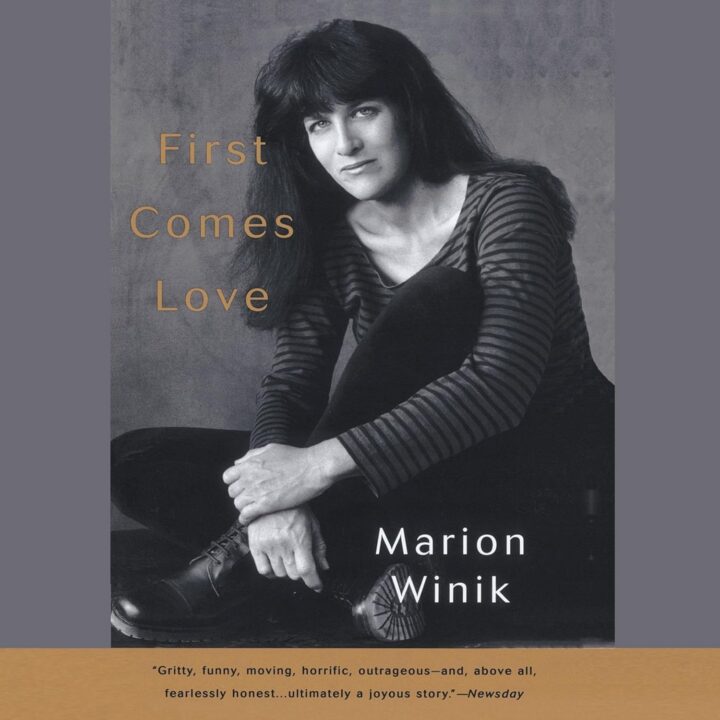
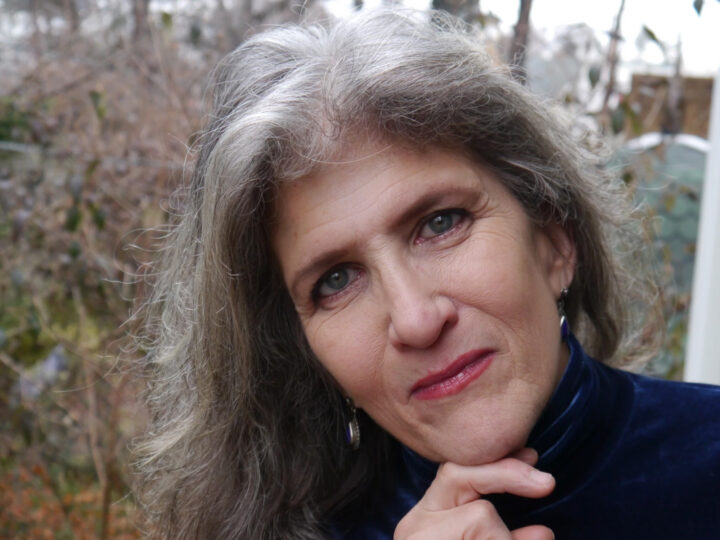
Marion Winik is the author of nine books, including The Big Book of the Dead and the unforgettable memoir, First Comes Love, which has just been released in a special 30th anniversary edition. Her essays have been published in The New York Times Magazine, The Sun, and elsewhere. Her column at baltimorefishbowl.com has been running since 2011. She’s a professor at the University of Baltimore, and she reviews books for The Washington Post, Oprah Daily, and People, among others, and hosts the NPR podcast, The Weekly Reader. She was a commentator on All Things Considered for 15 years. The recipient of the 2023 National Book Critics Circle Award, Marion Winik is the perfect person with whom to discuss making a fine career writing what you know.
Powered by RedCircle
Marion: How are you?
Marion Winik: I am fine and very pleased to be here, Marion.
Marion: Our mothers did, or somebody did, a good job of naming us as far as I’m concerned, and they spelled it right, which is good. Yeah. So you began your professional writing life as a poet, publishing two collections, Nonstop and Boy Crazy. And whenever I get to speak to a writer who began with poetry, I like to ask about its influence. I think it’s the best training ground in the world. What about you? What did writing poetry do for you initially? And do you still feel its influence in your work?
Marion Winik: Well, at the time that I started writing, which is when I was nine years old in 1967 or something, and later in my teens and early 20s, the personal essay was not a common form at all. Nonfiction was academic or scholarly or journalism. And there were two choices for a creative writer. You could write fiction or you could write poetry. There wasn’t this whole idea of writing memoirs or poems. creative nonfiction. That really didn’t happen until 1995. So someone like me that was really driven by a need to express myself and communicate what was in my heart, poetry was more natural for me than fiction because I really wasn’t driven by imagination and actually to this day have a pretty bad imagination.
But what I do have is a fierce desire to explain what’s going on inside me. And poetry is a natural venue for that And I also love playing with language, writing poems a little bit like doing a puzzle. And I still do write some poetry. And when I do, I write formal poetry because that really is like doing a puzzle.
Marion: I love that. One of the things that I think about a lot is Emily Dickinson used to cut words out of magazines and newspapers and just move them around. And I think that those of us who like to write, who love to write, who live to write, we’re moving words around, right? It is a puzzle. It is a very good training ground, I think. And yes, I grew up during that time of when we weren’t supposed to mention ourselves in pieces I benefited from the change.
And I teach memoir and work with writers all day long and have forever given them the advice to develop a toolbox of writing skills, including the personal essay, and to publish those essays first and foremost to get their voices out there, test their material on the world, because somebody may read it and think you’ve got a book in you. And in the late 80s, you began writing personal essays and they appeared in the Austin Chronicle.
And then an Austin-based national public radio reporter who had been reading them in the paper suggested putting your name forward as a commentator for NPR. And your first piece for them followed in 1991. So what happened was that Just as I was saying before, what can happen in early 92, a literary agent contacted you and together you put together a collection of essays, which became telling. So would you give this advice? Do you give this advice to the young writers you work with? You teach writing.
Would you give this advice, start with an essay or an op-ed and see what you really think, see what you really are willing to argue and see if it attracts the attention of an editor or an agent?
Marion Winik: Well, certainly if they’re interested in writing nonfiction. I mean, I think fiction writers would be more drawn to trying to publish a short story in a literary journal and agents look at those things too. But my most successful student, like of all time, is this man named D. Watkins. And he’s a Black Baltimore writer who came through our MFA program and had a lot of talent, but he progressed a lot in the program too. And then… It was 2015, and this whole Freddie Gray thing happened in Baltimore.
And D. wrote an op-ed for The New York Times, because he had experiences with the Baltimore police that were frighteningly close to what happened to Freddie Gray as a kid growing up. His op-ed appeared in The New York Times, and his career took off like a rocket.
And now he’s worked with David Simon, the guy who made The Wire, and he’s had his own HBO series and several books of memoir, and it really came from that op-ed. Also, as we were saying earlier, the number of venues for short personal essays has gotten a little narrower. So the op-ed format and the opinion sections of newspapers is where you’ll find a lot of us.
Marion: Yeah, as we were talking before we went live about the shrinking places to publish. But I do think that the personal essay and the op-ed are great places to get your voice out into the world. And speaking about getting your voice out into the world, those of us who are avid NPR listeners got to hear you do that. And we also got to hear you change over the period of years you wrote commentary for them. We listened to you trade your beloved Texas for Pennsylvania, navigate raising your kids, redefine your religion.
One of my favorites is losing your omnipotence as a parent. Yeah, that happens. Clean out your mother’s house and define and inhabit the empty nest. It was a joy. And I miss those NPR commentaries. I think the form is one of the greatest pieces of education a writer can get, writing from the small to the large. And I send people to listen to them all the time. They’re short, tight, direct, and crafted for listening.
And that makes them… special, interesting, really jeweler’s eye kind of looking for words.
So you’ve specialized in the small moments that are illuminative of the larger themes of life. So let’s talk about that. Talk to me about setting your eye on the small and which comes first, the moment or the object or the bigger theme that illuminated the small? What do you, when you first sit down, are you just going from, oh, my kid said this, or are you thinking about the larger theme?
Marion Winik: Well, a lot of my, you know, a lot of my writing, has been inspired by loss and different kinds of loss. But I often writing out of the urge to recreate something on the page that is lost to me in the world. And that is certainly the you know, behind First Comes Love, which is my memoir that just had its 30th anniversary reissue. But it’s also behind the, you know, I have three books that are called The Glenrock Book of the Dead, The Baltimore Book of the Dead and The Big Book of the Dead.
And those are 400 word portraits of people who came into my life one way or another who died. And it’s like everyone from my mother and father to David Bowie to who I didn’t actually know and to like my son’s dentist to even dogs and cats. And for me, that feeling of wanting to bring something back is a great motivator.
And I have seen that people use the little parts of the Book of the Dead as prompts and other people, you know, run with it because this idea that you could, you know, in 400 words, you could explain who this person was, how you knew them and how they died. You know, it’s a very tight form, but it works really well, I think. So that’s one way I go about it. And I think, even the sense of you could generalize and say that even when I write about some incident with my kids that happened two days ago, there’s still the sense of wanting to bring back and preserve something that’s over.
Marion: It’s a lovely way to put it. And I just adore the books of the dead and that format. And I agree with you that anything can be told in 400 words. You make the point beautifully in those. And you make the point beautifully in, well, in the essays, absolutely. But let’s turn our attention to this reissue, your memoir, First Comes Love. It was originally published 30 years ago. It was featured on the Oprah Winfrey Show, loved by reviewers and readers everywhere. Perhaps the word most often or the words most often used for it were pioneering and groundbreaking.
The Kirkus Review said of it, quote, “‘Romance, comedy, tragedy, terrible truth, and extraordinary love.'” as straight woman marries gay man, bears children and watches their world dissolve in the wake of AIDS. Yes, all that and more amid writing that is a masterclass in memoir.
So to remind people and to, of course, encourage them to go out and buy the new edition, your husband, Tony, died in 1994. The book was published in 1996. So I wanna just go back to that time for a moment, if we can, if you would, and talk to me about the time between his death and the publication, and what you thought you were writing when you first set out on that book.
Marion Winik: Okay, when I started writing the book, Tony was still alive. And I thought that I was writing something that would be published as fiction based on the true story of our unusual relationship. You know, we fell in love at Mardi Gras. He was gay. I was straight. Somehow we thought we were going to get around that. Um…
Marion: I just love that part of the story about that.
Marion Winik: Well, we did end up with, you know, we do have kids that are my sons are 37 and 35. So it did work a few times. But at this time, in the early 90s, there really were no memoirs like those that came out later in the 90s, like The Liars Club and This Boy’s Life and First Comes Love and even Prozac Nation. Before that, a memoir was something that like Winston Churchill would write at the end of his illustrious life. It wasn’t like a scene as a form where writers with literary aspirations would take usually part of their life, like their childhood or their divorce or their illness that they suffered, and focus on that in a book-length narrative.
So I didn’t even think that you could do that. I thought like the amount of truth that’s in my book, I thought I…
Probably get arrested or something because there’s a lot of drugs. And there’s also assisted suicide, which was a felony in Texas at the time. So just for all these reasons, and just because I had never seen it before, I thought, okay, well, they’ll, you know, I won’t change much. I won’t make up a lot of stuff, but they can just publish it as a novel because that’s how these things go. Well, it turned out that’s not how these things go. When I went to turn the book into Random House, they said, yeah, this is good, but we will definitely need to publish it as nonfiction because the things that happen in it are so outrageous that if it was in a novel, people would be like, oh, right.
You know, this happened, that happened. It all seems like it could never have happened. So I had to have, you know, they wanted the assertion of truth to be part of the book. And also- This turned out to be the first wave of the memoir boom that went on and, you know, to this day has really changed contemporary literature.
There’s still tons of memoirs, more than ever now. So by the time that they told me that this, you know, was definitely going to be published as nonfiction, this was after Tony’s death. So in 94 and 95, I was 50. First of all, finishing the story and going up through the assisted suicide and that stuff, there’s a little detail that I had also been nervous about sharing the facts about Tony’s sexuality. He didn’t run around telling people and his AIDS diagnosis. So it just wasn’t the way that we talked about things during his life.
In fact, in telling, I never even say that he’s gay or that he has AIDS. I say… He’s a sexually ambiguous ice skating bartender. So by now, though, you know, that was all over.
And not only did I need to be clear about his situation, but also I felt really strongly that I should go public about this assisted suicide thing because we had had to jump through a lot of hoops and faced obstacles in trying to pull it off. And my brother in law had had a long decline and a terrible last part of his life dying from AIDS. And Tony really didn’t want to do that. And I was sympathetic. So that’s what happened. I ended up, you know, accepting that it would be nonfiction and embracing that it would be nonfiction and, you know, almost daring myself to be as honest and vulnerable as I could possibly be on the page.
Marion: Yeah, vulnerable, absolutely. I teach memoir and I tell people all the time that the only way to establish authority is through vulnerability. The old school memoirists wanna be the Winston Churchill with their hands on the hips and say, this is what happened in history. But in memoir, in good memoir, vulnerability is the way you build your authority with your reader, absolutely. And I read a quote from that editor that said that the crazy impossible sounding series of events it contained was interesting precisely because it was true.
And it’s a good quote for people to understand, to think about, to sort of dive into if they’re writing memoir. And I wonder about, let’s just stick with the truth for a minute, about what it challenged you or what it taught you about the truth and thinking about that. I mean, everyone in a family or a marriage has a different version of the same event.
So these days, when you’re faced with a young writer, knowing what you know, what advice do you give them mostly about the role of the truth in both their thinking and their writing?
Marion Winik: Well, you know, of course, I say we can only tell the truth that we know. But we must tell the truth that we know. And we must attempt to find out as much truth as possible. So I encourage people to talk to others who are involved in the situations that they’re writing about and see what those people have to say. I encourage people to share the manuscript before publication with people that are in it because I believe that relationships are more important than one’s literary career.
And it’s important to, you know, I know some people totally disagree with me on this, but I always show people stuff. And I listen to what they have to say. It’s not that they get to rewrite the book, but I might add something like, my sister remembers this totally differently, blah, blah, blah. Or just today, I’m writing an article about being on the weight loss drugs and my neighbor has been doing it with me.
And I didn’t realize that she wouldn’t, be okay with having her name in the story because she thinks, I don’t know, people will judge her. So I was happy that I didn’t publish this without showing it to her because she would have been very, very upset to have her name associated with this. So for me, it’s the most ethical way to proceed when you’re turning the people in your life into your characters. You can only tell your truth, but you can make an attempt to understand what their truth is too.
Marion: Yes, absolutely. So this year, 30 years after its publication, First Comes Love is available for the first time in an unabridged audiobook form from Penguin Random House Audio. Along with the recording, the audio, you were given the opportunity to write a new introduction to the reissue of the book. And it’s just such an honor to consider. That’s just a wonderful thing when a publisher says, let’s do it again. So let’s talk about having a look at one’s work over time. In this case… You did not just get to have a little look, but you read the work for the audio book and you wrote this new introduction, putting a different, up to the minute, prow of the ship on that mighty book.
So many authors will state unequivocally that they never go back and read anything once it’s published because they would just want to change it. But not only were you invited to go back, but you were invited to kind of change it. So talk to me about having a look now at that piece of work and what arose in your and consideration about the piece?
Marion Winik: Well, you know, I had not read the book in decades and it was a really intense experience because I’m just such a different person now. I mean, I’m 67 years old, I’ve been single for 20 years, I have grandchildren, you know, etc. My main relationship is with a dachshund.
I get that. You know, I was literally kind of grossed out about some of the behavior in the book. There’s a lot of drugs in it. And I was very enthusiastic about drugs for a while there. And I obviously do not feel that way anymore. So what I really love about the audio book is then the chance to read it is that I think you can hear in my voice what I’m thinking about what I’m reading. Like, you can hear me being kind of disbelieving or you can hear me amused, things like that.
So the reading kind of almost became a collaboration between old me and young me.
And I had forgotten about some of these things about young me. And also, I have to say, our memories, you don’t dwell on the worst parts of things. And there were some really bad things that happened. And it was hard to read them and think about them. how very bad things did get it for a couple of years there between me and Tony and with this disease. But yeah, it was just mostly, I have to say, I felt proud. You know, proud and happy that I did it.
And ever since it came out, and I’ve been talking about it all the time, it’s like I feel closer and more, Tony is more present than in many years. And that’s a wonderful feeling.
Marion: Oh, that’s such a lovely, generous answer. Thank you. And I’m glad he’s more present. I think the fear of looking at what we wrote then is legitimate. We were younger. We didn’t know certain things. You didn’t have the language for your sexuality, his sexuality, as you said before. You wrote around it in a way that you wouldn’t now. But it’s just an extraordinary invitation to be asked to go back. And I’m grateful for the fact that he’s closer to you now. That’s lovely. So let’s talk about territory and how to stake one’s territory out.
Yours feels very domestic to me and I mean that in the best way. I mean, you’re not making comments, at least not that I’ve seen about foreign policy. You’re talking about the weight loss stocks I’ve been reading through your Baltimore columns. I mean, you wrote a book after first comes love, you wrote the Lunchbox Chronicles that delves into life as a single mom.
And looking through your work is like watching someone open a jewel box and choose one gem and hold it up to the light. You’re not taking on things outside of your own experience. And happily for us, the grateful reader, it’s vast territory looked at one gem at a time. So talk to me, or talk to the people listening about territory and how to be satisfied with it, or stake it out or identify it. Because we can really bleed out if we don’t know. what we should be writing about?
Marion Winik: Well, I always feel like any idea I get is precious to me because I do not feel like I am overrun by ideas on a daily basis. And I’ve always felt this. So whenever I get like the slightest inkling that I might want to write about something, like the weight loss drugs, but not just that, like I often want to write about like, I borrowed a really expensive pair of my friend’s shoes. And then when I was at the people’s house, I stayed over in New York.
The dog ate the freaking shoes, like $500 shoes. And I could not, you know, this woman was so gracious. She’s a, you know, a well-heeled person. Losing these shoes was not like a horrible thing for her, although she liked the shoes. And she was very, very gracious. But I couldn’t stop.
Thinking about it. So I had to write. Actually, the essay is called Talking Shoes, Leave Me Be, because I felt like the shoes had become like a character in a fairy tale where they would like come to me every night and be yelling at me and chastising me. And so a lot of my pieces fall into this category of exorcism, like something that I can’t stop worrying about or something that’s generally pretty bad that it happened. But by writing about it, I, you know, feel more power over it and think of it more as a narrative and less of as a wound.
Yeah. So like the dog eating the shoes or, oh, I have another recent piece was about leftovers and how much I love leftovers and worship leftovers and wouldn’t throw away a single grain of rice.
But I had left a party with boxes of leftovers, put them on the roof of my car.
Marion: Oh, no.
Marion Winik: And drove away. So they went flying and they were like the talking shoes. I could not stop thinking about these leftovers. And, you know, at a certain point, I started illustrating my work. So I actually I drew the talking shoes. and I also drew these boxes flying off my car. So part of my exorcism process is now art as well as writing. I love that. So it just makes me feel so much better. So I feel like, you know, they say nothing bad can happen to a memoirist.
That’s not quite true. But a memoir has an opportunity with bad things that happen that is a great opportunity. Because One of the reasons that we even like to read memoir is to find out about what other people are going through and what trials and tribulations they have suffered and how they dealt with it.
So every trial and tribulation that comes your way is a golden opportunity to make some reader feel less alone because, you know, they too destroyed their friend’s property and lost their leftovers or whatever. Yes. You know, or I had a serious falling out with a friend during COVID-19. And, you know, that was a real challenge to write about. But I did it. You know, I had to write about it very gingerly in a way that wouldn’t make the situation even worse. And fortunately, it’s all resolved now.
But, you know, that’s a good example. A lot of people went through these trouble in close relationships during the pandemic. And I think there cannot be enough writing about that because it’s why it happened and how we dealt with it and how we resolved it is something that I think is still really important.
Marion: I agree. And for those people who would like to see these pieces, you live in Baltimore now, you teach at the University of Baltimore and write for baltimorefishbowl dot com where you’ve written more than 180 columns. It’s extraordinary. And so you’re really living out loud to some degree. For me, I don’t know how I feel about anything until I write it down. I just, I mean, that includes my family. I mean, you can say, oh, I love my husband, but that means nothing. But if you give somebody some examples of why, perhaps you can communicate it.
But what about you? I mean, I really don’t know how I feel about anything until I write it down.
Marion Winik: Well, I have an inkling, I think, but writing is, you know, I think there’s a Joan Didion quote about this too. I think this is a pretty universal experience for people those of us who are drawn to memoir and personal essay that I’m just used to it now that, you know, I, as the events unfold, I’m already thinking, oh, this is a story, you know, and I have, I’ll figure this out on the page. And my children even figured it out to where they would be looking at me going, oh, this seems like an essay, mom.
They could see it happening. But yeah, I think it’s a great tool. It’s why, You know, therapists are always telling people to keep journals and stuff like that, but we’re doing it not just for… I mean, I think it does help the writer and does have a lot of healing potential and personal growth potential, but I think it also opens that for other people.
Like, it’s kind of the opposite. Memoir can be criticized as navel-gazing and it’s all about people that are so involved with themselves, but I really feel like it’s actually more… A closer relationship exists between the writer of memoir and the reader of memoir than any other kind of writer and their audience. I totally agree with you. Like with a fiction writer, you just don’t know, you know, like with, say, Laurie Moore, who I love. You always think, well, this, you know, this seems like it must be just what happened in her life.
And a lot of it probably is. But she is totally private about whether that’s true or not true. Thinks that’s the wrong question to ask. And I guess it is. But… Lori Moore The real person is a mystery to us because we only know the fiction, right? So I can’t say that Marion Winnick is a mystery to the readers.
Because, yeah, I mean, there might be a few things that they don’t know, but there’s not much, you know, I think that’s a great answer.
Marion: And, as we wrap this up, I want to talk about the writing life and what it is. You’ve written nine books. You met your second husband in a bookstore. You host the NPR podcast, The Weekly Reader, which NPR describes as, quote, four opinionated book-loving minutes. It sounds like a full-on writing life. And I’d be interested to know what living in books means. does for us, according to you, because books, their contents, the writers who write them are under assault right now. So every time I have someone on whose life depends on books, I ask them what we risk losing if we let anything but the values of free speech determine what’s on the shelves. So let us hear from you on this.
Marion Winik: Well, I mean, I have to say yesterday, The Washington Post book world was shuttered permanently. So it was certainly after the New York Times, the second most important book review venue in the United States and one of the only ones left in a newspaper. It’s really tragic and tragic for me because I wrote book reviews for them and they were by far my best payer. I mean, a lot of book reviews, you get 50 bucks if you’re lucky, you know, and this at least had two zeros in it.
And it’s terrible for everyone because There’s all these posts on Instagram today of novelists saying, if my book hadn’t been reviewed in the Washington Post, it wouldn’t have had one single decent review in the United States. It’s such a huge loss. So, I mean, I am passionate, a passionate reader.
I might even be more passionate about reading than I am about writing. And I read as much as 30 books a month, which sounds insane, but I also read really fast. And I write about Know almost every book I read, and I just love the community of readers that we have among readers. You know, it’s like, I don’t know, we’re all in some kind of giant virtual book club. I mean, I, I love every conversation about books and I love to find out what people are reading now and I don’t know.
To me, it is the greatest joy that there is. And I feel like you’re never lonely if you love to read, you’re never bored if you love to read. You might be hungry, but that goes with your reading. So I am so worried about the way that the forces of both capitalism and censorship and what’s going to happen.
It really is a huge disaster that that Washington Post book world closed. To me, it is. And I wonder how can it be that we’re going to have really one That’s a major review outlet. The New York Times is doing pretty good, but they can’t do everything. And, you know, so all the different levels, like my little four minute podcast and, you know, and all the people that have book blogs and book clubs. And I mean, these things are going to become more important than ever.
Some professional critics are really down on Goodreads and Amazon content. Commenters Me, No, I love that people express themselves. I think most of the people that put those posts up on Goodreads are serious and are saying their real beliefs. There can be some haters and some, I don’t know, stupid campaigns against books or whatever, but that’s the minority the majority of crowdsourced reviews are.
Very inspiring and passionate. I read them all. When I’m going to write a review, I’m curious, what do the regular people think? Even when I have to review something like Dan Brown, the Da Vinci Code guy, that makes it really interesting to me because I’m not really a fan. But before I slam this guy in his books, I want to know what the people who love him think. What did they think about the book? So I always feel that there’s some audience for every book, Even books I don’t like, there’s people that will like it.
And I feel responsible about trying to help people find the books that they would love to read. So I don’t know how we could live without the world of literature.
Marion: I don’t think we can. Well, I appreciate your contribution to it. It’s mighty. Nine books and counting and 180 columns. I think you’re doing everything you can. Thank you so much, Marion, for coming along today. It’s a joy to get to know you a little bit and it’s always a joy to read and hear your work. Thank you so much.
Marion Winik: Thank you for the great questions, Marion. It was fun. And I love calling someone else Marion. It hardly ever happens. This is fun.
Marion: We could do this all day. Absolutely.
Marion Winik: After you, Marion. Thank you.
Marion: The author is Marion Winik. See more on her at MarionWinik dot com. The book is First Comes Love, reissued in a 30th anniversary edition with a marvelous new introduction by the author. Get it wherever books are sold. I’m Marion Roach Smith, and you’ve been listening to Qwerty. Qwerty is produced at Overit Studios in Albany, New York. Reach them at overit studios dot com. Our producer is Jacquelin Mignot. Our assistant is Lorna Bailey. Want more on the art and work of writing? Visit marion roach dot com, the home of The Memoir Project, where writers get their needs met through online classes and how to write memoir, including classes on how to write the personal essay and the op-ed. And thanks for listening. Don’t forget to follow Qwerty wherever you get your podcasts and listen to it wherever you go. And if you like what you hear, please leave us a review. It helps others find their way to their writing lives.
Want more help? Join me in live, online memoir classes
Start here, with The Memoir Project System Page, to understand the breadth of all the classes we teach.
Want to jump right in? Here’s a sampling of our classes.
Memoirama: Live, 90 minutes. Everything you need to write what you know.
Memoirama 2. Live, two hours. Limited to seven writers. What you need to know to structure a book.
How to Write Opinion Pieces: Op-eds, Radio Essays and Digital Commentary: Live, 90 minutes. Get your voice out into the world.
And keep in mind that we are now registering names for the next Master Class, the prerequisites for which are Memoirama and Memoirama 2. Live, once a month. Limited to six writers. Get a first draft of your memoir finished in six months.