

How to Live the Freelance Writer Life, with Writer and Author Scott Eden
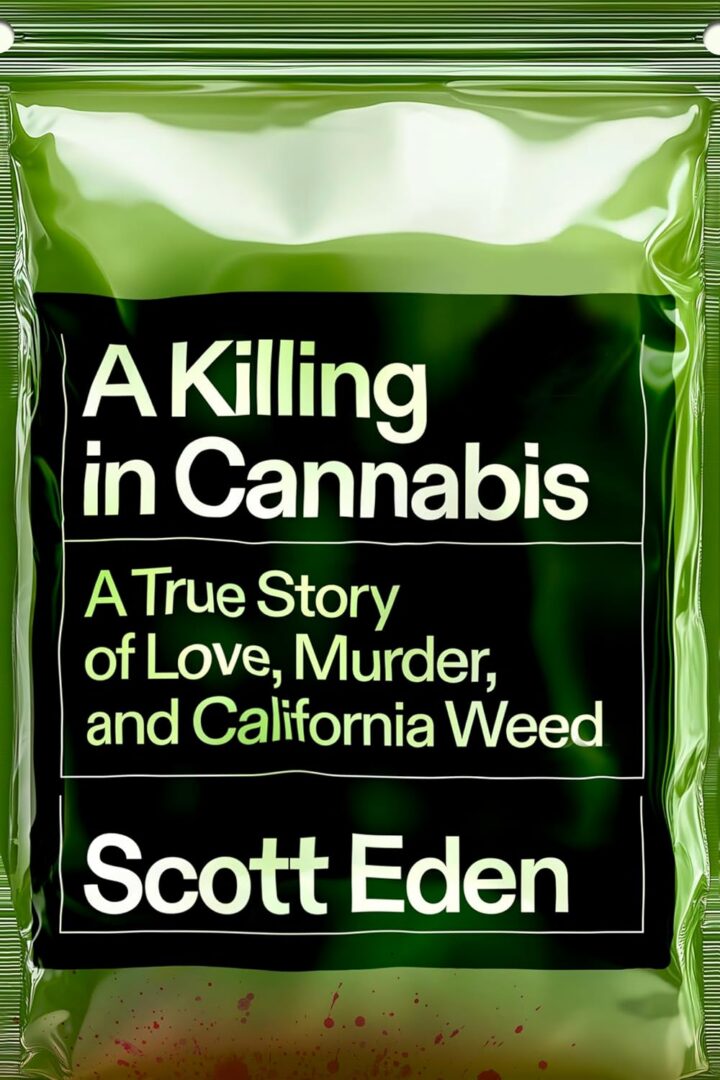
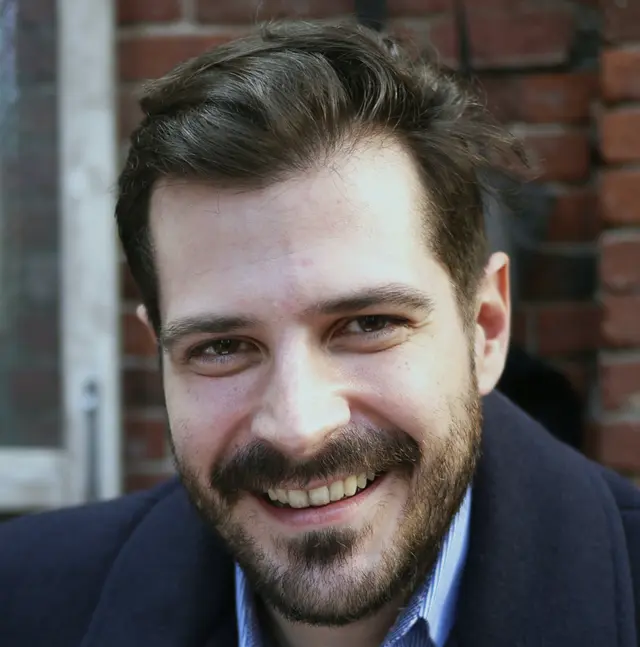
Scott Eden is an investigative reporter whose work is focused on crime, corruption, injustice, business, science, technology, and the dark side of sports. His work has appeared in Wired, GQ, ESPN, The Magazine, The Atavist, Inc., and The Believer’s Best of Collection Real Hard. He is the author of Touchdown Jesus, Faith and Fandom at Notre Dame. His new book is A Killing in Cannabis, A True Story of Love, Murder, and California Weed, just out from Spiegel & Grau. Listen in and read along as we discuss how to live the freelance writer life, and so much more.
Powered by RedCircle
Marion: Welcome, Scott. Great to be here. Well, it’s wonderful to have you here. So let’s set this up for our listeners. You’re a freelance journalist. My audience is writers, and some of them would love to make that move into more productive freelance work. So let’s just start with your journalism background and how you got started as a freelance writer.
Scott: Sure. I mean, it was a long road, but I started out not as a freelancer at all. Out of college, my first job wasn’t journalism. I got a It’s like sort of the opposite of long form magazine writing. The first job I had was for Dow Jones Newswires, which is, you know, this old, I don’t even know if it really exists anymore, but an old wire service that was the same company as the Wall Street Journal and I covered financial markets.
So I covered Wall Street.
But that was, you know, that was what kind of got me into journalism. Before that, I wanted to be a fiction writer.
But I kind of caught the journalism bug at this job, at Dow Jones.
Marion: Good.
Scott: And was there for three years. But, you know, I still couldn’t quite, you know, I always wanted to do long stuff. I had fallen in love with The New Yorker magazine and the fantastic writing that appeared there, fiction and nonfiction. And I went back to grad school for an MFA in creative writing at Wash U in St. Louis, where I focused on long-form narrative nonfiction. And from there, man, I just kind of scrapped and clawed.
After grad school, I moved to Chicago. And started writing for, again, a kind of category of publication that really hardly exists anymore. But I wrote for The Chicago Reader, which was one of the great weekly alternative news weeklies they used to call them.
Marion: Yes.
Scott: It’s kind of the Village Voice of Chicago.
Marion: Yes, it was.
Scott: Kind of cut my teeth there. Yeah. And then from there, yeah, finally moved back to New York City and began freelancing for magazines in New York. Great. Like in the early 2000s.
Marion: All right, well, that shows that you’ve bridged the traditional journalism to the freelance life. And I know that it probably taught you a great deal of discipline working for the Dow Jones Wire. Those wire reporters really learned to write it fast. and furious and on deadline. So it’s great training, right? It’s just wonderful training. And I think that kind of gets to the point, there is training necessary here. You can’t just walk into the freelance world. I always encourage people to get some real training, whether it be journalism school or working for a news organization.
So I’ve been over the body of your work, and I’ve had an awfully good time doing it, I have to say, including your 2015 piece on smuggling baseball players out of Cuba, your 2017 piece on New York City police brutality, and your match-fixing scandal, and your book, Touchdown Jesus, that delves into college football fanaticism as told through the lens of Notre Dame.
Wow. I’m the daughter of a sportswriter, so I love good sports writing, but I also love where you go. So, you’ve got some sports, some crime… And I would say you’re attracted to the dark as much as you’re attracted to those who go to extremes. What would you say you’re attracted to?
Scott: Yeah, I mean, I think that pretty kind of encapsulates it.
Through a letter I got to know in the financial side of things, he went to work at ESPN, the magazine. And so that’s how I started writing for ESPN and sort of entering the sports writing world. But yeah, I never wanted to write about the sport itself. You know, like I kind of, recoiled from beat writing. Maybe it’s because of all that great training, you know, working for Dow Jones where you have to cover a beat. And maybe I got burnt out on that. So I didn’t want to be part of the scrum where you’re with everyone else following stories.
I wanted to dig deeper and find my own narratives inside of whatever I was writing about, whether it was finance or sports. And so, I guess that kind of drew me to topics that were hard to research, hard to report, you know, stuff people didn’t want to talk about, you know, secrets that you had to dig out.
And I guess that’s why I was drawn to, you know, like not covering, you know, who’s going to win the Super Bowl, but uncovering, you know, how baseball players are getting smuggled out of Cuba, you know.
Marion: Yeah.
Scott: Stories that are hard to find, hard to get.
Marion: It’s fascinating to me. And I think that when people find that they’re attracted to something, that they like something… I wrote a book about forensic science, for instance. And it was hard to explain to people, except I had always been attracted to science and to crime. And it allowed me to combine both, of course. But there’s a lot of scary stuff there. There’s a lot of dark stuff there. There’s a lot of secrets there. But it always felt deeply thrilling. And I want to just dig a little deeper into that in terms of keeping that electricity alive as a reporter.
And as you say, you didn’t really want to be part of the pack. You didn’t want to be part of the scrum. And I get that, absolutely. But what do you think keeps that curiosity and the drive when you’re on your own like this alive?
Scott: I mean, a lot of the stories that I’m drawn to, yes, there’s some wrongdoing at the center of it. Yeah, there’s kind of this adventure element. Sometimes there’s a hero, sometimes not. In the case of the Cuban baseball players being smuggled out, they went on this kind of almost classic Robert Louis Stevenson sort of journey.
Marion: Yes.
Scott: Out of, you know, one dark place into kind of another dark place. So, there’s always like this journey. We find characters that are on a journey. That interests me. But then, you know, it’s also like, it’s not just the fact that there’s, you know, criminal activity. It offers like a window… Whenever I pursue these stories and I really find myself super intrigued and wanting to spend two years or more running down these rabbit holes, the story itself of a character opens a window into a subculture or a world that is of public importance, you know, I guess, sort of.
Marion: Yes.
Scott: Or that is just fascinating on its own terms. Like, who knew that there was this whole community of Cuban baseball players trying to, A, get out of Cuba, And by any means possible, even if it meant, you know, hooking up with cartels and human traffickers.
Marion: Yes.
Scott: Not only that, but, you know, some of them weren’t as talented as Yasiel Puig, the guy who, you know, was the focus of that story, but who gets stranded, you know, in the Dominican Republic or Haiti or elsewhere in the Caribbean or even in Miami. And so there’s this whole subculture, this whole community, this whole world that no one knew about, you know, until you start exploring it. And then, of course, creating a story that gives readers a window into that that kind of unknown world.
Marion: Yes. There’s so much of what you write about seems to be about ambition and what happens with ambition and what can happen with us and to us when we go with ambition. It’s fascinating. I kind of would love to see your brain under an active MRI and see what’s lighting up in there because you’re going. That’s true. That’s absolutely true. You’re going there. And the freelance life is one thing. Freelance investigative life is an entirely different thing because you’re going in kind of without cover. So are you very, very brave?
Are you fearless? Are you just driven by the curiosity, do you think? Just to kind of wrap up this drive on your part. Some of the characters you write about are kind of terrifying. Do you consider yourself brave? Are you holding yourself responsible for explaining America to us or ambition to us?
What do you think’s going on in there?
Scott: Nothing so grandiose. No, I feel like I’m a coward most of the time.
Marion: Huh.
Scott: Yeah, I don’t think of myself as brave at all. I mean, I’m writing about, yes, there’s instances where I’m writing about illegal gold mining in Peru. That was another crazy story where you’re dealing with criminal organizations extracting gold. I’m not a war reporter. I haven’t been in those kinds of situations. The closest would have been going into Peru. So, no, I do not consider myself to be on the level of war correspondents or conflict reporters.
Marion: Fascinating. It’s a fascinating division. I’ve talked to lots of war correspondents and conflict reporters, and I would say you’re brave. I would say you’re very brave. And we’re grateful. I mean, we’re grateful that you go there. Thank you for doing it. It’s a service.
So, let’s talk about writing. Let’s talk about ledes and writing a great lead. You open your new book magnificently with an analysis of the endocannabinoid system, or more to the point, what happens when we take a toke? I loved it. I read it and reread it to study where you’re taking us, what you’re setting up to take us into.
And ledes are the prow of the ship or the lens you put on the nose of your reader, however you describe it. So let’s talk about writing this one. And then let’s talk about, for those listening and trying to write great ledes, let’s give them some ideas of what the obligation is of a good lede. What’s it here to do?
So let’s talk about this one. Was this the original lede? Was it your 25th try at an opener. It’s a wonderful way to get into this story. But talk to me first about writing the lede of this book, and then let’s talk a little bit more in general about writing a great lede.
Scott: Sure thing. I mean, I love talking about ledes. I’m like a student of ledes. You know, I’ll take my favorite stories and sort of dissect, you know, what makes a great lead.
But this one, for the book, it was like our first idea. When I say our… I think I was talking to Julie Grau, my editor at Spiegel & Grau, about this, like how to open the book. And I said something like, you know, we were just kind of talking over lunch. And I said the line, you know, “There are good trips and there are bad trips.” And she’s like, just stop me. “Whoa, whoa, whoa. That sounds like a great first line.”
Marion: Yeah.
Scott: And so it started from there. And then I started, you know, thinking about, okay, you know, I consider like a lead not to be just the first sentence or the first paragraph, like. A lede can be 3,000 words. A lead can be a chapter.
Marion: Absolutely.
Scott: I conceived of, like, the first chapter as a lead. And I knew that I wanted to have the detectives of the Santa Cruz County Sheriff’s Office, you know, discovering Tushar Atre’s body. So I knew I wanted that to be the setup.
But this discussion I had with Julie gave me the idea, like, you know, I kind of wanted to get the reader high.
Marion: Yes, I thought you did. You wanted to remind me about what it’s like to be high. How it sets in. Yeah. Good.
Scott: So the whole idea was like, you know, maybe the whole book is a trip and, you know, this sets us off on that journey. Is it going to be good or bad? You know, what’s going to happen? And then I thought, you know, okay, a way to do that would be to, you know, sort of get into the science of getting high and, you know, what happens almost molecularly.
Marion: Yes. Yes. And it allows us to understand the attraction of so many of the people in this book to the the cannabis industry. So again, the title of the book is A Killing in Cannabis, A True Story of Love, Murder and California Weed. And it mixes, as it says, murder, there’s also surf culture, Silicon Valley, and the dark idea of the legal weed business. And you blend remarkable investigative journalism with some breathtaking writing and the kind of analysis of America that we need in these deeply confusing times in America.
And as you said, you set it up with this lede. So, to dig in a bit more about that lead and that story, what do you think that we carry from that lede? And then maybe we can talk a little bit about ledes in general. We carry in this idea of getting high. We carry in this idea of the seduction of it. Just talk to me a bit more about just continuing that idea through the book. Because as you said, ledes are not just the first paragraph.
Scott: No, I mean, I guess I wanted to inject a theme of paranoia A little bit into the story, which is kind of the essence of a bad trip. Yep. There’s an epigraph that’s written by this 19th century sort of physician who was describing the effects of hash, hashish, you know, where it makes a joyful person more joyful and maybe a cantankerous person more cantankerous.
And so there’s sort of these themes that I wanted to, you know, not come out and tell the reader about, you know, but of course just suggest, you know, and sort of plant into the reader’s subconscious as they’re going through.
And then I wanted there to be like this hard cut, you know, from the science paragraphs to the detectives or the deputies, the sheriff’s deputies at this raw piece of land that Tushar Atre, the murder victim, owned in the middle of the Redwoods.
I wanted it to be like a hard cut. And that idea actually came from David Graham. And not him himself, but reading Killers of the Flower Moon.
Marion: Yep, absolutely.
Scott: Has that awesome lead where he’s describing the flower bloom in spring in Oklahoma. And then, bam, there’s a hard cut to the missing main character. Yes, beautiful. And so that was sort of in my mind also as I was writing the lead. And then, you know, the detectives are searching for Tushar. They didn’t know he was even dead yet on this raw piece of land.
I found that I could weave in a lot of different characters that would wind up being suspects. It just was a natural way to kind of lay out almost the whole scope of where the book would go, just on a basic plot level, but then thematically.
Marion: Yeah. So, you say that that lede came to you talking to Julie Grau, your editor, at lunch. And I think that’s a great way that ledes can. If you have a smart person, if you have someone who’s invested in your success, pitching your story to them and saying, “You know, what do you think this is about?” And sometimes we just say that sentence. What about… When you’re home alone and you’re writing a magazine piece, or maybe you don’t write, maybe you do always pitch to somebody else, other ledes that you can remember, what tips can you give to the writers listening about coming up with the kind of opener that allows the reader to jump on the magic carpet and ride with you?
Scott: I mean, I guess one of the things, you know, if you have a main character, I mean, you want to put your characters in moments of peril.
Marion: Yes.
Scott: Or in writing programs and how-to writing books, they’re always talking about stakes. I mean, it’s true.
Marion:Yep.
Scott: So you want to have your people in a place of danger and peril, and then a decision needs to be made one way or another. Hopefully, like, their lives will change one way or the other, depending on the decision.
Marion: Nice.
Scott: I’m always thinking about that when trying. And another thing, sometimes I just need to get away from the screen sometimes. step away from the page and just like, just talk, talk it out. And I guess that’s what happened with Julie. You step away from the burden of having to create sentences. And so your brain sort of can open in places that you may never have anticipated.
Marion: It’s a great tip. Driving the car, chopping with your sharpest knife. I find those are really wonderful times too. The brain is engaged with something dangerous and suddenly you get this opener, you get this lead. Yeah, good, I like it.
So, this piece began as a very powerful magazine piece published in March, 2022 in Inc. So I’ve written magazine pieces and books and writers ask me all the time how to know which will be what. And I always answer it’s something about the grit a piece carries.
And if that grit will go the distance, cause grit wears out. If so, it’s not a book, but that’s me. I use grit as my measure. What measure do you use?
Scott: That’s a great question. This was the first, you know, sort of book that blossomed for me out of a magazine story. My first book just was a book. There was no smaller piece that it came from. But I mean, just thinking about the Ink story, I mean, I kind of knew immediately, I guess, just because I just started meeting interesting people. I think it might be just the number of potential dramatist persona I became It just became obvious that you couldn’t do it all in a magazine piece.
There were so many people that I wanted to talk to and explore. And it could never have been done in just a magazine story. It could only have been a book.
And then obviously you want those people to not be totally unrelated to the main plot line, which was in this case a murder investigation or at least the story of Tushar’s career in cannabis.
You wanted them to be the people that you would eventually put on the page and describe and go off on these interesting digressions. You want them to be still relevant to the main story you’re telling. But I just knew instantly that this could be something much larger. It was pretty instant, too, in the first three days of reporting the magazine.
Marion: That’s lovely. And people, yeah. You’ve got so many people. And one of the many things that fascinated me about this book is you’ve got people to tell you some fairly remarkable things. From intimate details like dropping somebody’s birthday cake to who wore what to a memorial service.
You have remarkable sources here, yes, but you got them to tell you things. And I teach memoir. I’m always teaching people about the need to interview others for your story. So, what tips can you give to the people listening on the fine art of drawing out the very details that need to be seen to allow us to witness a tale?
Scott: I don’t consider myself an expert interviewer either. Although, you know, I’ve tried to make a study of like, you know, techniques of interviewing and there are different contexts in journalism. You have like the classic 60 minutes, you know, sort of Mike Wallace interrogating, you know, a recalcitrant source or A.J. Liebling, a great New Yorker writer, you know, always counseled the wisdom of silence, of not trying to fill silence if you’re interviewing someone and they stop talking, don’t immediately go in with another question or trying to fill the awkward gap in the conversation with your own words.
Just let them talk. But I think for me, the key is just to keep going back to people. Like it can’t be one interview, really. Even minor characters or people who are in the background, you get those good details, but just keep going back to them.
It’s sometimes to the point of where they really, you tire them out. Or to the point of where you’re on the verge of irritating people because you keep going back and asking these ridiculously minute questions. They’re like, “What? Why do you want to know about that? How could that possibly be relevant?”
But that’s where the good stuff comes from.
So Rachel, who’s Tushar’s girlfriend, and then another character named Evan Scott, and even some smaller people that I said I would have interviewed many multiple times. The main characters interviewed dozens of times.
Marion: Yeah. And it shows. I mean, the small details are gorgeous. We see them. We move with them into the story. And I think that that makes it alive for all of us. So, you’re a nonfiction writer, but more than that, you’re a deeply skilled narrative nonfiction writer. And for me, that definition means that the accuracy and the story are melody and harmony with no compromise on either. How do you define it? How do you think of, you know, you’re not just a nonfiction writer. It’s that word narrative that’s really important.
So how do you define it or how do you think of it as a form?
Scott: Yeah, I mean, definitely it’s a combination of mastering the techniques of storytelling, but also, yeah, it has to be hung on the structure of fact of the most rigorous kind.
Marion: Yes.
Scott: In days of old, they could get away with fudging. Yes. fabrication or character, you know, composite characters. Even in The New Yorker with its vaunted fact-checking department, I think is how it’s always described. I mean, they have famous breaches in like 30, 40, 50 years ago, even in In Cold Blood with Truman Capote that he famously made up the ending.
Marion: The last scene. I just watched that documentary. And the word vaunted is, I think it’s on Netflix. The word vaunted is used for the fact-checking department. And they tell the story about the Truman Capote finally capitulating to the fact that he made up the last scene at the cemetery. And I was not surprised, but I was disappointed.
Scott: Sure. I mean, it does sort of undermine these classics of the form. I mean, there’s no denying that In Cold Blood is awesome.
I mean, it’s written at such a high level. And it changed everything.
Marion: Yeah.
Scott: Yeah, it totally changed everything. But I mean, now, today, all of those techniques need to be handcuffed to the structure of fact. You have to go over and do your best. Again, obviously, we’re all human. You’re not perfect. In a book or even in a magazine article, you’re going to get some things wrong, even with all the fact checkers. But at least they’re honest mistakes. You didn’t purposely fabulate. But you have to do your best to make sure, yeah, everything is buttoned up as possible.
Marion: Buttoned up exactly well. As we start to wrap this up. I’d love to have you answer the question that people ask me all the time. They ask a lot of writers, What do you read while you’re writing? Do you try to stay away from non-fiction? Do you put yourself on a strict diet of, you know, literary fiction? Do you not read anything? But when you’re actually engaged in writing a piece, what are you reading?
Scott: Sometimes there’s like a vibe or like an atmosphere that I want to create. I will read fiction or known fiction that I think is in the mode that I want to be writing in.
Marion: Ah, so you will travel in that jet stream. That’s fine. That’s great.
Scott: Like for A Killing in Cannabis, one of my sort of lodestones was Tom Wolfe.
Marion: Oh, that’s fascinating.
Scott: Because he’s tackling, especially with The Right Stuff, which is one of my favorite works, Oh, yeah. Of all time. There’s a kind of comedy to it.
Marion: Yes.
Scott: I wanted to A Killing in Cannabis, for example, to be funny. And I hope it is in parts.
Marion Yes.
Scott: It’s obviously a tragedy. But we’re talking about weed. Weed is, you know, for large portions of the population, it’s a fun thing. Yes. It’s meant to be a good time. And I didn’t want to lose that, for example. So I exercised my comic muscle a little bit. Or another great example was What It Takes by Richard Ben Kramer, which is an extraordinarily funny work of narrative nonfiction. So I was sort of working in that mode. And so I would read those guys at times. There was another part where like towards the end, I wanted there to be like another level.
Like you’re really sort of looking skyward at eternity. That’s how the book ends. Spoiler alert, being abducted and what happened.
Marion: Yes.
Scott: And so I was reading Cormac McCarthy.
Marion: Oh God. Sure you were.
Scott: Not to ape anyone’s prose style, for sure not.
No one would want to do that. But just to get like, there’s a kind of profundity that I wanted to tap into there at the end and in other parts. How do you do that? Oh, I don’t know. Just go read someone who strives for that kind of thing in their writing.
Marion: I think it’s such great advice and such a generous answer. Thank you so much. I love the book. I love your work. I’m a big fan now, and I’m deeply grateful for this new book. Thank you. Thank you for coming along today and talking to everybody. I’m sure all the writers really appreciate it. Thanks so much, Scott.
Scott: Thank you, guys. I had a lot of fun.
Marion: Good. The author is Scott Eden. See more on him at Scott Eden dot net. The book is A Killing in Cannabis, A True Story of Love, Murder, and California Weed, just out from Spiegel and Grau. I’m Marion Roach Smith, and you’ve been listening to QWERTY. QWERTY is produced by Overit Studios in Albany, New York. Reach them at overit studios dot com. Our producer is Jaquelin Mignot. Our assistant is Lorna Bailey. Want more on the art and work of writing? Visit marion roach dot com, the home of The Memoir project, where writers get their needs met through online classes in how to write memoir. And thanks for listening. Don’t forget to follow QWERTY wherever you get your podcasts and listen to it wherever you go. And if you like what you hear, please leave us a star review. It helps others to find their way to their writing lives.