

The Value of a Hard Deadline, with Author Davin Malasarn
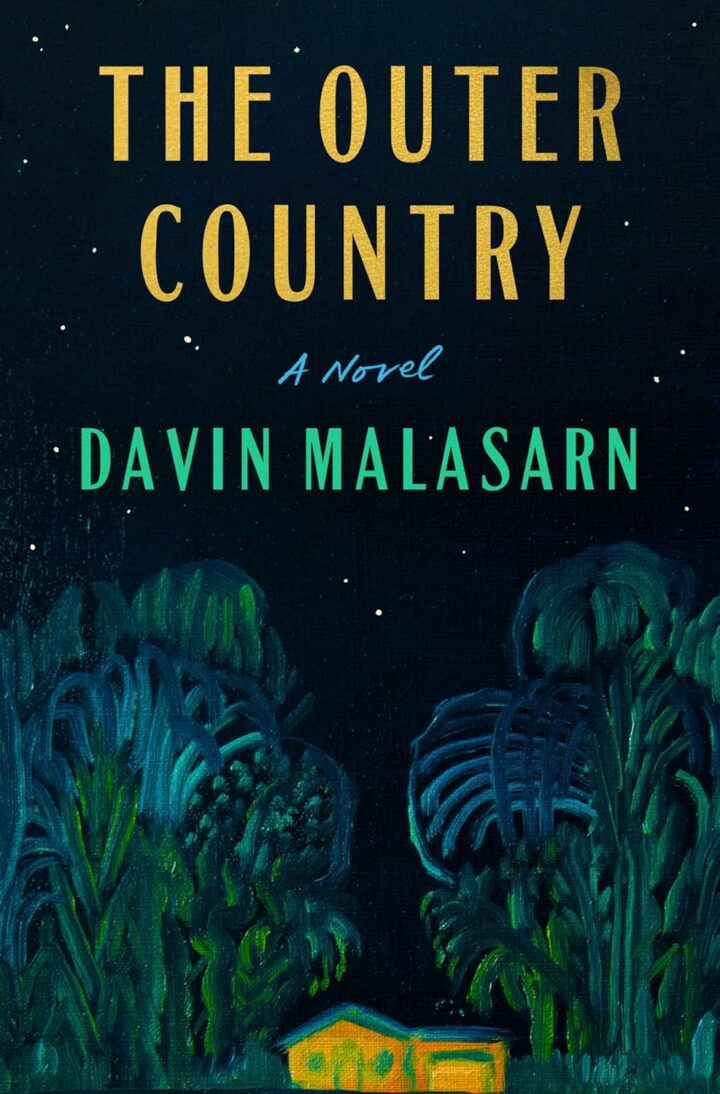
Davin Malasarn has published short stories that have appeared in the Los Angeles Review, Rosebud, Opium Magazine, Smoke Long Quarterly and other journals in print and online. His debut novel, The Outer Country, is just out from One World Random House. Listen in and read along as we discuss the value of a hard deadline and so much more.
Powered by RedCircle
Davin: Thanks a lot for having me, Marion.
Marion: You’re so welcome. My audience is writers, so let’s set this up a bit for them so they can relate to what you’ve built here in this smart, beautifully-written debut novel. Two sisters, one of whom gets sent from Thailand to The Outer Country, or what is known in Thailand as America. The decision of who gets sent sets out some serious sibling rivalry. A birth reunites the sisters, but the child, Ben, must grow into his queerness to be his authentic self. And culture and family and values and secrets all gather as forces on this group.
So how did this fine novel begin, and what was the germ of the idea when you set out to write this?
Davin: Iwas at the MFA writing program in Vermont, in Bennington College at the time, and I needed to… turn something in. And so…
Marion: Yeah.
Davin: So I wrote a short story, and it was about an aunt named Manda and her nephew Ben. It was about their relationship. And she catches him dancing one day with a blanket wrapped around his waist. And she’s worried that he’s going to grow up gay, which, you know, is not something that she wants for him, especially because they’re in this new country where they’re facing so many other challenges.
So she decides to invite a monk over to the house for a secret ceremony that Ben’s mother is not aware of. And she realizes that it’s sort of an exorcism.
The monk is trying to expel this feminine spirit from the boy’s body. So that was what started it. I wrote this very focused short story for my workshop. And afterwards, my advisor said, “There’s so much more going on here, and we want to know about it. We want to know the long-term effects. We want to know the family dynamics. So, what you have on your hands is not a short story, but a novel.” And that’s what I worked on the rest of my time at Bennington.
Marion: I just, I laughed, of course, at the laugh, the rueful laugh of a writer who knows that deadlines are it. Right. And you’re laughing the rueful laughter of a writer who knows the same thing.
It’s remarkable what pressure will do. And fascinating to me that you produced something that somebody else was able to recognize as a story. And I measure story, having to do with is this a short thing, is this a longer thing, in terms of grit. Like, has it got the grit to go the distance?
So, did you agree with that, teacher, when you were first told this had to go the distance, this had to go more, deeper, further? Did you freak out? Did you think, Oh, what a gracious invitation?
Just what was your response to that?
Davin: I’m not the type of person who gets a hundred ideas every day, so… I’m always happy when someone tells me, oh, this needs to be longer, or you need to stick to this project for a while because I don’t have to come up with anything new.
So, I was really happy for that. My mentor was Justin Torres, who wrote We the Animals and Blackouts. And he was just a really wonderful, sensitive reader. And one of the things that prompted him to suggest that this could be a longer piece was that he saw a dynamic between the aunt and her brother-in-law, Cameron, that I didn’t write. I didn’t put it into the story, partly because I was afraid. There was some vulnerable content there that I didn’t want to get into, but he saw it anyway.
He saw the traces of it in the short story. And so when he talked to me about this thing, this element that I had kept hidden, I did see that there was more material there. So I was happy to have the idea and to have a long-term project. And I was a little nervous because I wasn’t sure how much I wanted to reveal.
Marion: It’s a lovely, gracious answer and speaks so beautifully to what it’s like to have someone else whose eyes are on your work, if that person is invested in your success. And frequently, writers will hand their stuff to people who don’t have the goods to give that kind of observation and response, but you did. And I love that. I’m so glad for you that you did. And I think it really does speak to showing it to, especially in the early stages, only to somebody who’s got the, really the talent or the eye or the grit or the, just the determination to, or the commitment to the other person’s work.
Have you frequently shown your work to other people before this? Is that the way you usually operate or was this..do you wait to show it to somebody who’s a professional?
Davin: I’ve really changed over time. You know, I know a lot of early writers, and I think when we’re at the beginning of our writing career, we’re hungry to have anyone offer feedback, right? So when I first started writing, I shared it with many more people. I got feedback. And like you’re saying, not all of that feedback was great, you know?
Some people were really good readers. They were very sensitive and they liked the type of writing that I was going for. Others, either they wanted something completely different or they weren’t engaged or whatever.
So, then you’re confronted with this mix of opinions, right? And you have to kind of sort through them for yourself. The more I write, I think the smaller that circle of trusted readers is, has become for me.
And so now I’m much more thoughtful about when I send it out to people and who I send it out to. And I also think I’m trying to trust myself more and just have the confidence that what I’m writing is okay, that it’s a reflection of me and it doesn’t necessarily need input from 10 different people.
Marion: That’s a gracious answer. And it speaks well to getting the job done because there should be a smaller circle the more you write. It really does get a bit tighter. And then that self-trust, also, we hope, will percolate up. Yeah.
This is your debut novel. It’s epic, crossing cultures and generations, and yet it’s tremendously intimate. It’s told from multiple points of view, and it takes on some of the topics we somehow cannot seem to not wrestle with in this country. Two of those being immigration and queerness.
We seem to just not be able to accept and belong in this country. So set in a family unit, it also takes on the intimate topics of not being good enough, of how the words of others shape us, family ghosts, and the fragile mobile families are, and the lengths we go to to keep them balancing, however badly.
So I was just astonished and very curious about your eye. So, let’s talk about observation. You’re a keen observer of your fellow humans. As an undergraduate and graduate student, you studied biology and biochemistry. And I understand you snuck in some fiction classes, but you still pursued postdoc work in scientific research. And when I read something like that, I always wonder about the eye. And I started to wonder for you about that training.
Early in the book, when there is a lovely setup for the character of Ben as we watch him observing women cooking, while we hear his aunt define him for him, and all the others listen. He’s in first grade at this moment, and you move around the room, letting us hear everyone’s definitions of Ben, and it’s such a skilled family moment.
That thing we do in families, fixing each other almost in amber, fusing our words onto them. And as I read it, I wondered about your powers of observation. So, the obvious question is, is any of this exquisite eye of yours the product of your scientific training?
Davin: I think it has to be. Science was such a big part of my life for many years. And I worked on very small things. I studied bacteria. I studied algae. And so you learn to notice very subtle differences and pay attention to details that maybe aren’t very dramatic.
So, I’m sure that was part of it. I think growing up, I always was a big observer. I felt like I needed to be aware of, you know, how my family was feeling at any given moment that was just sort of a byproduct of how I grew up.
And so, I had a lot of experience just watching people and not necessarily interacting with them but watching them from afar.
And that’s kind of what I bring into my writing.
Marion: You bring it in beautifully. And you’ve chosen to do this at a pretty difficult scale because family stories told from multiple points of view are tremendously difficult, especially if the story is as easy to read as this one is.
I would say the single characteristic one might need is empathy to be able to dolly around from one person to the other person and to get each clearly defined, as well as heard. You do it magnificently. So, what do you think is your strength from which you drew to build and shade these characters?
After that eye, what is it that you think you were able to bring to it to get each of these so specifically well drawn?
Davin: Well, thank you for that.
Marion: You’re welcome.
Davin: I do think sympathy is sort of the key word there. Early on, I had an early draft of this book, and among one of my earliest conversations with the editors at One World, someone asked me who the villain of the story was. And I never thought of the book that way. I never thought of: Here are the good characters, here are the bad characters. I was writing about a family with all of their complexities, and no one was good and no one was bad.
They just all had their history and their flaws. And I think I just see people that way. So, for me, it’s a matter of telling the story without placing judgment on any of the characters, without saying, “Here’s my villain, here’s my hero,” and so I need to point out all the things that are bad about the villain and all the things that are good about the hero, right?
I was just telling the story almost the way a reporter would, or even the way a camera would, without injecting bias into it. And, you know, that’s impossible as a writer, but that’s sort of the mindset that I had as I was working.
Marion: It’s fascinating to me. And you develop these multiple points of view. Did you always, from the start of the book… set out to use multiple points of view, or did that develop over the time it took to write the book?
Davin: My friends and family will tell you that I like complexity. I don’t think of myself that way. I always am trying to distill ideas and tell the story in the cleanest way possible, the leanest way possible.
So this started out — I mentioned it was a short story. The short story was told entirely from the aunt’s point of view. And then when Justin told me to turn this into a book, I wrote the entire book from the aunt’s point of view. Then, you know, it was the next term.
I had a new advisor, Jill McCorkle, and she said, “What you have is good. So just keep playing, just keep experimenting.” And so, then I wrote the entire thing through the mother’s point of view, not with the idea of having them both, but…I thought, well, maybe this becomes a more interesting story from a different perspective. So I wrote beginning, middle, end from the mom’s point of view. And Jill said, “This is actually telling another piece of the story that we don’t get if we’re only seeing it from Manda. So this is great. Consider using both and just keep playing.”
And so then I introduced the Ben character, his perspective. And then eventually I introduced Cameron’s perspective, which was the hardest for me. That was the biggest sort of emotional barrier.
But the book grew and grew in terms of points of view, only because people were telling me that they were getting more information as I was adding the other characters.
Marion: It’s a wonderful thing to be told as a writer, that they’re getting more information. And it’s a wonderful thing to be told to “keep playing.” I just think that we may need to put that on a pillow or a tattoo or something.
Davin: Absolutely, yes.
Marion: But I think I’m going to just write it on a piece of paper and stick it to my wall because it takes a lot of the pressure off. But there is an aspect of play in writing, I think, that people forget about all the time as we take it so seriously. And when we have these conversations, we almost never talk about play. And we should. Because there’s such a process of annotation in writing, of going in and asking yourself, your deepest self, consciously, subconsciously, “What do you got? How do you wanna look at this?” And that’s play, I think.
Davin: It’s so important, yes, absolutely.
Marion: Yeah, it’s lovely. So, my listeners love to hear from successful writers about how they manage their material. What was your method for keeping these voices straight, this story straight? Do you use a chart, a spreadsheet? Are you building a family tree on a dry erase board? Are you utterly digital in your org chart or is it all in your head?
Davin: This actually sort of ties into what you’re saying about play because for a long time, I started this book in 2018. It didn’t come out until 2026, so that’s eight years. I would say for the first two years, I didn’t do any of those other organizational things. I was just writing. And much of the time, in my head, it felt like free writing. It felt like play. I was just kind of getting pieces down onto a document. And sometimes it was digital. Sometimes I was writing in a journal. And then hopefully I would get that over to the digital file, which I didn’t always do. But I dedicate a lot of time to that very loose information gathering and creating. And then, only after I feel like I have something substantial and this could feel like a second or third draft, then I’ll go into the charts and the outlines and all those things. Because at some point, my brain can’t hold the entire book in my head anymore, right? I need to have shorthand ways of looking at the thing as a whole. And so that’s where the other diagrams come into play. But for a lot of the process, it’s very messy and very disorganized. And that’s just kind of how I like to work.
Marion: And are there charts and diagrams? Or do you use flashcards? Or do you use index cards on a cork board? Or what does it look like?
Davin: The main outline form that I use that I really like, it’s a drawing. So I’ll get a journal with a relatively big page. And I sort of, for different sections of the book, I have different shapes in my head. Like if the introduction might look really lean, maybe it’s very focused. So I’ll draw something, you know, narrow. And then maybe, I don’t know, the second chapter is kind of covering a larger area. Maybe it’s covering the journey from Thailand to Los Angeles so that maybe I’ll draw something that looks like dumbbells, you know, something that’s kind of more lateral.
So, it begins to look like this sort of balloon animal or some sort of bulbous sculptural thing. But for me, each of those shapes helps me kind of hold a section of the book in my head clearly.
And then I can look at it as a whole and I can see kind of the flow of how those different shapes are going from beginning to end.
Marion: I love that answer. That answer is so full of self-knowledge. And somebody recently was telling me about platonic solids and the different elements associated with the dodecahedron and the tetrahedron and the octahedron. And I was absolutely mesmerized.
And then I started to realize that as you structure a story or a book, there are these shapes that you can relate to. And if you say this to a new writer, frequently they go, “Yeah,” as though you’re giving them permission to utilize that thing in their head. And if you look at the great John McPhee, who’s been teaching writing at Princeton forever, he’s got these graphs, these drawings he does, and Gay Talese, who’s in his 90s, uses his shirt cardboards, literally the cardboards that come back from his laundered shirts.
Apparently he just gave them, I think he just gave them to the New York Public Library — I’ll have to check my facts — with his papers. These visuals that were provoked to create, I think a lot of people think they’re the only person who does them, but I love them. And I think… You’ve just helped so many people listening. The barbell, you know, going from the small to the big to the bigger to the, yeah, that’s it, right?
Davin: Yeah.
Marion: Yeah, lovely.
Davin: You know, for me, it was, I was doing it in my head already. I just didn’t really acknowledge it, right? And so it was only when I was trying to wrangle this thing and I was trying to figure out the easiest way to do it that that process kind of came about.
Marion: I completely get it. I totally understand.
So, you write short stories, flash fiction, and short pieces of memoir. Let’s talk about writing around the genres. First, I want to know about how one informs another. Did you write short and then learn to write long? Did you find that even a short piece of memoir somehow can inform a piece of fiction? What about writing around in these forms? Do they work together for you and inform one another?
Davin: I think all writing that I do informs the other writing I do. I actually sort of started backwards. As a kid and as a young adult, I was always very inappropriately ambitious.
Marion: It’s a lovely title, “inappropriately ambitious.” I think I like it a lot. That’s great.
Davin: But, you know, one of the first things I wrote was a novel. And I just said, I’m going to keep writing this story until I have 100 pages, because that’s what I wanted to do. So, my earliest creative writing consists of long projects that weren’t good, but I do think they were helpful to me. And then only as I was starting to learn the craft and trying to control things, did I realize, Oh, if I write something shorter, I actually have a chance of looking at every sentence and making sure that things flow and they make sense.
So I jumped to the short form as a way of improving my craft and having more control. Always with the idea, I think that novels are the thing I love most. So I definitely appreciate flash and short stories, and I love reading it. And every once in a while, I get that hankering to write it. But most of the time, I think I’m working on the novels because they’re the most fun for me. And they definitely inform one another. I’m not sure exactly how, but I think just the exercise of compression, expansion, knowing when you can get away with being incomplete, like you might do for flash fiction or short story, knowing when you can kind of make a little leap in logic, those are things that carry over for me from one form to another.
Marion: Yeah, I agree with you that writing begets writing. And early in my career, I was told you pick one genre and you stick to it. I think that that memo got burned about 20 years ago. And I’m really glad because I love to talk to writers who boldly go from one to the other and are informed by each. But you’ve got to find your training and then you’ve got to practice your work all the time and bring something to it. So let’s talk a little bit more about training to be a writer in today’s market.
After your scientific training that you mentioned and we discussed earlier, you went back to school and earned an MFA from Bennington College, as you told us about, and completed the book development program and earned the status as a PEN America Emerging Voices Fellow, a Plimpton Writing Downtown Fellow, and a Bennington Alumni Fellow.
So what advice do you have for those aspiring young writers in terms of training?
Davin: I think everyone learns differently. And I really enjoy the classroom experience. I didn’t enjoy high school and junior high, but as soon as I went to college and I had a lot more control over which classes I was able to take. And honestly, as soon as the classes kind of got hard enough to be interesting, I had a lot more fun. So, I really like taking classes and I learn a lot by doing that. I also, when I was at Bennington, one of their approaches is they say, “Read 100 books, write one,” right?
So that’s sort of the encapsulation of the program. And so that was the first time I really read very widely.
And that was very helpful to me. One of the things that has been surprisingly beneficial that I really never articulated it until the last year or so, is reading two books at the same time or more. Because for me, you know, so even on a single… night, I might read 10 pages of one book and then jump over to another book. My brain is comparing everything that I’ve read and I’m learning so much by that comparison that it’s incredibly helpful to me. So, I guess all that is to say, I think we as learners need to be aware of the mode that works best for us.
And if it’s the classroom, then take classes. And if it’s not, then don’t force yourself to do that.
You know, find whatever mode works for you.
Marion: I love also the line about “waiting ‘til things got interesting enough to pay attention” in school. You did say that, basically. I think that it’s absolutely true for writers that we can be interested in some things and not interested in others and hyper interested in some things. And take a little bit from our science and take a little bit from this. But, you know, when things get interesting, we’re all in, right? And it’s just being a little bit forgiving in all of that of our education and being appreciative of it is a skill unto itself.
But I just love that, that things just weren’t interesting enough until they were. That’s very nice.
So, in 2020, you co-founded the Granum Foundation, a nonprofit whose mission is to “identify and invest in the next generation of path-breaking writers and artists.”
You support writers who are ready to finish and launch major literary projects. So how did this come about, please, and how’s it doing?
Davin: This actually, I started this with my partner, and we’ve been together for a long time now. And it was one of the first things that we discussed when we first met each other. We were you know, finding things in common. And somewhere along the lines, I would say within the first year of knowing each other, we said, how great would it be if we could start some sort of organization that just supports writers and artists? And we came up with a name then too, the Granum Foundation, and then nothing happened for a very long time.
The pandemic hit and we just had more time to reflect. And I realized that, you know, I was supporting various organizations And if I sort of focused my resources, I could do this thing. I could make this happen.
And so, during the pandemic, we started this nonprofit and the first round of applications came in in 2021. And it’s just, it’s been a wonderful experience because somehow, you know, we’re attracting really talented writers, a lot of them, and we can’t, Unfortunately, we can’t recognize them all. But we are getting to discover so many new voices and we’re getting to recognize some of those voices. And so it’s going really well. And I feel like we’re making friends and I feel like we’re building community. And so this is our fifth year. And yeah, it’s strong and it’s going well.
Marion: Well, I’ll certainly put a link in the transcript to the foundation. And do you give… support in various ways? One kind of support? Just expand a little bit about what you mean by support.
Davin: The main prize is a $5,000 grant to a writer who’s either doing fiction, non-fiction, poetry, or some hybrid form within there. We also recognize a handful of finalists that get some money, and then, you know, along the way to identifying who those winners are, we have a shortlist and a longlist. And I only say that because we’ve heard from a handful of people now that just being on one of those lists has helped them get attention from agents and things like that. So, I think even maybe the shortlist is a more appropriate one, but I think even just being on the shortlist has been helpful for people.
Marion: Of course.
Davin: We also do a translation prize because we really want to support international work.
And there’s so much good work happening there. Other than that, so outside of those prizes, we’re just trying our best to keep track of the writers that we’ve recognized and we’re trying to promote their work. I have a podcast that I do very occasionally, but a lot of times I’m interviewing people that were associated with Granum and just came out with books. So I just want to, you know, get the word out for them as well.
Marion: Of course you do. It’s a wonderful thing that you’ve done. And I can’t wait to promote it as well. And so, as we wrap this up, I simply cannot let you go without asking about your Instagram handle, writinganddonuts. Specifically writing underscore and underscore donuts. Okay, explain.
Davin: It really was just, you know, I wasn’t taking it very seriously. And I was thinking, Well, what do I like? I like writing. I like donuts. And so, I put those together thinking that no one would ever pay attention to my account in the first place. And then somewhere along the line, you know, years later, I decided, well, I can start promoting books by pairing them with donuts. And so, the vision became a little more clear. And so now occasionally I’ll do those pairings that are a lot of fun for me. And hopefully, you know, people get a kick out of it.
Marion: We do. Thank you, David. It’s been a joy speaking with you. The book is The Outer Country. It’s beautiful. And I’m just delighted to learn about the writing and donuts. I’m delighted to learn about the Granum Foundation and about your process. Thank you so much. And come back again the next time you publish, please. All right. Thanks a lot.
Davin: You’re welcome.
Marion: The author is Davin Malasarn. See more on him at davin malasarn com. The book is The Outer Country, just out from One World Random House. Get it wherever books are sold. I’m Marion Roach Smith, and you’ve been listening to Qwerty. Qwerty is produced by Overit Studios in Albany, New York. Reach them at overit studios dot com. Our producer is Jacqueline Mignot. Our assistant is Lorna Bailey. Want more on the art and work of writing? Visit marion roach dot com, the home of The Memoir Project, where writers get their needs met through online classes and how to write memoir.
More and thanks for listening. Don’t forget to follow Qwerty wherever you get your podcasts and listen to it wherever you go. And if you like what you hear, please leave us a review. It helps others to find their way to their writing lives.