

How to Investigate and Write About a Family Suicide, with Author Hilary Plattner
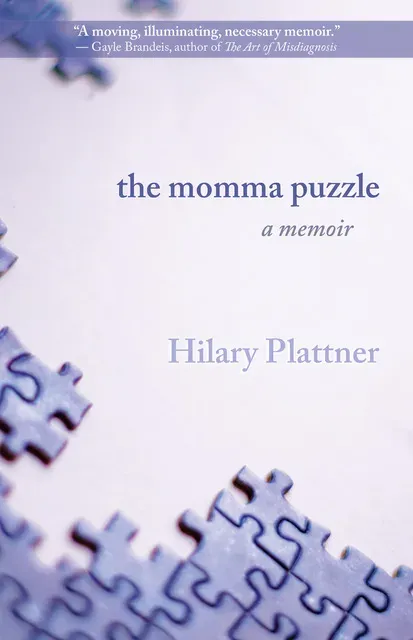
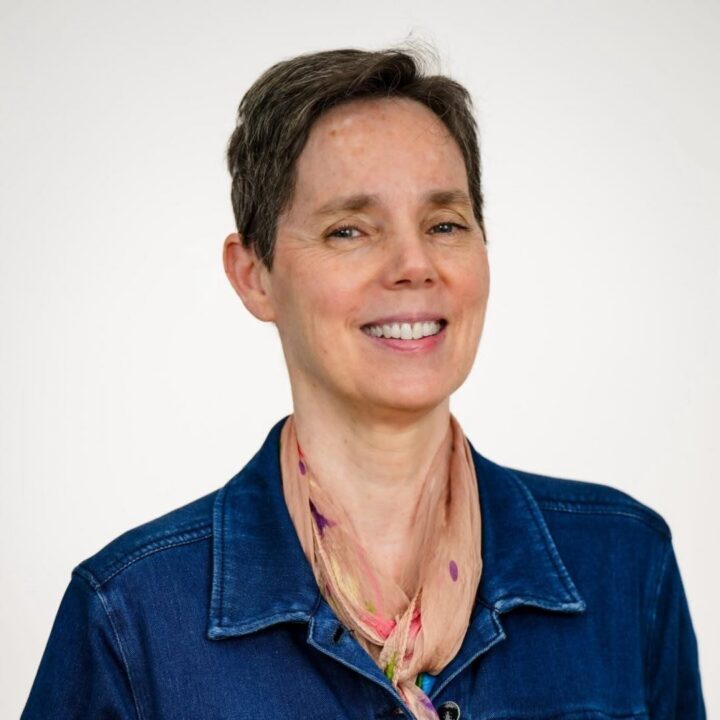
HILARY PLATTNER IS A WRITER of fiction, nonfiction, and poetry. Her debut memoir, The Momma Puzzle, was shortlisted for the Santa Fe Writers Project Literary Awards and named a finalist for the Wandering Angus and Trail to Table Book Awards. She holds an MFA in fiction writing from Columbia University and is taught writing at the New School. Previously, she founded and directed Brooklyn Writers, a community-based writing program. Her writing has been published in numerous literary journals, including Allegro, Cider Press Review, Fence, GSU Review, and The Ledge. Listen in and read along as we discuss how to investigate and write about a family suicide.
Powered by RedCircle
Marion: I’m delighted to welcome you here, Hilary. How are you?
Hilary: Doing very well, Marion. Thank you. So glad to be here, too.
Marion: Well, it’s wonderful that you’re here. And you’ve written a memoir that reads like an adventure tale as you go hand over hand or step over step. And we go with you through a mystery you want to solve. And that mystery is your mother’s suicide. And the adventure, if you will, is your obsession with that.
So let me set this up for the listeners. Your mother had worked in Saigon in the 1950s as a secretary for the Foreign Service. In February 1968, you were six years old and the Vietnam War was at its height. That year, your mother dies by suicide, leaving her young children behind. You are six years old. For years, you study the items she left behind, including her psychiatric records, letters, photographs, and some personal papers. So let’s talk about how you were living and how you were affected by her death before you started investigating this story. I want to dive into what happens to us when we write.
So give us a sense of who you were before you were a writer living with this story?
Hilary: Well, I guess it depends how far back you want to go. Like, as a child, right after it happened, I mean, I was six years old, so I was with my family, my father and the rest of my family, and, you know, we were just in the midst of recovering from what happened and going on with our lives. So… How I started to become a writer, I think it was partly my father noticing and helping me become that person. I always had questions about what happened, but we were a middle-class family in a college town. My dad was a university professor. He’s since passed away. And I think it was just my natural development. I had questions and questions. There was a lot of not talking about what happened though, because I think, especially in that time period, it’s become slightly less so now, but suicide is really taboo topic. I mean, I write about this in the book that I was sent back to school immediately the next day. Like her suicide happened on a Sunday night and I went to school the next morning. And that was my family. trying to protect me, do the best that they could to protect me from what they feared was coming at me, was going to come at me.
My dad always tried to answer the questions that I had, even though it might have caused him, you know, great grief still to talk about things, but he always tried to be open and talk when I had questions.
And then I was always a huge reader. I mean, my mother had been a huge reader. I write about that in the book too. And I think I started keeping a journal at some point. And whenever I had writing to do, he always really encouraged me, my dad. I mean, I have to say, I suspect that he really wanted to be a writer. And he became the person who made a living and took care of the family. So when I took on that role of being the person who looked like they were gonna be a writer, he was all in, you know?
So then I went to college and I think I tried to be a writer in college, but I didn’t really get a lot of encouragement. I was always, I think because of what happened to my mom, really struggling with figuring out where do I fit in?
Like, who am I in the world? I think that’s something your mother does, is help you notice who you are. And I had my dad being the best mom for me too, that he could. There were flaws, but he was like really trying. After college, I still didn’t know what I wanted to be. I think I knew that I wanted to write, but I didn’t have the confidence. And I was also trying to figure out a job. Like, well, how am I gonna do something that makes money too?
I came across this organization by chance called Amherst Writers and Artists. And they’re very supportive of figuring out how to be a writer. And so I started to work through there and use their method. And that helped me a lot. And I taught using that method for a number of years.
Marion: Oh, that’s lovely. I think support is a really good and interesting piece that you’ve just mentioned there. We have to have some support, whether it be in community with other writers or an organization, but it started with your dad, it sounded like. And you must have had some real sense of ownership of that because this is a tough book to write and you set it up really well. Book setups are essential to the success of the book, essential for the understanding of the reader and a very difficult assignment for the writer, but you achieve yours marvelously, including in the first five pages, two sentences that set up for me, what it is I was going to read.
First, you write that, quote, “a man or woman with no children who dies by suicide is judged as merely sad, depressed, misunderstood, or even pathetic. But a mother who kills herself has committed a heinous crime, has turned herself into a monster.” And it’s an extraordinary series of sentences that I said to myself, Wow, I have that bias. I don’t think I could have articulated it without reading your piece. And I thought, wow, yes, I think I think that. And so we feel deeply what’s at stake. And I think that’s essential to us. The way you set up the book allows us to understand what you’re going to investigate. And a few pages later, you write, quote, “I don’t want to accept that my mother was a monster.”
And we see ourselves as being part of — as I said before — an adventure, but an inquiry. And after that sentence, the reader feels that deep assurance that this investigation might unearth our biases and change what we think. So talk to me about using that word monster.
It’s a tough one. It’s a really tough one. But you throw it down there and you show us what we’re going to circumnavigate in this book.
Hilary: Yeah. All I can say, I could probably say a lot of things, is that I work very intuitively. And that’s why the pandemic actually helped me a lot. My husband and I used to joke when we would watch “Star Trek, The Next Generation” together, that I was the character of the empath on the show. And he is like that too, you know? So when the world shut down in the pandemic and it became very quiet, that’s when I could go back to trying to write this book that I had been trying to write in graduate school.
And I was not able to figure out how to do it then. And I had set it aside and done a lot of other things, including go out and live my life in a way that I could still need to step back from what had happened to me and have perspective on it.
And then when the pandemic happened, I started feeling like what is still left in my life that I need to take care of it now in case this is all over soon. You know, I just started to put my house in order. Not like I obsess about dying at all. You know, I’m in the middle of having a big love affair with life, all the time as much as I can to counter what happened. So how did I come up with the word “monster?” I really try to set up a writing method where I work regularly every day, five days a week at a regular time in a regular way so I can clear aside all outside distractions and start to listen very deeply to myself when I am in that writing mode.
And I just try to listen to the voice in my head and those thoughts and get them down. So I don’t know how I came up with that word, but I think I was just picking up all my life that that is some of the unspoken attitude that’s out there and what made it so hard for me to ever talk or write about what happened. And one thing I was thinking getting ready for this podcast, too, Because I may have become good at expressing some of these difficult-to-express things in writing.
I, like, really honed my skills as a writer. But I’m still working on how to talk about it, you know? Like, I don’t have a lot of practice trying to put these things into words yet, although I would like to be able to.
Marion: Yeah. That’s a lovely distinction. I really like that. Because later on in that first chapter, as you set up this book, you write this wonderful sentence that, quote, And I was struck by the difference because you had said in the book also, you talk about how hard it is to articulate things. when people ask, we all have mother stories as you write, and, you know, people ask, “Oh, who was your mother? Or how did your mother die? Or is your mother still alive?” It’s very hard to articulate your version of this.
And yet, in the writing, you’ve been able to do so beautifully. So what is that special ability about writing, do you think, that allows us to get in there? The pandemic gave you access to it, but what was the writing for you that allowed you to get on this story finally and get it done?
Hilary: That’s such a great question. I think it’s one thing that makes me love reading. I think writing and reading, they just activate, for me at least, certain centers of my brain, which are connected to my humanity, which is what gives meaning to my life, is to be able to imagine things through somebody else’s point of view. And I think that’s what I was trying to do when I was writing. And when it works, it’s working. I’m not saying that it’s working at every minute in the book, but I’m trying to show you what it was like to be me at the same time at various ages, you know, because I’m skipping around in time too, letting the reader know they do not have to take care of me.
Like I am not still back in that place where I was, that I managed to survive and And I guess it was a question I kept asking myself too as I had to go back and relive and revisit this difficult material is, how did I survive? And sometimes I don’t know. I know that it was hard, but I think at this point I have come up with a long list of things that did help me, including my dad and many other things that I could say.
That special ability that the writing Has to make people come back to life. I don’t know if I could put it any more clearly into words, but I know it’s what I love about reading. That allows me to enter what other people’s worlds and experiences were like.
Marion: Well, you certainly do that here. Let us enter it and see, especially being so young when she died by suicide, and that perspective, we feel that we enter the. but we also enter the world of your father trying to make things better. And we’re very solidly in that room with you. Whenever I have a memoir writer on, I always ask them the same question, which is, what are we asking a memoir writer to do when we ask them to go back into trauma? Are we asking them to relive it? Are we asking them to reanimate it for our benefit? Or are we asking them to sort of stand coolly back from here and report on it? What do you think we’re asking them Or even what do you think you were doing? Were you reanimating, reliving, or reporting?
Hilary: A mix of all three. And I don’t know if I can separate them all.
Marion: And it is such a good question.
Hilary: It is the being able to stand back coolly. But if you stand too far back coolly, then the reader doesn’t feel it with you.
Marion: Right.
Hilary: And when I showed a finished draft to somebody who… was one of my first readers. That’s one thing they said to me is, and it was a revelation to me, is you have to go in and put more feeling into it. I thought my job was to protect people from that. And so then I had to deliberately, and it was really awkward and hard for me, to go back and just write in simple terms like, I cried or… I felt sad and I just tried to keep it simple.
You know, I didn’t want to overwhelm the readers, but yeah, I had to add it back in like a second draft.
Marion: Yeah, I suspect so. And I think that’s so helpful to people that we do try to protect people. And that’s maybe not what the reader came here to do is to be protected. They came here hoping that you’ll blow up their biases or that you’ll support them in their own recovery from suicide or, you whatever. And it’s a fascinating dilemma, right? What’s our responsibility to the topic? You’ve written on a topic that all of publishing is scared to handle. Absolutely. It’s a spoken and unspoken rule that publishing does not want to deal with books in which a child dies or in which there is a suicide.
And of course, there are magnificent exceptions in both of those categories. And yet the 2025 data is not yet available. But There were 48,000 suicides in America in 2024.
And while the CDC website doesn’t list it as a crisis, it lists suicide as a major public health concern. So what do you plan to say to people as you publicize this book and they contact you and they want to write about the suicide in their family? Would you say, do it because we need to get this topic out there? Would you say, be prepared for some pushback? Would you say both of those things? I handle this topic all the time with memoir writers that I deal with.
And always they say, but I’ve been told I can never publish this. And I always say, “No, no, there are magnificent exceptions to that rule.” What do you say to people?
Hilary: There are so many things I could say. I mean, you know, what I just said already is that I’m not very good yet at talking about it. I am wanting to learn how to. It was partly what led me to want to write the book is just as I was fighting back against this feeling that both that I had loved my mom, I love my mom, and I felt like she deserved to have her story told, that the story that got told about her happened after she died and it was basically all bad and she disappeared.
I wanted to take that back for myself and for her. And then at the same time, I just, because there was so much repression around it, I really sensed like that there is a story here to tell.
There is a good story. You know, it’s like when you’re told, don’t go there, you want to go there. You know, there’s something there. Absolutely. I, you know, started Googling and that similar statistic. I’m really bad at remembering numbers, but that 2,000 people a day die globally from suicide, or roughly one person every 40 to 43 seconds. So I’m not a math person at all, but the image I say, and I don’t want to gross people out, but that in the time that we are sitting here talking, the room that you are in will fill up with bodies of people who died by suicide. And yet it’s a problem we don’t see at all, don’t talk about.
It’s kept I think kind of deliberately, not by any person in particular, you know, but by the way the system operates that we can’t see the extent of the problem. So I didn’t have that in mind as I set out to write. I was just like, I have to get this book written before I die.
Marion: I’m so glad. I’m so glad you did. I really am. I’ve experienced suicide in my own, my best friend killed herself years ago. And it’s not rare, as you just said, that extraordinary idea that in the time we’re talking on this podcast, the room will fill up with bodies. I think we’ll stay with everybody. And I think that your ability to have a look is what will be so appreciated by the people Reading this book because this book depends on documents, letters, psychiatric records, photos and more.
And I teach memoir, and every day someone comes to me wanting to publish family letters or use documents in a memoir. There are particular problems, as well as promises amid those documents. The promise is revelation, but the problems, of course, are context.
And you’ve got to select and curate from those documents so we can relate to them. So just take me back to that initial time when you decided to write, help those writers listening. What was the initial sense when you really understood the size of the documentation that you had? Was it overwhelm? Was it indecision? Was it initial determination when first confronting the material left behind?
Hilary: It was so many things. I think “determination” is a good word. I’ve been starting to be asked to answer interviews. And that’s something that I can do a little bit more easily than talking because I’m a writer, you know? So I’ve been answering interview questions and a lot about what’s your writing process. And I realized there were a number of things that kept me going. And one thing is that it’s not about how I organize the documents, but it’s how I would get started writing and how I approach my work.
I felt that I was just writing this for myself. Just write it for myself. Don’t look up and get self-conscious. So I kept a list of writing reminders as I went.
Like, just get one tiny thing done on this every day. And it’s okay to write it for myself.
Marion: Nice.
Hilary: And there was one other really fun one that I have shared with other writers that they always find is helpful. This comes from a New York Times article from somebody who was a wedding planner. And it just happened to connect and resonate with me. And it was when picking out your wedding dress, they always helped their clients by saying, “We’re going to just keep the energy around the dress light.” So then I would sit down to write. I’ll be all worried about all these things and bringing all this stuff to the table.
And I would look at my list of reminders. And every day, like one thing might resonate with me or not. But that idea was really helpful to me that I would sit down and like, Oh, just keep the energy around this project light.
And then I could think instead of getting all tense about I have to write this important book. How am I going to do it? And I have no idea what I’m doing.
Marion: And then I would trust myself. That’s wonderful. I love that. Let’s keep the energy around this light. That’s a beautiful one. And you had this ritual you did with your pictures. You call them your picture guides, and you take them out and line them up on the top shelf of your desk behind your lamp. So what’s happening when you do that? It sounded to me in the description in the book like a ritual. It’s obviously a provocation. But I just love the idea of taking them out and lining them up. So talk to the people listening about that kind of a ritual.
Hilary: Well, I didn’t deliberately design it as a ritual. And it’s interesting that you would say a provocation, because if that’s what it is, I was unaware of that. But, you know, things can start to have meanings that you didn’t realize you were bringing to the table. But I think I was just trying to take a break from the intensity of it and step back for a minute. And again, it just came to me what to do. And I also, because it was difficult, it was a struggle to figure out how to put all the material together and even to figure out what I wanted to say about it.
But I remember that another author, I think it was Isabel Allende, a long time ago I read that when she was writing about something difficult, and I’m sorry, I’m not going to remember this right, but I think it was the death of her daughter or something, that she would light a candle to help her and commune with the spirit of her daughter.
And I think that’s where I came up with the idea of asking these people in my life who weren’t here anymore to help me get their story told.
Marion: I love it. I think it’s beautiful. And I think that the request… the reaching out to those people who are not here anymore is a terrific idea for a writer. We’re annotating from within and we need help. And the acknowledgement of that is what it felt like to me. It’s lovely. So as we start to wrap this up, you published this fine book with Apprentice House Press and appropriately named Apprentice House as the nation’s first entirely student-managed book publisher. It’s housed at Loyola University, Maryland. And at this press, the students are responsible for every aspect of the publishing process from acquisitions to design and publications of the book.
So my question, of course, is I love hearing about new presses. I love hearing about presses that are not your usual big four, you know, New York City.
So talk to me about finding and working with Apprentice House Press, please.
Hilary: Well, I just feel like I was so lucky to find them. I submitted this book to 77 places. And I just kept being told, if I got an answer at all, you know, we can’t sell this. As you said, that’s what people writing about suicide run up against. All the time. Then somehow that just made me determined with some encouragement from friends, you know, not to give up. Because I was also really aware that there are not that many books out there that have been written about suicide.
And… friends who were encouraging me were saying, the book is really good. And so then just out of the blue, when I was about ready to give up, you know, that kind of hopeful story, I get an email from Apprentice House, is your book still available?
And so I was like, yes, it is.
It was completely a pleasure and not your typical publishing process, which I don’t know about, you know, because this is my first book that’s coming out. But it’s a little bit like being in graduate school again or being back in college again. The wonderful thing is everybody that I met is doing what they’re doing because they love it. You know, it’s not just their day job. And also, I think the students who read my book and accepted it were more adventurous, you know, like not worried just about how are we going to sell this?
So everybody I’ve met there has been really wonderful. But it’s more work, I think, than maybe your typical publishing process because you’re doing the work along with them.
And it’s, like I was saying, a little bit like being back in a college class because they accept a whole cohort of about 20 authors at once, which is amazing that they publish that many people at once. At once. So we met each other, you know, once or twice in a meeting on Zoom. So we’re all going through this together, not just you and your book, but this group of friends that you make who are being published together. Oh, I love that. We set up a Facebook group together and we are communicating with questions like, what’s happening with your book now?
And I couldn’t figure out how to make this work. And Just like in college, you know, where you have people to ask you to help with things. But then it’s also a lot of work because you get assigned an editor and they do some editing on it.
And then you have to go in and mostly do it yourself again. It sounds wonderful.
Marion: It’s interesting. I love this idea. It’s really interesting. Yeah. Well, that’s great. Well, the book is beautiful. And I’m so delighted to know more about Apprentice House Press. And I wish you all the best with the book. It’s brave and interesting. It’s a great inquiry. And you fulfill the promise of the book. We’d certainly come out having a very different feeling about life and choices and family and the whole idea of taking one’s own life. And I really applaud that accomplishment. So thank you so much for coming along today.
Thank you for writing the book. And thank you for talking to me today, Hilary. Thank you.
Hilary: Thank you so much, Marion, for having me. You’re so welcome.
Marion: The author is Hilary Plattner. See more on her at HilaryPlattner.com. The book is The Momma Puzzle, just out from Apprentice House Press. Get it wherever books are sold and see the press at Apprentice House dot com. I’m Marion Roach Smith, and you’ve been listening to Qwerty. Qwerty is produced by Overit Studios in Albany, New York. Reach them at Overit Studios dot com. Our producer is Jacquelin Mignot. Our assistant is Lorna Bailey. Want more on the art and work of writing? Visit marion roach dot com, the home of The Memoir Project, where writers get their needs met through online classes in how to write memoir. And thanks for listening. Don’t forget to follow Qwerty wherever you get your podcasts and listen to it wherever you go. And if you like what you hear, please leave us a review. It helps others to find their way to their writing lives.
Want more help? Join me in live, online memoir classes
Start here, with The Memoir Project System Page, to understand the breadth of all the classes we teach.
Want to jump right in? Here’s a sampling of our classes.
Memoirama: Live, 90 minutes. Everything you need to write what you know.
Memoirama 2. Live, two hours. Limited to seven writers. What you need to know to structure a book.
How to Write Opinion Pieces: Op-eds, Radio Essays and Digital Commentary: Live, 90 minutes. Get your voice out into the world.
And keep in mind that we are now registering names for the next Master Class, the prerequisites for which are Memoirama and Memoirama 2. Live, once a month. Limited to six writers. Get a first draft of your memoir finished in six months.
This was a good interview about such a difficult topic. I especially appreciated Hilary Plattner’s wise and liberating ideas for writers. Thank you.
Dear Mary,
Welcome to the Memoir Project.
Many thanks for the note.
I am delighted you enjoyed that interview. I think she did a great job.
Please come back for more.
And write well.
Best,
Marion