

How to Write the Hard Stuff, with Author Nicole Walker
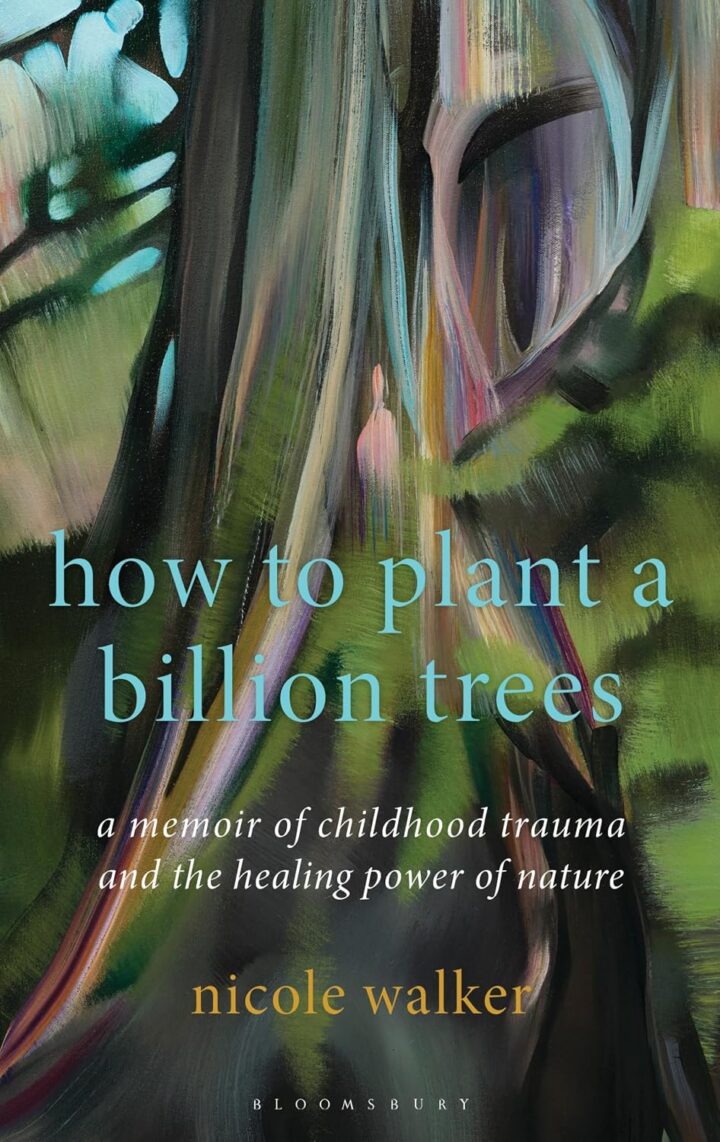
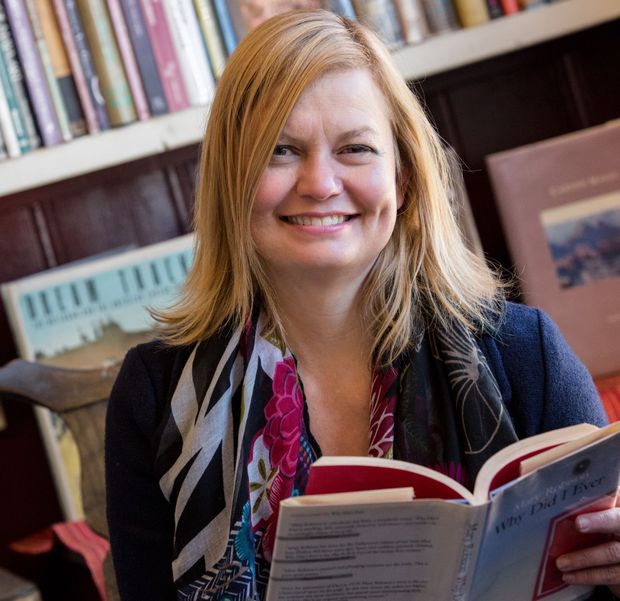
NICOLE WALKER IS THE AUTHOR of several books, including Processed Meats: Essays on Food, Flesh, and Navigating Disaster, and The Afternormal, Brief Alphabetical Essays on a Changing Planet. She edits the Crux series at the University of Georgia Press, is the nonfiction editor at the Journal Diagram, and teaches creative writing at Northern Arizona University. Her new books are How to Plant a Billion Trees: A Memoir of Childhood Trauma and the Healing Power of Nature and Writing the Hard Stuff: Turning Difficult Subjects in to Meaningful Prose both, just out from Bloomsbury. Listen in as we discuss how to write the hard stuff, and so much more.
Powered by RedCircle
Welcome, Nicole.
Nicole: Thank you so much for having me, Marion. I’m grateful to be here.
Marion: Well, it’s a joy to have you here. Your work is remarkable and I’m a huge, huge fan. I may just pin it to my shirt and wear it all over town of writing the hard stuff. I just think that you just, first of all, the title is so right. And I’m a fan because in no small part, you have the best and most definitive instruction there on how to write the braided essay, on how metaphor illuminates voice and how in writing the hard stuff we get perspective on, or as you write so well, learn the difference between disassociation and distance.
And I just think that you took on the best topic there is: writing the hard stuff. And I particularly fell into that last one, that idea of disassociation and distance. And I want to just jump right in and talk about that because you write about putting yourself as narrator on the page and how you must do so if you’re going to affect the reader The way you were affected by something.
So you’re a writing teacher. Give us a little more on that one, please, so we can understand you and your voice a bit.
Nicole: Absolutely. So one of the things that I really appreciate about what’s happening in my book life right now is I have this book, How to Plant a Billion Trees, which is about my own experience. sexual abuse as a child and subsequent healing from that. But as I was writing that book, I was also writing the book, Writing the Hard Stuff, which goes through some of those same issues, but it talks about how I actually was able to write this hard story, make it into a book that was, I thought, accessible, and it didn’t traumatize me, nor I hope does it traumatize the reader.
And I think that happens through some of those craft techniques I’m talking about in writing the hard stuff. So in dissociation versus distance, I talk about how one can write from a separated point of view, can separate their bodily experience from So, for example, I’ve been working with students lately and having them do a writing exercise where they write a really embodied first paragraph of something that happened to them.
It doesn’t even need to be traumatic. I mean, sometimes, you know, there’s something that is, you know, really giving you a lot of tension and you do want to write about that hard thing. And often I feel like we remember things particularly because they were difficult and because they did cause a bit of trauma. And so often our memories, I think, do circle around difficult subjects. So I have them embody their experience. You know, tell me where you were, you know, sitting under a tree, you know, and let’s be goofy here and say, you know, “You were stung by a bee.”
This is your mini trauma story. What then I ask them to do, and, you know, flesh that out, literally flesh, you know, put all the five senses into the scene. And then in the second paragraph, I say, okay, now what I want you to do is change your point of view. Write that same scene from the third person. You can even speculate a bit about what the person thinks You could speculate about what’s going on further around them besides the bee and the tree.
And this activity, right, this shifting from first person to third person, people find just fascinating. enlightening. It’s an epiphany for them because they see themselves as a different body. And they also can then move that body. It gives them a different kind of agency. And they have two kinds then, right? They have their first person agency, which is the one that says, “this is my story.” But then in the third person, they have the agency to say, “this is what it means to have a body in this place.”
So that’s just one exercise that I’ve really, you know, I’ve been using a lot lately and use myself in writing How to Plant a Billion Trees.
Marion: It’s a great answer. And speaking of different bodies, you teach creative writing at Northern Arizona University and serve as writer-in-residence for the Center for Ecosystem Science and Society. So chicken and egg this for us for a bit. Writer first and foremost, informed environmentalist first and foremost, two inextricable things. How would you pitch yourself to yourself?
Nicole: Hence the braided essay. This is, you know, because they are… really are inextricable in a lot of ways. My teaching informs my writing so much that I, you know, give myself tools when I’m considering, you know, what lesson plans to teach that particular day. I’m like, oh, this might serve, something I’ve learned from a text that I’m teaching and want to share with my students. It becomes part of me. I also share with my students quite a bit of my writing experience and a lot, a lot, a lot of my editorial experience because, you know, as the series editor for Crux, we’re really looking for memoir that has an angle, that has a perspective.
We don’t really look for the memoir that tells us just the central story, which I appreciate and does, you know, exist and is such a beautiful way to write memoir in so many venues.
But for Crux, just the name of the series itself, right, getting to the heart of the matter, that we really are looking for a story that’s centered around a larger, broader cultural concept. And so I tell this to my students too. Again, the braided essay works with this. So, you know, in the short version of the braided essay, I have students write for two minutes a personal story. You know, again, we can go back to the bee in the tree. But in this case, as opposed to going to the third person, in the braid, you would maybe jump to the history of apiary or the connection between dandelions and bees, right?
You just do some serious research-based writing. And then you go back quickly back to writing the personal story. And then again, back to the story of the research about the bee. And what happens in that going back and forth is really this cool energy that happens between the two stories.
And you find that you’re using similar imagery and you’re using similar word choices. And you’re seeing at the end, often, of a really successful graded essay. Not only how does the bee inform the personal story and the personal story inform the bee, but also how am I like a bee and how is a bee like me? It becomes this really great way of connecting, I think, to the world. And it’s thanks to my work at the Center for Ecosystem Science and Society that I get to have a front row seat to some of the most cutting-edge research on climate science.
And so, I’m learning distressingly about what happens after permafrost melts. I learned a lot about Antarctic ice sheets melting. But I also learned about the incredible work researchers are doing to amend our atmosphere. They’re not only looking for ways to find microorganisms that absorb more carbon dioxide, but they also look to new technologies for renewable resources for energy so we don’t rely on fossil fuels as much.
It is distressing sometimes to see how many horrible things might happen if we don’t stave off climate change. But it’s also so heartening to see how many people are working to help us fix this problem.
Marion: It is. And it’s a remarkable thing that you bring to the work. It gives you a great voice for memoir. And not to go all MFA talk on either one of us, but I think your strength comes from the ability to hold tight to the tension between that dissociation that we talked about and authority. And I had not really thought about how one creates the other until I read Writing the Hard Stuff. So let’s dig into that idea of authority. and then we’re going to turn our attention to your most recent book.
In memoir, we simply must connect our interior selves to the exterior world. In short, the story cannot be about us. It has to be an illustration of something universal. So talk to those listening as a teacher, as somebody part of this conversation, about your ideas on how to hold our attention with your authority without being authoritative. I have never read you lecture or hector, but you command our attention with your authority. What advice do you have on that?
Nicole: Thank you so much for saying that I do command authority. I think one of the ways to command authority is to give it up a little bit.
Marion: I really, really like that. Can we get that on a t-shirt?
Nicole: It’s been instructive being a teacher for this many years and also knowing that trying to talk down to people or trying to tell people exactly what to do is the best way to turn them off. And so a lot of what I do, even in both books that are serious subjects, I tease myself. I let myself be a little bit goofy. I riff a little bit to the side about some goofy story that happened to me in the recent past. And then I think one way, too, though, that I gain some authority is being attentive to the world around us, that exteriority that you’re talking about, the research and the people around me too that are informing my experience and have been central to building me up from some of the most devastating experiences.
And so, you know, one thing I believe deeply about subject matter and voice is that they are inextricably linked, that you are connected. your subject. And that subject should be as vast as you can make it. There’s so many ways that we see ourselves in the world, part of the world, reflected in the world. Also, small, little, tiny bits of the world. We’re not, you know, the planet itself. We are small, interoperative parts of that planet. And recognizing that, I think, also lets the world itself have a little bit more authority, so you can step back and say, look at this magnificent place we live. How does it sing to us?
Marion: Yes, I think that’s great advice. And you’ve written a pile of great books and essays, but I suppose it is your 2022 New York Times essay that I think of most when I think and speak to your authority. When in June of that year, Roe v. Wade was overturned and you stepped forward in August and of that year with a New York Times op-ed telling us of your abortion at 11 years old after you were repeatedly molested by your babysitter. The piece is skilled, sharp, perfectly constructed, and of greatest impact, it’s dire.
So let’s talk about writing the hard stuff here. I know you’ve been endlessly interviewed about this piece, but my audience is writers, and they all have stories that they do not know how to touch. So let’s first talk about reacting. Artists react. Writers must learn to react quickly if they want to be included in a conversation.
Can you please reconstruct your reacting to the 2022 Roe v. Wade overturning?
Nicole: Absolutely. And I think, you know, you bring up that I’ve written a lot of essays and books, and I have spoken obliquely about the subject. I have talked a bit about the babysitter situation. I’ve talked about abortion rights and reproductive rights. But when the Supreme Court overturned Roe v. Wade, whatever shame and shyness I’d felt about discussing these topics fell away. I just felt propelled into a mood and a mode that said, you must speak out.
I’d never had that experience before where it was, felt just absolutely necessary to say, okay, I cannot hide behind lyricism or metaphor. I also need to just be very clear about what exactly happened and what would have happened to my life had I not had the opportunity to have an abortion.
And that essay is so, as you said, it’s very boiled down. It pretty much tells the whole story. It talks about my mother a lot and my daughter a little bit. And, you know, it’s a really short piece. It’s like 1,200 words and it gets to the point. And so, I think a lot of authority comes from that, as well. But in that essay, I had the chance to say, you know, at the end, “Please don’t look away. Don’t look away for what is happening to not only, you know, reproductive rights, but people’s rights across the country.
Like, it’s time to open your eyes.” And I’m sort of telling myself that at the same time. Like, you need to look and see, you know, what your life would have looked like had your rights been completely constrained.
Marion: Yeah. Yeah, and you do. And it is… compelling. And I will put a link in the transcript to the piece. Let’s go a little bit deeper into writing the hard stuff. What do we need to have on us to do so? Is it support? Righteous indignation? What role does rage play? Just give me a sense of what you are packing and what you think people have to be packing to write into the hard stuff.
Nicole: I do think rage is very helpful.
Marion: I do, too. I really do. And I think rage is resilience. Women are told not to be rage-filled, but I say, put it on the page. But go ahead. I interrupted you.
Nicole: No, you’re absolutely right. And I’m so glad that you agree that there’s something about channeling that anger. There’s a special kind of energy that comes with it. And what better thing to do with being enraged, you know, instead of, you know, beating a tree up with a bat, you know, some people are told to do in therapy, to turn it into something that other people might want to hear or it might inspire other people to write.
That’s the other way I think I take the earlier question about authority and this idea about rage is like, I’m not only angered on my behalf, but on your behalf.
And also, if I write my story, perhaps this is an invitation for you to write yours and, you know, I have a lot of rules when I try to write these things, like to be scene-based, right? Like include a scene. So in the New York Times essay, I talk about how my mom sends me a picture of this cyst on the back of her head.
And I’m like, well, “I don’t know what you’re doing this for, Mom.” And she’s like, “Well, you know, I just wanted everybody to see that this is, you know, this is happening to my head.” And I’m like, that’s right. People want it. want to see what’s happening to and in our heads. And sharing that is vulnerable, right? You have to be pretty vulnerable as well as enraged. You can’t just be mad. You have to be willing to share that openheartedness. But also, like I said, create a scene, add some dialogue. Use some craft techniques. And that sounds like maybe a little bit, like you said, MFA, creative writing skills kind of speak, but it also really helps you craft that piece into something that you become in control of. You are the agent of that story. You get to determine how it goes now. And so it’s really empowering to write those stories of our greatest vulnerabilities and our greatest fears and our moments where we’re most enraged.
It’s because then those stories become ours. And we get to dictate how they turn out. And that, I think, is a lesson that I learned about myself and my life actually through writing.
Marion: Yeah. I think that that is so important. And whenever I have a memoir writer on QWERTY, I ask them the same question, which is, what are we asking a memoir writer to do when we ask her to go back into trauma? Are we asking her to relive it? Are we asking her to reanimate it? Or are we asking her to stand coolly back and report on it? And I think in the disassociation conversation, you answered that to some degree. But what do you think in terms of what we’re asking her to do?
Nicole: Well, you know, I think you laid it out pretty nicely that I think we’re asking them to do a lot of things. And, you know, in those positionalities, right, and reliving it and also reporting on it and reanimating it, you’re taking the story and you’re looking at it from those three perspectives. In some ways, this is a very incredible craft skill, right, to be able to do that. But it’s also really important to say, Okay, from this perspective, I see the long history of how this has happened to many people.
Many women have been traumatized this way. So I can explore that. I can do research on that. I can write expositionally about that. But you also want to… This is one thing that I think is really hard about telling my story over and over, is I don’t want it to lose its power by my repeating the story itself, even in my heart, right?
I don’t want to get so cold that I can just tell the story without feeling the emotion. And so, to do that, Sometimes, you know, you have to put the body in the place. You have to reanimate, as you say, the scene. And one thing I talk about in Writing The Hard Stuff, too, is how I use speculative nonfiction in How to Plant a Billion Trees to imagine my body as I can’t quite remember. So there’s this one scene where I’m telling the babysitter about the abortion, and I cannot remember in real life exactly how the conversation went, but I can remember how it felt.
And so, I reenact on the page the feeling of it. So I pretend we’re having this conversation about a tire. And I say, “Why can’t I take the tire off?” And he says, “You can’t. It is now you. The shame is now you.”
And I said, “Well, what about your tire?” And he says, “I am the tire.” Oh, yeah. And that’s pure imagination, right? Yes. It conveys what I really felt at the time, that I didn’t have that power and he did, and that I was stuck with this thing and he was not. You know, he wrapped around me, but he himself was free to go. And so, you know, I used those again, and it’s really been fun to have these two books at the same time because I can see how I created some of those experiences so the reader could come back in and also to teach other writers how they might approach the same subject.
Marion: Well, I certainly recommend they be read in tandem. I read them together and I found them to be tremendously companionable and important. So, How to Plant a Billion Trees, A Memoir of Childhood Trauma and the Healing Power of Nature is the full title of your gorgeous new book. And the connection from the New York Times essay to your book might seem obvious, though I suspect it’s a lot more complex than it appears. I teach memoir writing. I tell my students all the time a well-placed essay or op-ed frequently leads to a book offer after an agent or editor sees the original piece. So, is that what happened?
Nicole: I wish. So, I mean, but everything, all of my book publication stories are such a long and winding road. But one of the things, I mean, I was on Lawrence O’Donnell. I, you know, wrote other companion essays for Lit Hub and other places. It was a big deal at the time. But what happened, actually, it wasn’t so much that it was a long road to getting the book published or writing the book. But what happened was after the 2022 essay came out, we started gearing up for the 2024 elections.
And I was inscripted to do a lot of work. So I was in Washington, D.C. doing a lot of interviews. I was in Miami doing a lot of talks for Writing Class Radio. We did a huge event where nine of us told our abortion stories from all different points of view. I was all over Arizona working for Proposition 139.
So I became kind of a political activist for about year. And I was writing alongside that, right? But I also had my regular job teaching and my writer in residency. So, the book that was coming had been in fruition for some amount of time, but it wasn’t until this political season that I was able to come up with an ending. And I think that thanks to that political work, the book now has a narrative arc that makes sense that says, you know, what do you do with an experience that steals your agency, that makes you feel shame, that makes you feel like your life is more precarious than you perhaps wanted it to be.
And the answer, at least in my story, was to take that story on the road and share it with as many people as possible and also listen to their stories.
That’s the other major thing that happened after the article in the New York Times came out is so many people wrote me with their stories. And if we’re not ashamed of telling our stories, then we can make those connections and we can say we’re in this together and we are resisting and resilient and we are persistent.
Marion: Gorgeous answer.
And waiting for an ending is a very big lesson for so many people. That’s a lovely, lovely answer. And I want to talk a little bit about voice because How to Plant a Billion Trees knits together two of your areas of expertise, recovering from sexual assault and your well-researched and well-documented knowledge on climate change, specifically on the pillaging of our planet. So everyone wants to know how to get a voice, how to use it, how to grow it. Was there a decision to use forest ecosystems as a model and combine those areas of expertise into this powerful voice? Or is this just simply and undeniably who you are?
Nicole: That is hard to extricate the one from the other. But what I found in writing this book and the number of times that I went back to revise it is that. The connections between me and the forest, and the forest ecology and the climate, and my fear, and also anxiety. activism for climate change, I saw more and more of the connections. So what happened in the writing of it, I was like, Oh, I am more like the forest system, the ecosystem, than I thought. And so I would say the answer is both, that I am forest-like, that the stories are forest-like, that our connectiveness really can be felt and seen.
But I also, thanks to the writing of it, was able to draw out through the language, through words that, you know, recurrent images and word choice and metaphor, I was able to bring into specific relief how those connections really work.
Marion: Yeah. You do. And late in the book, you have this remarkable series of paragraphs on communication where you explore what you might have said to your mother when the babysitter began molesting you. It was your mother who one day popped into your bedroom when you were 11 and asked you point blank if you were pregnant. You had not told. And in this series of paragraphs on communication, you take on the idea of being singled out and what it does for us to be chosen. That complicated combination of emotions when, as the babysitter did, choose you. And you extend this idea to a tree in a forest. You slide from one to the other without making a fuss, without saying, “Okay, now hold on people, now I’m gonna become like a tree.” But you just show us how you think, how you hold these ideas in union. And writers have ideas like this, seeing the similarities, feeling the metaphor, the meaning, the metaphor between things, and then they talk themselves out of it instantly, not you.
Talk to me about getting and exploring an idea that’s rightfully your own, but that others may not have. How is that power built and how is it maintained?
Nicole: Oh, can we go into fear? Like I am deeply afraid that sometimes I do the metaphor too hard. But what I really feel is true, at least about me, is that going back and forth between me and the tree in this instance, is that I am gaining confidence lyrical power through seeing what actual elements in that metaphor I can pull together and what ones I sort of have to let go. You know, I’m not going to talk about my skin being exactly like the bark of a tree.
No, I have to talk more about the deeper parts of the tree, the cambria and the heart of the tree and the way the hyphae from the roots go out to find the mycelia of the fungi in the mushrooms. And they communicate and they share nutrients. I have to go into the system to really make the metaphor work.
And it’s sort of putting that pressure on extended metaphor and really, really holding on tight and not letting go, even if you’re afraid that it’s going to just explode in goofiness at some point. But to say, if I believe fundamentally that we are all connected, then this metaphor will work. I just need to be very thoughtful and detail-oriented and pay really deep attention to how ecosystems work, how trees communicate, and then those metaphors will arise.
Marion: They do, and they stick, and they work. So as we wrap this up, before we went live, we started talking about how we don’t like to be called brave, that we steal something from people when we say, “Oh, you’re so brave. Oh, you’re so courageous.” I actually think it kind of cauterizes the conversation when you say that to a writer. What I want to know is how did you get to this point of standing by your metaphor? So talk to me a little bit about the word brave.
Nicole: I really appreciate that, the idea that it does sort of cut off conversation and can cauterize the conversation we’re supposed to have between, you know, reader and writer or writer and writer. And so, I think that one of the ways I think about it is I rely on my friend Brenda Miller’s experience when she read aloud a story that she’d written and it was so vulnerable making that everyone in the audience came up and said, “Oh, you’re so brave, you’re so brave.” And she looked at them like, what?
I didn’t know I was being brave. I was just like trying to make the best sentences possible. And I feel like that experience of trying to draw out the right words, the right scenes, the right images is something that is maybe a different kind of bravery, which says, I’m going to make myself so vulnerable that I don’t even recognize that I’m being vulnerable, that I’m so busy in the crafting of this story that the vulnerability conveys beyond my conscious effort.
And so, when people come up and tell me I’m so brave, I’m like, “Thank you. But I bet you have similar, you know, you have stories like mine or stories that are completely fundamentally unlike mine, but it would still be hard to tell.” And that’s what I love about the title of Writing the Hard Stuff is I believe we all have difficult subjects that we want to pursue. And they may be personal and they may be, you know, much more external and much more ephemeral. difficult to put on the page, nonetheless.
And my hope for Writing the Hard Stuff is that there’s ways to help every kind of person with every kind of difficult subject to write it. And then How to Plant a Billion Trees can offer one example of how one can wrestle with that material without, again, becoming re-traumatized.
Marion: That’s a wonderful answer. And Nicole, you’re just a wonderful writer and advocate for getting out there and using our authority to tell the hard stuff. Thank you so much for your work. And thank you so much for this conversation.
Nicole: I’m so grateful to you, Marion. And this was a lovely conversation.
Marion: Thank you.
The author is Nicole Walker. See more on her at nikwalk dot com. The books are How to Plant a Billion Trees, a Memoir of Childhood Trauma and The Healing Power of Nature and Writing the Hard Stuff: Turning Difficult Subjects into Meaningful Prose, both just out from Bloomsbury. Get it wherever books are sold. I’m Marion Roach Smith, and you’ve been listening to Qwerty. Qwerty is produced by Overit Studios in Albany, New York. Reach them at overit studios dot com. Our producer is Jacquelin Mignot. Our assistant is Lorna Bailey. Want more on the art and work of writing? Visit marion roach dot com, the home of The Memoir Project, where writers get their needs met through online classes and how to write memoir. And thanks for listening. Don’t forget to follow QWERTY wherever you get your podcasts and listen to it wherever you go. And if you like what you hear, please leave us a review. It helps others to find their way to their writing lives.
Want more help? Join me in live, online memoir classes
Start here, with The Memoir Project System Page, to understand the breadth of all the classes we teach.
Want to jump right in? Here’s a sampling of our classes.
Memoirama: Live, 90 minutes. Everything you need to write what you know.
Memoirama 2. Live, two hours. Limited to seven writers. What you need to know to structure a book.
How to Write Opinion Pieces: Op-eds, Radio Essays and Digital Commentary: Live, 90 minutes. Get your voice out into the world.
And keep in mind that we are now registering names for the next Master Class, the prerequisites for which are Memoirama and Memoirama 2. Live, once a month. Limited to six writers. Get a first draft of your memoir finished in six months.
I could not love this interview more. Marion’s questions, as usual, lead to answers that go beyond answers. Example: when asked about rage–and oh, please, can we talk more about rage?–not only did Nicole not disavow it but she said–I’m still nodding my head–that she saw it as an INVITATION to the reader.
Dear Lea,
Thank you so very much for this encouragement.
Yup: Rage. It’s an invitation to the writer and to the reader.
Let us write on, shall we?
Please come back soon.
Best,
Marion
Thank you Marion for your dedication to getting storytelling and memoir as story and opinion pieces to so many of us who are woking at telling our own stories and experiences especially about difficult subjects .
I also love the talks with the many authors you have interviewed on QWERTY who have written memoir, personal essays and opinion pieces. I will read Nicole Walkers’ piece and thank you both for this interview.
Dear Ida,
How kind of you.
I am deeply grateful for this recognition of my work.
This means a great deal to me.
Thank you.
I hope your writing goes well.
Please stay in touch.
Best,
Marion