

How to Write a Braided Memoir, with Rachel Weaver
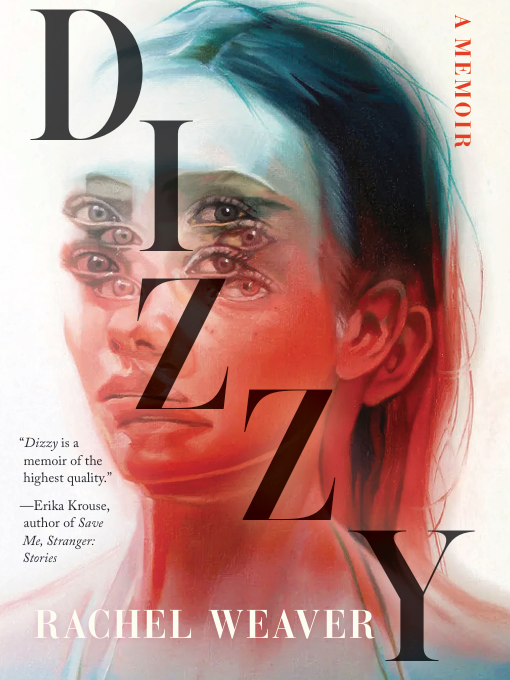
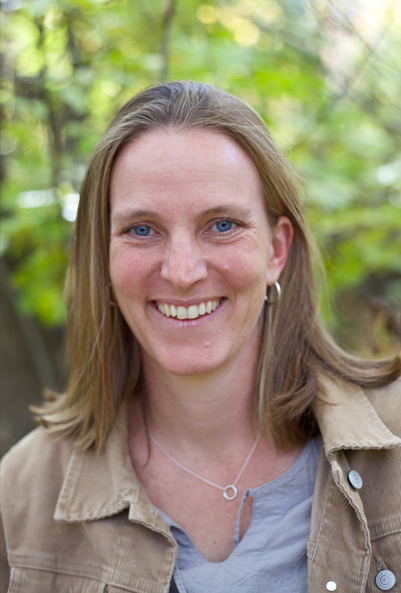
Today, my guest is writer, author, essayist, memoirist, and teacher, Rachel Weaver. She’s the author of the novel Point of Direction, which Oprah Magazine named a top 10 book to pick up now and won the 2015 Willa Cather Award for fiction. Her new book, a debut memoir, is Dizzy, just out from West Virginia Press. Listen in and read along as we discuss how to write a braided memoir, and so much more.
Powered by RedCircle
Rachel: Thanks for having me.
Marion: It’s really a joy to have you here, and I particularly want to start with you about… the influences on writers. I love to ask writers about their influences. And you hold an MFA in writing and poetics from Naropa University, a Buddhist-inspired non-sectarian university in America. I know the school fairly well. And I want to ask you about its influence on your work. We are all pathological products of the things we’ve heard, seen, read, eaten, and whatever. But maybe writers are more so than any other group of people. So what, if any, Buddhist influence do you feel on your body of work?
Rachel: Yeah, that’s a great question. I was really drawn to Naropa for my graduate work, mostly because I felt like it was going to teach me how to be a writer. Not as much how to write, but more about how to create a life that writing could happen within. And it did that. It definitely did that. It was frustrating at times because sometimes I would just feel like, but how do you write a character? How do you write a scene? But it wasn’t really that. It was, you know, there was some of that, but more than anything, it was about creating contemplative practices in your own life that calm you down and help you find that inner quieter place from which good writing happens.
Marion: You mean it’s not all just caffeine and dark chocolate?
Rachel: Well, that certainly helps.
That’s part two.
Marion: Yeah, because if the first doesn’t work, maybe we just go right to the second. Yeah, I love that. I love the inquiry on your part. What great wisdom that is, because the writing life can really bear down on writers if they’re not prepared. The solitude, the quiet, the required… getting out in the world so that you can feed your head, but they’re required going back. And so that’s fascinating. Do you feel that you practice what you learned there?
Rachel: I mean, I try. You know, I’ve got all these kids and dogs and jobs. I love the way you said kids. They all follow me around and want things.
So, I mean, I certainly try. But, you know, just like anybody, I am constantly… trying to get back to the page, get back to where that stronger, truer knowledge lies on the page, within me, and it’s hard, and it’s not successful all the time, or even a lot of the time, but I do feel like over the years that I’ve spent writing, which at this point is 20-something, and then all the various influences in my life, including my time at Naropa, have just given me different tools. And I think, you know, sometimes you just use different tools. But it’s good to have a whole bunch of those tools in your toolbox when you’re trying to write a book around everything else.
Marion: Yeah. Wise. That’s very wise. You’re right. And different projects require different tools and different sharpening of tools and all of that. So prior to earning your MFA in writing and poetics from Naropa, you worked for the Forest Service in Alaska studying bears, raptors, and songbirds. And along with being a book of medical pursuit of a mystery illness, Dizzy is what we call a braided memoir, combining two stories. In your case, bringing in a life-altering illness and your time working in the back country of Alaska. And it works.
But talk to those listening who want to write braided memoir. I teach memoir. My audience is writers. I get constantly just absolutely people that want to write a braided memoir. It’s the phrase I hear most often. So why did you choose this form and what qualities did you specifically feel from both of those stories that warranted braiding them together?
Rachel: That’s a good question. It was hard because I think that’s the trick. You want braids that mirror each other in some way or another. But trying to figure out how they mirror each other or how they work together is really hard. What happened was I just wrote the medical mystery part of it, and it was too sad. It was too hard. It was too much of the same feeling. When I teach memoir and fiction, I always talk about how you want to create this sort of roller coaster of emotions for your reader. You don’t want to just hit them over the head with the exact same emotion over and over and over. So then I started… thinking a lot about what could be braided into it. And one of the things that happened in real life is I went straight from working in the back country where I would encounter bears and other wildlife on a pretty regular basis, straight to being very sick and moving from clinician to clinician to clinician as everybody was trying to figure out what was wrong with me and no one could.
And I started recognizing very quickly the power dynamics, like the similarities in the power dynamics that play out between bears and humans in the backcountry and were playing out in the clinical setting and it was blowing my mind. And so eventually when I was trying to think of, you know, another thread, I came back to, well, what did I learn in those interactions? How did my time in the back country prepare me to try to navigate this new power dynamic? And in what ways did it serve me and in what ways did it not?
Marion: That’s a wonderful thing to contemplate. And I wonder if we could dig into that a bit more. You talked about the stories mirroring one another and you gave us a very specific example of bears and human. And I get that bears and medicine, bears and the power, the overpowering. Would you have anything more to say about the quality to help those listening that are writing what you think the real quality stories that you want to crisscross need to have to work together? I’ve used melody. I have used harmony. I’ve used all kinds of metaphor to try to explain to other writers about how the stories must work together. But do you have anything else in general that you would say to your students?
Rachel: So one way I like to think of it, and I came to think of it when I was trying so hard to make the two braids work together, and was not successful at first. I started thinking about it like each time I dipped into the other braid, it needed to drive the whole story forward. My dad was a mechanic, among other things. He would always talk about like there’s nothing in an engine that is unnecessary, right? Everything has to be there to make the car move forward.
And so I kept thinking about that as I picked through, you know, which of these hundreds of stories of my time in Alaska actually moves the dizzy, like the medical story, forward in some way and what elements of the dizzy story kind of work or reverberate within the backstory, like the braid of my time in Alaska.
So that helped me navigate a little, but it was very unwieldy feeling to me as a writer. I had never written a braided narrative before this one, and it was a difficult thing to do for sure.
Marion: It is difficult. It looks so easy when it’s done well because the ingredients from each enhances both. And it sounds so good. It reads so good. It’s delicious, right? But I say to people, don’t assume for a second that it’s going to be easy. Good. I love that answer. And I love the utilization of your father’s car mechanic idea that everything’s there for a purpose. That’s a great way to think about it.
Thank you for that.
So your new book, Dizzy, began as a July 2017 magazine piece for The Sun, that lovely, brilliant publication, for which I have to say your writing is right on brand. In a driving nine-paragraph opener, you combine a medical emergency, getting trapped in a river by a bear and her cubs, and a deep sense of educated doom about the American medical system. I’ll put a link in the transcript to the piece so everyone can enjoy this masterclass as I did in how to open a magazine piece.
But I want to know what your intent was when beginning with a magazine piece. Did you think at some point it was only going to be a magazine piece? Not that that’s not a big endeavor, especially one for The Sun. Or were you testing your topic on the public to see if there might be a book there?
Rachel: No, I read an essay written by Laura Hillenbrand, I believe, the author of Unbroken. And she, I didn’t know this before I came across the piece, and I don’t even remember where I read it, but it was an essay about her medical journey, and it struck me so deeply and in a huge rush I wrote the essay for The Sun Magazine, and I had been previous to that. I had been sending everything I wrote to The Sun Magazine for about 10 years. Trying so hard to get them to pick up some piece of mine. And I had all these rejections from Sy Safransky, the editor at the time, and that was the one that.
He picked up and I don’t, there was no real intention. I didn’t really want to talk about my illness. I had hardly talked about my illness at all, but I was so moved by the bravery in Laura Hillenbrand’s essay that I thought maybe I should try this. Maybe there’s something in me that could do this kind of thing.
Marion: Oh, that’s lovely. And the idea of persistence with a magazine, especially a magazine with that great grace and power, I think is inspiring to others. It’s a wonderful publication. It’s a wonderful magazine piece. And we touched on this a little bit earlier, but as I said before, in Dizzy you have a mystery illness that comes complete with dizziness, headaches, and the worst account of spinning I’ve ever read anywhere. A string of 37 doctors to whom you are sent amid a broken down American medical system. These are big negatives, both personally and in terms of writing. And you said it before. I mean, this could have been a big fat bummer, but it isn’t. It’s an adventure tale, at least to me. It’s a pure adventure tale. So I want to just have you talk to us, if you wouldn’t mind. This is pretty intimate and this is pretty, you know, getting into your own personal head. But I want to know about how you crawl out from the realities of this to see the generosity of providing story there.
Rachel: That… was very difficult. I was afraid to write the book. After the essay, so many people reached out and had similar stories or were looking for connection just because it’s such a lonely road. I think chronic illness is a lonely road for most. And I felt as though maybe I could help someone. Maybe if I write this story, someone could feel less alone like I felt for all those years and less isolated. And so I tried, but the thing that I found was that it was very hard to go back and forth, right? So I had to dip really deeply back into the feeling of those years, those hard, hard years.
Then I would find myself, like 15 minutes later, at pickup at the elementary school chatting with other parents. And it was very disconcerting. And my kids would be like, “What’s wrong with you?” I’d be like, “Well, I just spent all day thinking about this horrible thing.” And so I just started doing it in long spurts. I was so grateful to be offered a writing residency in Wyoming. And I wrote the whole first draft in seven days, but like 14 hours a day, I just immersed myself in the heavy heaviness of it.
And then I had to recover for, I don’t know, six or nine months or something. I didn’t work on it again, but it was almost like I got that out of the way. And then I could see the next level stuff, you know, like not that deep sadness, but more of like, the humanity that I ran into in this journey and my own resilience and my connection to the people that stood by me through all of this that didn’t have to. And so it just took a long time, I think. And I think those were stages, almost, I guess, kind of a grief or of me processing maybe.
Marion: That’s so generous. And I appreciate it so much. And the idea of of making room on the bench for other people is very deeply complicated when writing because you make room, but then they show up and they need things and they want things. And it’s hard. And that example you gave of showing up at the bus stop, right? Like, “Mom, why is there like a sandwich attached to your hat? You know, “Why is your lunch down your front? Why, how come you, I wanna tell you about my day,” you know, and you think, Yeah, well, that’s good because you would never understand what I just had to do, but you could get awash in it. Absolutely.
Rachel: I think also going back through it, I think cleared out a lot of that brain space for me to be more present with the kids, like not on the same day, but, you know, over time, I think writing it helped me process what happened in those years and where were those pockets of connection or connection appreciation that maybe got overlooked by all the sadness and distress. So I think there’s always this thing of writing our own stories that kind of clears out the cobwebs so that we can be more present in our lives with the people that we want to be present with eventually.
Marion: That’s a wonderful thing to contemplate. And whenever I have a memoir writer on, I always ask, what we’re asking from a memoir writer. Are we asking her when she’s written about trauma. And you certainly are writing about trauma. Are we asking her to re-inhabit it? Are we asking her to relive it? Are we asking her to stand coolly back and have a look at it? And your description of making more brain space by addressing this trauma is an answer I’ve never gotten before. What do you think the assignment is, though, when you go in to look at trauma, are you supposed to be cool and be kind of leaning against a tree while you look at it from across the room or across the street? Or are you supposed to dive right in and be in it?
Rachel: I always think of it as sort of clearing trail. I worked on a trail crew in New Hampshire one year and I was the chainsaw girl, and there were all these, there were all these trees, there were all these trees that had been bent over by this terrible ice storm winter where there were multiple ice storms. So there were all these trees that were like spring loaded, you know, and I would cut them and they would sling and it was totally dangerous and I was like 22 and I loved it.
But I think about that a lot when you’re writing a memoir, I think, or when you’re writing nonfiction, I think, you know, you’re sort of like the trail crew. You go through, you clear the trail enough, you do that super hard work of clearing the trail, of deciding, No, we’re gonna go around this stump this way versus that way or this rock or whatever. And then the reader is able to walk the trail and get to their own destination, get to their own, like have their own experience of it, but you’ve done the hard work of clearing the trail for them.
Marion: That is a perfect assignment. That’s a terrific description of what goes on here. So let’s talk about opening this book. Book openings are essential to the success of a book and never more so than in memoir, when we need to establish fast and furiously what’s at stake, lest the reader get hit with a lot of dreary details describing the writer and her bio, but do nothing to draw us into the tale. And your book opener was like a luge ride. It takes us into the heart of what is at stake fast and furiously.
So let’s talk about that. You show us the medical emergency and you show us the healthcare emergency of this country. As soon as you get to a medical office and the receptionist emits a quote, “noncommittal,” end quote, noise to your description of your wretched symptoms. Really nice. So what were the choices for an opener? Was this the first one? You say you wrote this at a retreat in a rush and a frenzy fury, you sat down and just dumped it out. Were there other choices or was that always the way you envisioned opening this book?
Rachel: Well, you know, I started with the inciting incident. What’s the inciting incident? I woke up dizzy. And then what was at stake in the rest of my life, right? I mean, lucky for me, I’ve had lots of bad boyfriends. So there was one of those in the mix. And then, you know, I’ve always been broke. So that was in the mix too, right? And I was caught in between leaving my job and starting graduate school. And I had, you know, in a responsible way, signed myself up for the health insurance through school, but I didn’t know when it started.
And I had visited the doctor before the first day of the semester or whatever. And so I just started thinking to start a book with high stakes is always a good move, right? Because you set the tension really quick. You create that forward momentum. And so, you know, I started with the inciting incident. I woke up dizzy. And then what all was at stake in the other areas of my life? Well, I was broke. I just created for myself a preexisting condition that caused lots more trouble later. And the first doctor I see has no idea what’s wrong with me, right? And sends me on to the next one. So, and I’ve got this bad boyfriend that is like no support whatsoever. So suddenly there’s like a laundry list of trouble, which I think is always a good way to think of a beginning.
You know, what are all the things that the reader can worry about right away?
Marion: Yeah, it works. You do the same thing in your 2014 novel, Point of Direction, your literary debut. And you place two people who are fleeing their pasts in a lighthouse on a remote island in Alaska. And we put them under a lot of pressure. And every famous writer seems to have a saying about how to put and keep your character’s intention. Perhaps my favorite is Kurt Vonnegut’s sixth of his eight rules of creative writing that reads, “be a sadist. no matter how sweet and innocent your leading characters make awful things happen to them in order that the reader may see what they are made of.”
Yeah, I’d say you followed that pretty nicely in the range of your work. You know how to do it, and it reveals a talent for it. And I know you also teach writing and work with writers as a developmental editor. So whenever I say this to my students, “put them in trouble, keep them there,” lots of questions arise about the manner of pressure, the duration. “What kind of pressure, like, what do you mean?”
How do you measure if it’s really bad pressure for anybody else other than me? So let’s talk about bringing the pressure. I mean, you had it, you just described it, bad boyfriend, bad medicine, bad dizzy, some bad timing. So how do you think about and how do you teach this idea of putting people in pressure for their writing?
Rachel: Yeah, that’s a good question because I think as writers, and I do this myself too, where I’m like, oh, surely that’s plenty of tension. This person’s having such a hard time. But you have to think about it, I think, in terms of how is the reader going to interpret this? And one of the things I started doing in my own writing, and I have been encouraging my own students to do for years, is ask yourself what driving questions will your reader have at any given point in your book, right?
So… You know, if you go through your manuscript, every 10 pages at the bottom of those 10 pages, write down what questions your reader will have. And it should be not the big picture question, right? Like not the like, “How does it work out? Like, does she ever get not dizzy anymore or whatever?” But instead, what are the driving questions that that scene or those last 10 pages have raised in the reader’s mind that they are going to be feeling compelled to to keep reading to find the answer for that you are gonna supply the answer for, right?
Like, you know, if you start with a bad boyfriend, then the question becomes, “I mean, is she really gonna stick with this guy or is she gonna bail? Or is it gonna get worse? Is she gonna stay with him or what,” right? So that’s a question. So at any given time, I always encourage my students to have, you know, every 10 pages, you should be able to identify at least three questions that your reader has, and not things like, Where are we? Or what time of day is it?
None of those, but like, whose baby is it? Or like whatever it is. Like compelling things that make you want to stay up past your bedtime to find out, right? And as you answer one of those three questions, you add another. So in the next span of the next 10 pages, maybe you answer one of those and you raise another so that your reader understands gets that feeling of like, “Oh, no, I can’t put the book down now. I just found the answer to this thing. Now I want to find the answer to this other question or these other two or three questions.” So it’s like a treasure hunt almost where you want to reassure your reader that, yes, you keep looking, you’ll find it, but then there’s going to be another thing to look for and worry over, I guess.
Marion: And worry over, I always describe readers as homicide detectives in walking your lawn, you know, and that we all know that look from the great BBC detective novels or the, you know, the American police procedurals, whatever. A bunch of people walking the lawn, looking back and forth, because readers are remarkable. And they’re searching for clues, they’re searching and acquiring. And if you keep giving them questions to metabolize, and then answers and questions, and answers, they keep hungry, they keep digesting, they keep moving. But if you wake them up out of that sort of pursuit, they don’t keep reading, I think.
I love that answer. And I love the idea of every 10 pages. I’m going to try it. I’m also going to try to suggest it to some people. Have you done that yourself? Do you make a list physically?
Rachel: Yeah.
Marion: Tell me about the list.
Rachel: That’s what I did with point of direction because the feedback I was getting early on was like, “Oh, it’s so good. It’s really good. But then it gets kind of slow in the middle.” And I’d always be like, “Why and where?” And no one could answer those questions. And so I was like, well, I’m just going to figure it out for myself. Like, where is it that people run out of questions? And it became very clear that. like where it was probably getting boring to people because there were no more questions for 40 pages or 50 pages. And that 10-page thing is just arbitrary. You can do it every 20 pages. It kind of depends. If you’re writing a fast-paced novel, like a plot-based novel, then you might want to shorten that 10-page mark. If you’re writing a more character-driven novel, you might want to widen it a little. It doesn’t really matter how many pages. It’s just that at the end of every so often, you need to check to see – Does my reader have any driving questions?
And if they don’t, if you’ve kind of gotten off track with dropping clues and building, you know, more tension, it becomes very apparent where. Perfect.
Marion: Perfect. So, your literary debut was a novel. Then you brought us Dizzy, a memoir, and you have a novel out in 2026. It’s called The Last Run, published by Lake Union Publishing. It takes us back to Alaska, and yes… puts your characters in some good trouble. So clearly, you never got the memo to stick to one genre. And I’m damn glad that it either went unread or you lost it in the mail or you lit a cigar with it or whatever. But what do you think is the strength of crossing genres?
Rachel: Well, I learned a lot about memoir writing. Well, I learned those really hard. And I want to say that I can’t wait to get back to fiction, but I do understand the depth of importance in digging into, like, real, hard experiences that we’ve all had. But it was an entirely different experience for me as a writer, and it’s been a different experience to talk about it. I did a lot of talking about Point of Direction, I had this great idea that I would write to 500 book clubs and be like, hey, I’ll come to your book club, thinking like maybe 50 would say yes and then like 200 did. So I did a lot of talking about Point of Direction.
And it was fascinating, but it wasn’t about me necessarily. I mean, of course I’m in there on a lot of levels, but talking about your own memoir is, it’s a whole different thing and requires, I think, a lot of bravery sometimes.
Marion: Well, we’re very grateful that you crossed over. And to me, my observation was that you have a really good organic sense of timing in memoir. It’s hard for people to cut themselves off, to edit down, to curate from their lives. But I would say your fiction writing has taught you so much about just how much trouble and just how many questions exist, we can have on the page in a 10-page section. It’s a joy to read you and a joy to talk to you.
Thank you so much for coming along today. And good luck with the book. I can’t wait to read The Last Run. So thank you so much, Rachel.
Rachel: Thanks for having me. It’s been great.
Marion: You’re welcome. The author is Rachel Weaver. See more on her at rachel weaver dot net. The book is Dizzy, just out from West Virginia Press. Get it wherever books are sold. I’m Marion Roach Smith, and you’ve been listening to Qwerty. Qwerty is produced by Overit Studios in Albany, New York. Reach them at overit studios dot com. Our producer is Jacquelin Mignot. Our assistant is Lorna Bailey. Want more on the art and work of writing? Visit marion roach dot com, the home of The Memoir Project, where writers get their needs met through online classes on how to write memoir. And thanks for listening. Don’t forget to follow Qwerty wherever you get your podcasts, and listen to it wherever you go. And if you like what you hear, please leave us a review. It helps others to find their way to their writing lives.
Want more help? Join me in live, online memoir classes
Start here, with The Memoir Project System Page, to understand the breadth of all the classes we teach.
Want to jump right in? Here’s a sampling of our classes.
Memoirama: Live, 90 minutes. Everything you need to write what you know.
Memoirama 2. Live, two hours. Limited to seven writers. What you need to know to structure a book.
How to Write Opinion Pieces: Op-eds, Radio Essays and Digital Commentary: Live, 90 minutes. Get your voice out into the world.
And keep in mind that we are now registering names for the next Master Class, the prerequisites for which are Memoirama and Memoirama 2. Live, once a month. Limited to six writers. Get a first draft of your memoir finished in six months.
Great interview!! And I’m excited to read Rachel Weaver’s books! Great writing advice here. Thanks again!
Hi there, Jan.
How lovely to see you here.
I’m so glad liked the interview.
I found her fascinating.
Sending good writing vibes your way.
Best,
Marion
Thank you for the interview with Rachel – so many of my curiosities about writing a braided memoir have been answered. And yes, it is unbelievably difficult to achieve. Struggling to create my own braided story has taken up years of drafting and rewriting and I’m still not content – and I feel I am running out of lifespan. Now in my ninth decade – I need to get it done.
Dear Karel,
I’m deeply grateful to receive this, and I agree with you: Many of my braided story questions were answered, as well.
Thank you for letting me know this interested you.
And please stay in touch.
Best,
Marion