

The Great Joy of Writing Fan Fiction, with Author Marian Yee
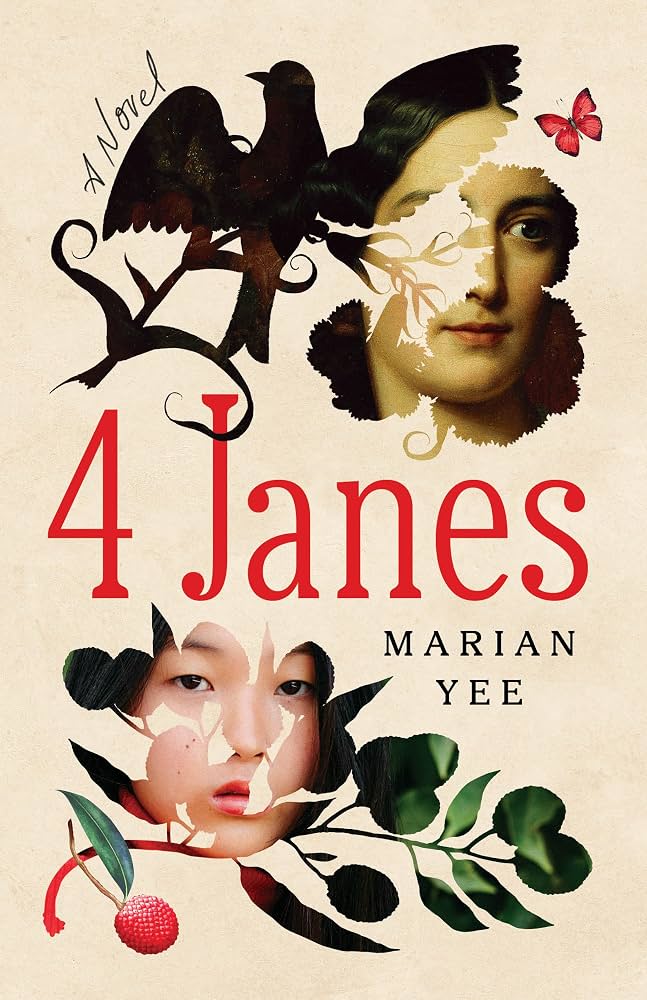
WRITER, SCHOLAR, AND AWARD-WINNING TEACHER, Marian Yee, teaches writing, literature, and contemporary art to performing arts students at Berklee College of Music. Her published writings include poems, reviews, and scholarly articles. Her debut novel is 4 Janes, published by Little A. Listen in and read along as she and I discuss the great joy of writing fan fiction.

Powered by RedCircle
Marion: Welcome, Marion.
Marian: Thank you. I’m so happy to be here.
Marion: Well, I’m delighted to have you here. And I think right from the start, we probably want to talk about the phrase, “fan fiction,” which may or may not be a phrase that everyone knows.
So we’ll start there. Since everyone who reads books has noticed that there are very popular books out there these days that seem to call back to famous stories. The definition of fan fiction is something like “unauthorized derivative fiction written by fans using pre-existing characters, settings, and lore from an established original work.” That work can be a person, a novel, a TV show, a movie, or even a video game. Basically, you take something and run with it. And you chose to run with Jane Eyre. I just cannot thank you enough.
My absolute delight is this book. So people are familiar with this sort of subgenre. The Song of Achilles by Madeline Miller is technically fan fiction. as is the Pulitzer Prize-winning novel Demon Copperhead by Barbara Kingsolver. So that kind of gives people a little bit of context.
Written by Charlotte Brontë, but published under her pen name Curer Bell, Jane Eyre was originally published in 1847 and is absolutely considered one of the greatest novels ever published in the English language. widely credited with changing prose fiction forever. So I want to just congratulate you for choosing what I consider to be, it’s my book of books. The book that I read as a young teen, it galvanized, electrified, tantalized, and utterly captivated my very self. I read it again and again, never let it too far out of sight.
And you’ve taken it and re-imagined it. So first, do you consider this fan fiction? And were you a fan fiction fan before you took on the project of this debut novel?
Marian: So, yes, I love that term, “fan fiction.” And I sometimes attach “literary fan fiction” to it for people who use their source material from the classics, like Barbara Kingsolver did, like Percival Everett for James, and Madeline Miller did as well for Circe and Song of Achilles. But then, you know, the unauthorized fan fiction that you talk about that, you know, anybody can do with their, you know, favorite source material, that is definitely… out there. I think because people, when they love something, they don’t want it to end.
They want the stories to go on. Or sometimes they feel so invested in the characters, they just want to know more. Maybe there’s a side character and they wish there was a backstory. Or maybe they wish the characters loved other characters instead of the ones the authors chose for them.
So fan fiction, it comes from readers just, I think, loving the material and wanting to participate in it or Half the story go on. So you mentioned that you love Jane Eyre. I do too. And so many people do as well. Jane Eyre is just, she’s just iconic. She’s this figure. She’s so resilient. She relies on her wits and her brains and not her looks. In fact, she is described again and again as plain, but she pushes on. She’s like, it’s a Cinderella story. She gets there, but she has to work.
She suffers, but she..she does win at the end. That’s a heroine you just have to love and to root for.
Marion: Absolutely.
Marian: And so many people do.
Marion: Yeah, I would follow her anywhere. And… And that’s what this book does. And that’s what’s so completely and absolutely delightful. And congratulations on this marvelous accomplishment. I’ve read that this novel was inspired by a trip to Vietnam in 1995, where you met a street seller who was reading an abridged copy of Jane Eyre to learn English. So take us back to that scene, if you would, please.
Marian: Oh, I’d love to, because that really is the kind of origin story for this. So I was traveling in Vietnam with my husband many years ago. We stopped in Huě and we were just walking up and down this boulevard. We met this woman. She was a bookseller. Mostly used books, mostly to tourists. A lot of copies of The Quiet American, for example. But she herself was reading something way more interesting, I thought. She was reading something I never expected to find in Hue, Vietnam. And that was Jane Eyre.
Maybe an easier version of it, an abridged copy. But still, that’s a difficult text. To read, even in English, is challenging. And she was working her way through it. She was determined to get better at her English. And she loved the story. She felt connected to Jane Eyre. We were actually talking about it a little bit.
It was just so, in my mind, such an unusual juxtaposition to see this kind of Western text in this kind of Eastern context. And it just kind of fired up my imagination. I wanted to maybe write something where I could bring these to my mind, two very different worlds together. And that just started the journey of putting together 4 Janes and trying to figure out, well, how am I going to bring these two worlds together? And it seemed to me that I had to like take apart the original Jane Eyre a little bit to get things kind of moving in the direction that I needed it to go.
Marion: That’s lovely. Take apart the book a bit to get it moving in the direction you need it to go. That’s wonderful. And it seems that, as you said before, fan fiction is taking something you already love and moving it along to somewhere new. So what was it about Jane Eyre that you love?
Marian: Well, you’ve got to start with her.
Marion: Yeah.
Marian: Because she’s just so interesting. She’s so strong. We get her childhood story because the first half of Jane Eyre is just her growing up and just trying to survive in this very unfriendly, stark environment. She’s at this school for the poor and the indigent, and she has no friends anymore, except for one. And she just has to learn how to be strong, learn how to find her kind of moral center, and just to survive because she is a survivor.
And then the second half of Jane Eyre is this really interesting love story. And it’s interesting because it’s two people loving each other. They’re both kind of a little broken in a way. And they love each other because they recognize something within each other, which is not based on looks or on money or power or anything.
They just discover that they’re like-minded. They share this kind of passion for talking and knowing each other. And she finally gets to be seen in a way that she has never been her whole life. She’s pretty much been overlooked her whole life, but Rochester sees her. And so there’s this really interesting love story based on two like-minded souls who find each other. And of course, a complication that has to happen, which is that he’s already married, so he can’t marry her. And then after that, the story is about her respecting herself enough to not enter into a situation that she knows isn’t right.
So it’s her moral strength that allows her to leave. And then she undergoes this journey where her resilience and again, her capacity for survival is what keeps her going. And in the end, it is a happy ending, but not to spoil it for people who haven’t read Jane Eyre. But it’s interesting. I love the way it ends because there’s a kind of equality that takes place.
Marion: Yes.
Marian: He has to fall in a way. He has to come down. He has to be diminished. And she rises. She comes into money. She has her independence. So they meet on a much more equal footing. And that’s something very satisfying about that.
Marion: Yes. It is deeply satisfying. It is one of those books you consider forever in that deep satisfaction, I think. And even as we grow up and have our important relationships in our lives, if we’ve read Jane Eyre, I think it’s embedded in us. I hope it’s embedded in us. It certainly did a lot for me to consider equality, to consider that there must be equality in the relationships if they’re going to move forward.
It’s a formative book, right?
Totally. And read at the time, at least that I read it, I was 13, 14, probably 14, really did that. It was delivering a message that I have never left. And I just love that. I love that about it. So yes, I totally get why you did this. And in this marvelous novel, you give us four alternative Janes. One of the four Janes travels to India and Burma. Another is trying a young woman selling books in Vietnam. You have her in another Jane crossing time and space. And in a fourth is a young Vietnamese man searching for himself. All of them are familiar to us. And yet all of them travel into the “what if.” So first, what was it that you wanted to explore in that what if?
Marian: So Originally, when I met this young woman in Vietnam, the bookseller, and I wanted her world to interact in a way with Jane Eyre’s world, I guess I wanted to explore what it would look like for that to happen. And I talked a little bit about having to break up Jane’s world in order for that to happen. And so for me to bring their two worlds together, it meant that Jane Eyre had to leave England and move towards the East. And the Vietnamese Jane, she had to somehow leave Vietnam and get closer to England. It never quite works out that way, but its journeys have started geographically and kind of time-wise to try to like make that crossing.
So to get Jane Eyre out of England, I went to the end of the story where she almost did leave England because she had a marriage proposal, another marriage proposal, from her cousin, St. John Rivers, for her to marry him and become a missionary’s wife and to go to India to proselytize. And she agrees to do it mostly because she feels like her other life is over, the one that she might’ve had with Rochester. And this seemed like something that maybe she could do. In the end, she doesn’t, of course, do that. But if she had, and that’s one of those what if questions, if she had, if she had decided to marry the other guy, what would have happened? So she would have left England. They would have gone to India. I ultimately wanted to get her to Vietnam, but I couldn’t just have them go there right away because England at that time, if you were a missionary, you went to India.
They all went to India because the English had colonized. India and the French had Vietnam. So, you know, realistically, historically speaking, of course, they would go to India at least first. And from there, I had them go on to Burma. which is, again, closer to Vietnam. And then by the end of Jane 1, Vietnam is in sight, even if she hasn’t actually reached there geographically. But I wanted to get her moving. And I was also curious, this would be an interesting life for Jane Eyre to be in. She would be traveling to a different country. She would be doing something she’s never done before. It would be such a challenge. It was interesting to just think of her like, out in the world doing this. So this was very interesting for me to pursue.
What would Jane Eyre be like in that position? What would she do? What would she think? What would she encounter?
Marion: It’s a wonderful question. And the thing that’s so fascinating to me about it is any of us that have watched let’s just say watch TV right before we go to sleep. And we carry the story with us, right? Many of us do this. We think about the story as we’re falling asleep or many of us dream into the story. So we know that we can enter a tale and then it becomes different than the story we just see. Intellectually, we know this is possible, that we’re allowed to do this. And yet most of us would talk ourselves out of the what ifs. It’s just that prevention, that obstacle. Because, well, Charlottë Bronte wrote it like that, and that’s the story. And you have to live with that, Marion.
But you just don’t. And I love that. So what is it? Is it confidence, courage, chutzpah? What is it that allows a writer to go on the magic carpet of what if?
Marian: That is such an interesting question. And I think when fans do it, when they enter into the world of their source material, they do it, I think they do it out of love. They just love the story. They want it to go on and they want to participate in it. I mean, that’s what I do. It’s not like I feel like I’m challenging her or equal to her, but it’s like, I love your character. And I just wonder what happened to her in this other situation.
Because she’s so fully formed and alive in my mind that I feel like she could be doing any of a number of things. I kind of have her basic character in mind because she’s so wonderfully developed by Charlottë Bronte. And I feel like I’ve been kind of given enough tools to like, if I just went off that path, I feel like I have a sense of what might happen.
You can’t ever depart too much from what is core or basic and to the original story. And I think that that is a constraint that all fan fictional writers work with. There is a source material and that constraint is actually wonderful. I love having a constraint in my writing because writing to me is so, it could be anything. You could write anything. It’s so wide that having some constraints allow me to like work more deeply in a way. It’s like playing tennis without a net, it could go anywhere and it’d be fine. But if you had a net, you have something to work against, right? And if you know the rules, you know, like, you want to see how far you can push against those rules, how far you can bend them.
But you also kind of recognize in a way that they’re there.
Marion: It’s so fascinating to me because reading through this book, I found myself thinking about other characters, deeply familiar characters in deeply familiar literature, who are set in stone for me, who I’m not really interested in what-if-ing with. I was thinking about The Great Gatsby, and I was thinking about how Daisy and Tom Buchanan… You know, I don’t really care what happened to those two people after that. I just don’t. Nick Carraway, the narrator. Yeah, I do. I do wonder what happened to Nick. And I do. I could go with him. And it’s so interesting how some of them are really sort of cauterized in our imagination. Like that’s the limit to them. But other ones like Jane, you do recognize in her the ability to go with her anywhere. And I think that’s what’s so fascinating. I think what you’ve done is given such permissions to so many people listening right now that they could choose a character that they love and take that character someplace, go with that character somewhere. I suspect there are pitfalls to the work, though. For me, the immediate one I run into with Jane Eyre is reverence. I’m not sure how I would approach the words of Charlottë Bronte with anything other than pure, restricting, like straight jacket reverence. So, and that’s just me, right?
So what about you? What are the pitfalls? What were, if there were pitfalls for you?
Marian:Yeah, it’s an odd kind of ventriloquism in a way.
Marion: Oh, I love that.
Marian: You want to know her writing well enough that you can borrow her voice and extend it. So, you know, language is formal in a way that felt to me like Bronte’s writing. I mean, it could never be Bronte’s writing, but it was as close as I could get. I could hear it in my head, in my sentence structures. And that kind of familiarity, I think, has to come from just kind of deeply immersing yourself in that voice, in that world, and just having, you know, just kind of soaking it up. It’s funny, I didn’t go back and reread Jane Eyre until afterwards, and I was looking at some of her sentences and her language, and I was thinking, I don’t think I’m even close.
If I had gone straight from reading her to trying to write, I think I would have failed. So I needed a little bit of distance so that it could percolate in me, can come through me, Because otherwise, I would have felt like I was trying to sound like her. I don’t think that would have worked very well for me.
Marion: Yeah, I get that. And in your acknowledgement, you thank Virginia Woolf, which I loved, whose visions and style you say you, quote, “borrowed from when reimagining Jane’s world.” I was quite taken by that. And I see that in the text. When you said that, I was like, “Yeah, I get that.” But let the writers listening into… how someone or understand from you how someone else’s vision and style granted you access to this world?
Marian: Yeah, I didn’t recognize it myself right away, but I did, you know, eventually Virginia Woolf was very much moving through me as I was writing this. She’s one of my favorite writers, you know, as well. So, the parts where I wasn’t trying to sound like a, you know, 19th century Victorian woman, I was kind of borrowing a lot from Virginia Woolf’s very, kind of flowy style. I love that style. And I found myself just kind of flowing into it very naturally. But many of the themes of the book come from Virginia Woolf, you know, as well.
So like Orlando, where she has a character that moves through time and changes gender, as well. That very much is a theme in my book. And in Mrs. Dalloway, where she explores, you know, characters moving in and out of consciousness, connecting to each other, but not knowing that they’re connected to each other was another important theme in my book.
And finally, To the Lighthouse, there’s a character, Lily Briscoe, who’s an artist, and she very much kind of informs my last Jane character in a way. And even the ending of the book in To the Lighthouse, it ends with Lily Briscoe executing a work of art, which is just kind of a gesture. a very kind of a minimal line on the canvas, which kind of captures for her everything about, you know, time and grief and love. And I wanted my character, who’s an artist as well, to also end with a work of art that is kind of impermanent and minimal, but which also tries to kind of capture everything that had kind of gone through up to that moment.
So yes, Virginia Woolf very much was in the style I was using and in the themes, totally.
Marion: It’s perfect. And it suggests how porous we can be as readers and writers, that we can have these writers in us, flowing through us, that I think sometimes young writers, and many people listening to this are young writers, just starting out, trying to find their voice, trying to find where to write from. And they feel so unaware of what their voice is yet. And they don’t accept, don’t understand that that porousness is essential, that you’re not going to write like Fitzgerald, but you have to have read Fitzgerald or Virginia Woolf and Shakespeare and Zora Neale Hurston, and you have to read, and you have to let these writers flow through you and let their ideas pass through you for you to develop a voice.
And it’s not that it’s imitative, it’s that it’s informed. And that’s what you’re talking about here. And I love the references to Virginia Woolf, who I also adore. And so as we start to wrap this up, though, let’s just talk about the art of publishing because your publisher is Little A, the literary fiction and nonfiction division of Amazon Publishing. So talk to me about choosing them, working with them, and ultimately publishing with them.
Marian: I have loved working with the team at Little A. They were just so professional and so supportive every step of the way.
Marion: It’s great to hear that.
Marian: Couldn’t be happier with my first time publishing experience. Some of the things that surprised me, having never published before, was… And if you’ve never done it, it’s like your first draft is not your last draft.
Marion: The draft that you submit and you thought was done, it’s kind of not. No.
Marian: That surprised me. I just didn’t know that that’s how it goes. So rewriting was interesting.
Marion: Mm-hmm.
Marian: Working with an editor was very interesting. And that might be new for some first-time writers as well. Because we think of ourselves as one person writing one thing. And you never think, what if somebody else came and said, you need to do this or maybe a little bit more. And then, you know, you said before that there’s an aspect of writing where it’s never really you. It’s like everything that you’ve read kind of filtering through you.
And revising is kind of the same. Working with an editor is a little bit like that. It’s getting away from the idea of creativity as you alone with your keyboard and working with somebody else who like reads your story, wants it to be as good as it can get, suggesting things, and then you going back and taking that and rewriting. That was new to me because I’ve never like written with somebody else or collaborated with somebody else, or revised with that kind of participation in mind. It was enlightening. In the end, I felt like I had a tighter, better draft. But it was not something I had expected or ever experienced beforehand.
Marion: Well, it’s a beautiful book, both the writing and the structure of it and the endeavor of it is beautiful. And Little A created a gorgeous piece of I don’t want to say hardware, an artifact. Just lovely. The first time I saw the cover of it, I said, “My goodness, who made that book?” So congratulations on all fronts there, Marian. You’ve written a beautiful book and they’ve produced a gorgeous book and we just wish you the very, very best with it. Thank you for taking on Jane Eyre. I am thrilled and I wish you all the sales in the world. Have fun with it, please.
Marian: Thank you so much.
Marion: You’re welcome. The author is Marian Yee. See more on her at Marian Yee dot com. The book is 4 Janes, just out from Little A. Get it wherever books are sold. I’m Marion Roach Smith, and you’ve been listening to Qwerty. Qwerty is produced by Overit Studios in Albany, New York. Reach them at Overit Studios dot com. Our producer is Jacquelin Mignot. Our assistant is Lorna Bailey. Want more on the art and work of writing? Visit Marion Roach dot com, the home of The Memoir Project, where writers get their needs met through online classes in how to write memoir. And thanks for listening. Don’t forget to follow QWERTY wherever you get your podcasts and listen to it wherever you go. And if you like what you hear, please leave us a review. It helps others to find their way to their writing lives.
Want more?
Start here to understand the breadth of all the classes we teach.
Want to jump right in? Here’s a sampling of our classes.
Memoirama: Live, 90 minutes. Everything you need to write what you know.
Memoirama 2. Live, two hours. Limited to seven writers. What you need to know to structure a book.
How to Write Opinion Pieces: Op-eds, Radio Essays and Digital Commentary: Live, 90 minutes. Get your voice out into the world.
And keep in mind that we are now registering names for the next Master Class. Live, once a month. Limited to six writers. Get a first draft of your memoir finished in six months.