

How to Write, Structure, and Edit a Memoir with Writer Hester Kaplan
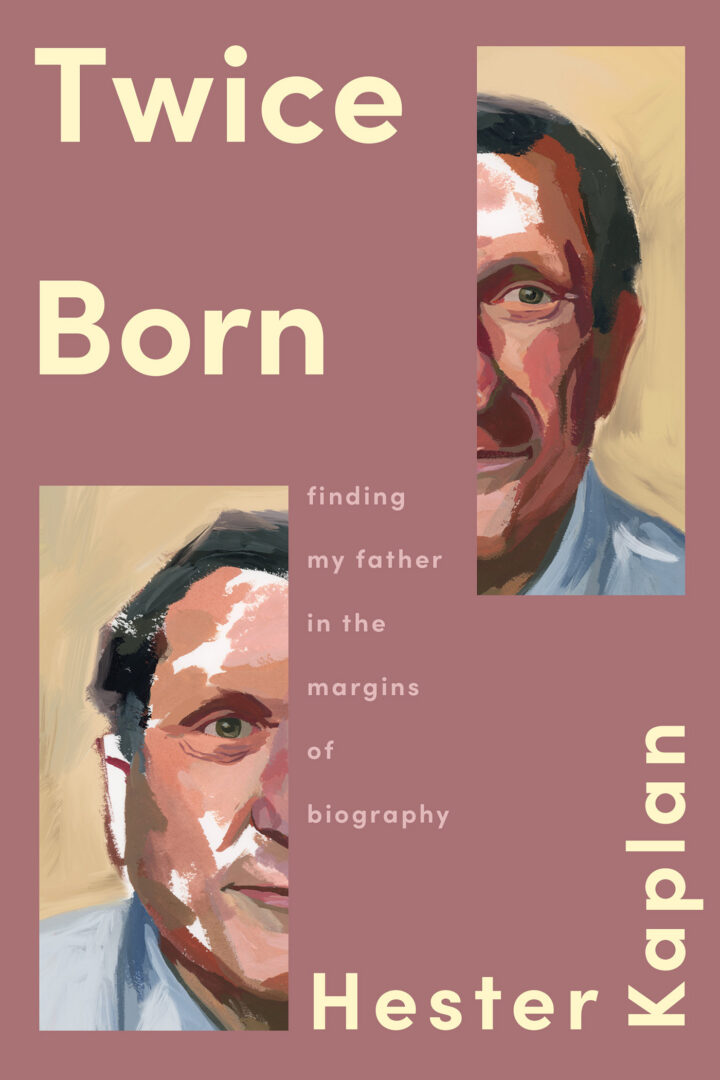
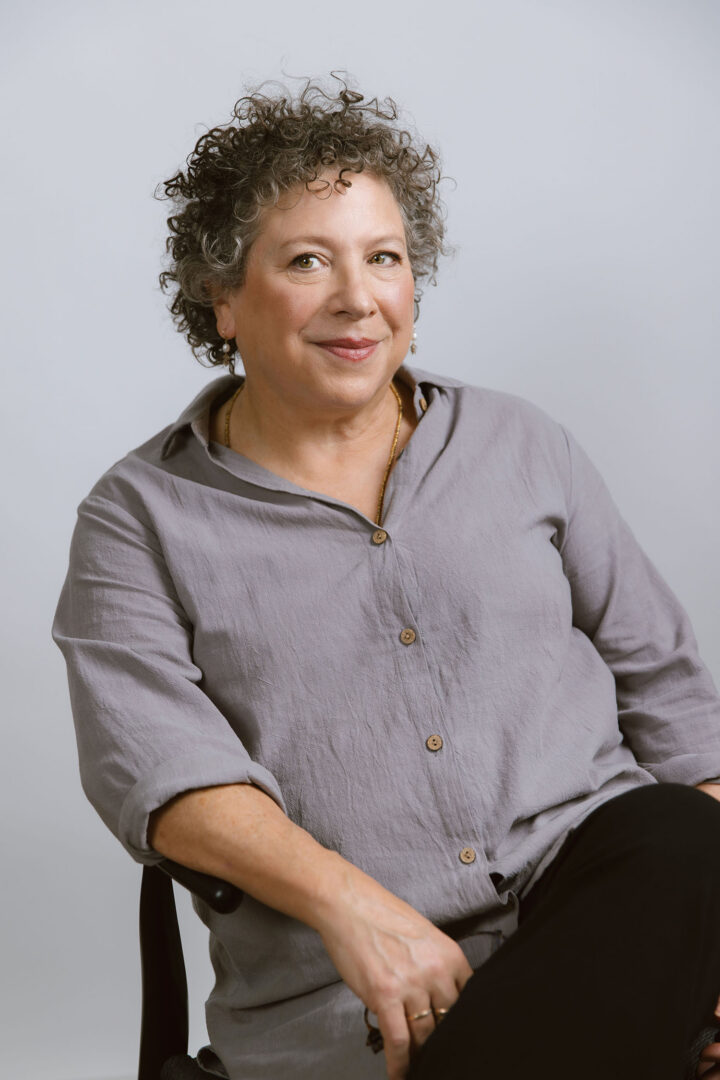
HESTER KAPLAN IS THE AUTHOR OF TWO STORY COLLECTIONS, The Edge of Marriage (University of Georgia Press, and Norton), which received The Flannery O’Connor Prize for Short Fiction; and Unravished (Ig Publishing); the novels The Tell (HarperCollins) and Kinship Theory (Little, Brown). Her work has appeared in Ploughshares, Story, Glimmer Train, Southwest Review, and Indiana Review and others, and has been widely anthologized, including in The Best American Short Stories, Creature Needs, and Providence Noir. The recipient of two National Endowment for the Arts fellowships and two fellowships in literature from the Rhode Island State Council on the Arts, she was named Quarry Farm Fellow by the Center for Mark Twain Studies Fellow for her new book, Twice Born: Finding My Father in the Margins of Biography, just out from Catapult. Listen in as she and I discuss how to set up a fine piece of memoir.
Powered by RedCircle
Marion: Today, my guest is Hester Kaplan, the author of two story collections, The Edge of Marriage, which received the Flannery O’Connor Prize for short fiction, and Unravished, the novels The Tell and Kinship Theory. Her work has appeared in Plowshare, Story, Glimmer Train, Southwest Review, and Indiana Review, and others, and has been widely anthologized, including in the Best American Short Stories, Creature Needs, and Providence Noir. She was named a Quarry Farm Fellow by the Center for Mark Twain Studies for her new book, Twice Born, Finding My Father in the Margins of Biography, just out from Catapult. Welcome, Hester.
Hester: Thank you for having me.
Marion: Well, it’s a joy to have you here, and the book is beautiful. And so, as I said to you before we went live, my audience is writers, and so I want to dig into this from a very writerly point of view. Your dad was Justin Kaplan, the acclaimed biographer of Mark Twain, Lincoln Steffens, and Walt Whitman, and your new book, Twice Born, is a memoir. in which you run the parallel story of your father and trying, after his death, to truly locate who he was and the story of your own literary life.
You open the book with this line, from the moment I was aware of my father’s existence as separate from my own, I’ve been trying to find him. And we understand because we both know and don’t know our parents, of course, but then you reveal that you’re standing in the crematorium with his corpse and casket in front of you and that your motivation for seeing his corpse is, quote, I wanted to see the body off and I wanted to know myself as it happened.
It’s a great scene. It’s a perfect setup for this book. And the big reveal, if you want to call it that, comes soon after in the fact that you have not read your father’s books, but that after his death, you do. You set out to find him. So let’s talk about setting up books. Chicken and egg this for us. I’d like to say, I doubt you were writing this opener in your head while you stood there in the crematorium, but being a writer, I know better.
I know lots of writers. I’m one myself. and I’m probably going to hell for some of the things I’ve written under similar solemn occasions. So talk to us about how you decided to set up this book.
Hester: Yes, that moment of hell where you think, you know, I should be thinking of something else, but I’m really thinking about how am I going to write about this? Yeah, let’s talk about that. I think one of the things that happens, whether you’re writing fiction or memoir or anything else, is that once you put it down on the page… you, or maybe I should say I, often lose a sense of the truth of when something happened, that the story has been sort of forming in my mind for so long that it feels absolutely true to me.
So, I mean, one of the things that I did learn from writing novels and stories for so long, for many, many decades, is that often where you begin is not where you end.
You really begin and that it’s something of a circular process. In this particular book, I really did feel that at that moment where I was seeing the body off was a way to understand that the loss of one thing could be the gain of something else. So the death of my father could be the sort of revivification of my father. And I, did really feel at that moment when I left the crematorium and walked out and saw the smoke coming out of the building, which I knew was not my father.
Of course, this is not meant to be gruesome at all. Was a way to sort of tell myself that he was still there in a way that obviously he’d never been there when he was alive, but that he was still there.
And it took me a while to figure out why that was important for me to feel that he was still there and where that particular smoke was going to lead me. And I had felt all my life that he was most himself in his books because he was so hidden otherwise. And that the smoke was going to lead me back to his study and his bookshelves and his books.
Marion: What a moment. What an extraordinary thing. to carry out of a crematorium. And how much time after that did you write something down?
Hester: I probably started writing something down about two years after that. I was aware, because I had never read any of my father’s books before I started this project, that I really had a lot of work to do to understand what literary biography was. And… A lot to understand about simply the art of biography. Yeah. So I really spent a couple of years reading. I spent a couple of those years reading his Mark Twain book over and over and over again and beginning to get a sense of how what I was reading brought up something in my own life or my own relationship with him.
And it took a good while for this to kind of come into focus. but it really was probably a couple of years since I started writing this book.
In the book, I do talk about how I had written a story not long after he died called The Biographer, which was a short story, so a piece of fiction, that was really very much the direction I would eventually take up. I didn’t know it at that point, and that I really felt that fiction was not doing it for me. that I was really sort of avoiding a kind of truth.
Marion: Yeah. Fascinating. So I want to talk about the structure. This one is fascinating. And I would not say it’s a braided memoir. I would say this reads like the first time I witnessed a reliable visual of the double helix of DNA and the joy and wonder it created in me, thinking of all that swirling and those ladders and the rungs. People talk about a braided memoir. I would say this is not that. It’s They run together. They are interdependent. What would you say to those out there who want to write of themselves and someone else under one cover in terms of structure?
Hester: I think I have a number of things to say on that. One is that I began to see that there were different ways of getting to the truth in any book that you write, any piece of, I think it holds for fiction and nonfiction as well, which is in this case, memoir, fiction, and biography. And that there are three different forms that can help you get to the truth. Once I realized that, I felt a greater freedom to use all the tools in the toolkit.
Once I started using all the tools in my toolkit, the structure kind of gave itself to me. it allowed me to really step back and say, you know what, I’m not going to follow any sense of rules that I have here. I’m going to bring in the, you know, these different tools when I need them.
And I think this is, you know, this is essentially the kind of the memoirists question, which is how do I write about myself in from different advantages. Am I writing about myself as a child? Am I writing about myself as an adult looking at the child? And then originally I started writing this book as a biography. And I saw that I didn’t really want to write a biography. I didn’t think I was able to write a biography. And then I realized, of course, that I couldn’t write a biography of my father unless I was in it.
So once I became part of this story, It went sort of from something flatter to something that had many, many more dimensions in terms of the structure. I also used the opening of his Mark Twain biography, which started when Mark Twain was in his, well, it was Samuel Clemens in his 30s and becoming Mark Twain.
And I had read a lot about what my father said about start the story when the subject feels himself coming into life. So that gave me sort of a place to begin, which is ironically where I felt I was coming into life, which is, you know, at the crematorium in a strange way. In terms of the kind of chronology of the book, I saw very quickly that a conventional chronology was not going to work.
Marion: Yeah.
Hester: Because I go back and forth in time so often in the book that I was going to instead do it much more thematically. The structure is, I have no good answer for the structure, which I have tried to come up with something a little bit more articulate about the structure. I think, unlike many things that I’ve written, I really felt I was working on some sense of intuition. And having written for so many years, I also felt that I trusted myself. Good. That was good.
Marion: Yes, I think it shows. There’s no swaggering, I don’t mean that, but there’s dependable authority and that’s essential because what can happen so often when we go, when we write books of discovery where the author is going on an adventure as you were to find him, it can be deeply satisfying for the author if you feel you got to know your father, it’s a total win for you. But you run the risk of leaving out the reader on any adventure tale. Yours doesn’t do that, not in the least.
We’re swept up and onto this pursuit. So I think your structure avoids mere biography slash memoir that looks adoringly at someone or hideously at someone, right? But in this case, not hideously at someone, not accusingly, for instance, at someone.
But it’s hard. It’s really hard. I wonder if you have anything else to say to the writers listening about how to look at somebody who we can never really see.
Hester: I’m going to back up just a little bit in your question, if that’s OK. And, you know, I’ve been talking to a wonderful writer friend of mine named Michael Lowenthal, who has just written a collection of essays about what powers a memoir or an essay if there is no giant reveal. Mm hmm. And there is no giant reveal here. There’s not the, you know, uncovering of, you know, my father was not a spy, right? There was not a, you know, huge traumatic event. That what powers some of these narratives is really the notion of whether the writer is going to tell the truth, is going to realize the truth.
Marion: I love that idea. What powers it is this discovery of the truth. And I think that I was looking just for any other tips that, You can give, I teach memoir. I’ve been teaching memoir for years and people frequently come to me with, oh, my father, you’re so amazing. I’ve just got to write a memoir about him. And I say, what’s in it for the reader? Always. I believe memoir is an argument-driven genre, not a plot-driven genre. It doesn’t have to have a big reveal. Absolutely.
But what are you arguing? What is it that I’m going to get? What’s the universal? What’s the transcendent change I’m going to feel here? And you avoid any… of your own satisfaction in spite of us. It’s our satisfaction too, as you discover him. And so I just wondered if you had any tips about including us in that, because I’m sure you’ve read the books I’ve read where you just go, well, that’s nice.
I’m glad that happened to you, but nothing happened to me for those 35 bucks.
Hester: Exactly, exactly, exactly. Yeah, I think one of the things that I realized as I was spending more and more time in this book The search to know somebody, I think it’s easier to say this when they’re no longer alive, but the search to know somebody is really about yourself and not that person. There you go.
Marion: I love that.
Hester: Yes. And that once you realize that, you can follow the questions that compel you. And I think that the questions that compel you are not always the questions that compelled your subject. And that it’s important to keep those two things separate.
Marion: Oh, that’s lovely. That’s lovely. I totally get that. And so helpful because I think that gets all bollocksed up in the adoration sometimes or the revenge memoir, you know, where I’m going to get him, I’m going to get him. And we get exhausted by that. You know, we just can’t.
Hester: We can’t. And also, I think, as you said, it’s not, you know, it doesn’t give anything to the reader. I was really struck as I started to write this book and I couldn’t quite figure out what to do with this fact that how many of the things that I remembered so well were upsetting experiences or not great experiences and why my mind was really stuck on those.
Because that’s what we remember. We don’t remember, you know, the lovely dinners that we had all the time don’t stick out. We only remember the one dinner that veered from that. So that’s something that I think any writer really needs to keep an eye on. And one of the things that I discovered in writing this book that was really so interesting to me was that when these memories come up, there were certain memories of mine or certain experiences that, you know, I kept coming back to that I would immediately dismiss and go, well, that’s I mean, that sounds so trivial that and yet.
There they were, you know, 50 years later. And so when I was able to sort of slow down and say, why is that memory still there and why do you continue to push it away? And when I could engage in what the dynamic was between me and the event, there was, you know, an enormous amount of really rich material, I think, to explore. So, for instance, in the book, I have two things. There’s, you know, there’s a scene of sexual assault, right? which I thought I will never, ever, ever, ever write about this.
And in fact, I had very much in my mind said, you know, listen, I don’t know a single woman to whom something like this has not happened. Right. And so I really, really downplayed it. And then there it was. And I had to say to myself, why have you downplayed it all these years?
Yeah. And in that question to myself was really, you know, sort of the answer about what how I have moved through the world, I think.
Marion: Right. I mean, I think you can argue that the tough stuff is where we learn things. But you also benefit from your mother being a novelist and nonfiction writer who told you, quote, to observe everything. But then the second part of this I love so much. She said that no one cares about the sunny days. Yes.
Hester: Oof.
Marion: Yeah, I was thinking maybe scrolling that on a big old piece of cardboard and putting it up on my wall because she’s right. You know, we don’t learn stuff in the good times. We learn stuff in the tough ones. But it seems like you really got that. And I think that’s what you were just talking about.
Hester: Yes. And I think I write about this in the book, too, a little bit that I think I worry at times that I’ve taken that too much to heart.
Marion: Yeah, you said that.
Hester: That’s right.
Marion: You wrote that. Yes.
Hester: Yeah. But I try to, you know, be a little bit generous with myself in that these are the things that move me. As you said, these are the moments in which, you know, we learn things. And so, for instance, my reading tastes tend to go to things. I mean, I will essentially read anything, but tend to go to things that are, you know, sort of dark or depressing or really, really emotionally intense. because they move me. Yeah.
Marion: Yeah. I will take Jane Eyre any day.
Just, you know, that’s kind of my home base of, you know, everything flows from there.
Hester: Well, the language of this book, Twice Born, Finding My Father in the Margins of Biography, is a wonder right from the beginning. In the first few pages, you establish that your father and his commitment to language, as well as mortality, you establish those through my favorite characterization of his devotion to language, which you serve up in this very short phrase by stating, quote, my father knew the ache that huddled in euphemism. And I read it, I bowed my head and thanked Buddha for such precision and grace.
Marion: I’m going to be showing it to everyone I teach. Look at this phrase, my father knew the ache that huddled in euphemism. And so I work with writers all day long and have taught memoir for more than 35 years. And somewhere along the way, while working with a student, I’ll inject the truth about writing that it must be the very best it can be to get published.
Yes. So you are my expert here. We’re co-teaching this moment since language sells books every time. And so talk to me about, or talk to them about writing well. Let’s break it down a little bit. What would you say about, let’s just talk about, what would you tell them about the first draft versus… later drafts in terms of the quality of the writing?
Hester: I think that I would first say that everybody’s got to find their way to do this. I’ve taught in an MFA program for decades, and I know that, you know, people talk about sort of underwriting and overwriting. And the underwriters will, you know, have a sentence, and then there’s a, you know, part of the sentence will be in brackets, and it says something like, you know, fill in description of X later. I am just the opposite, which is I cannot move on until I’ve filled in that description of X.
Because to me, it’s the language that you use that sets the mood and puts you in the space of being absolutely precise about what it is that you’re trying to convey. And I really, I believe, learned this from my father, who was a stickler.
Oh, he was such a stickler about these things, which of course, as a kid drove me crazy. But he would say, that’s not the right word or that’s a weak word or find a better word. And I think that often writers are so focused on getting from the beginning to the end that they overlook what to me is an equally important part, which is the language, how it sounds, how it makes you feel. you know, have you used the best verb here? Are you being economical?
And that to overlook the importance of the language itself is to short trip the writing, I think. Yes.
Marion: I think it’s true. I’ve written and published four books, and I’d like to think that all of the effort that went into each of those was exactly what it took to get there. And in that, I have one late draft where I only edit every single adjective. I circle every single one and really work on them. And when I tell my students this, they seem incredulous.Speaker 2
Yes, yes.Speaker 1
Absolutely. So what about you? Is there anything else you say to your workshop attendees and your MFA students and retreat writers about that needed quality of writing that you would impart here?
Hester: Well, first I give them the bad news, which is that it takes a really long time.
Writing well… is going over and over and over what you have and asking yourself, is the rhythm right? Does it sound right? Is it saying exactly what I want it to say? Is it economical? Is it precise? And is it doing that wonderful thing, which is to create that mood that kind of hovers over the whole thing? I don’t do what you do. I don’t go in and circle adjectives, but I do go over and over and over it. I mean, you know, in a way that kind of make myself a little nuts, but I can often feel when it’s not quite right.
And so one of the things I often say to my students is, what are you trying to say here?
This isn’t sharp. This isn’t precise. You’re using the word it too much. When you can stop and you can explain, you can write about what it is, then the whole world sort of opens up. So I do think that everybody’s got to find their own process. But again, the bad news is that, or the good news, because to me, this is the really gratifying part, is that, you know, it takes a long time. It just does. It does.
Marion: It does. It takes a long time to get the the piece that’s in your heart onto the page. And the problem with the typing, the actual physical aspect of it sometimes is that you’re reliving it in your head, but you’re not getting it out there onto the page. And that’s, I think, what takes the draft after draft after draft. I can’t begin to count how many times I’ve said to a student, it’s in your heart. Absolutely. You’re crying reading it to me, but I’m not crying.
And let’s look at the difference here, what’s happening here, what’s still trapped. And yeah, that one word after the other and the length of time. And a couple of times here in these answers you’ve mentioned about rhythm, and I’m a great believer in syncopation, like really seeing how the beat, the movement, the tempo of the sentence is going.
And so that it’s very supportive of the argument or the mood or the theme. So do you read, aloud to yourself? You said you drive yourself a little bit nuts. Are you reading aloud? Are you recording it? Everybody has a different system for this. Are you just reading it over and over and over on your computer, on paper? Just give these writers something of an idea of how you’re reading that drives you a little nuts.
Hester: I think that I do read it out loud and that I don’t let myself off the hook because when I hear it and it’s not quite right, And I’m really anxious to get onto that next thing because I’ve been working on this thing for, you know, a whole week. I just, you know, I say, you can’t do that. You have to get it right. So the reading, I think, is really important, the reading out loud, because it mirrors what it’s like to actually read on the page.
We hear our own voice. So I think that’s really part of the process. One trick that someone taught me years and years ago, which was, if you’re spending your two hours, three hours, whatever it is writing that instead of writing up to the point where you find yourself frustrated, you stop at a high point so that when you leave your desk and you go to the, you know, the supermarket and you put in the laundry and you talk on the phone with people, et cetera, it’s still sort of percolating in the back of your head.
So that when you sit down to write the next morning, it’s there, it’s been sort of growing in its Petri dish. Yeah, I have found that really, really helpful. But I think that, you know, the old advice really holds true, which is that when you are antsy to get up or to move on, that’s the moment when you’ve got to stay at your desk and you’ve got to try to figure this out.
Marion: I agree. Yeah, that’s a good clue that something’s not quite right.
Hester: Quite right. And it’s not, you know, it’s not enough to say, oh, well, it’s almost good enough. No, never. You got to just keep hammering away. And I think this is a skill that you learn through writing, which is to recognize when it’s not quite there. Yes.
Marion: Yes. A friend of mine told me a million years ago that if you’re thinking about something other than what you’re reading… If you’re doing your grocery shopping, if you’re saying, oh, damn it, I got to make that dentist appointment, you know that sentence is not compelling. If you’re leaving the scene, you got to go back in and fully engage in that sentence, sentence by sentence, word by word. Absolutely.
Well, so as we wrap this up, I want to talk about community a little bit because you’re our co-founder of Write Rhode Island, a statewide high school writing competition and Goat Hill, a literary production group hosting events such as conversations and panels with authors, agents, and editors. And you offer workshops, seminars, novel and memoir development courses. So it seems to me you feel strongly about creating community for writers. Many writers are sitting home alone listening to this. They don’t have a writing partner.
They don’t have a developmental editor. They’re not in a group. Talk to those listening about the benefits of being in community when writing.
Hester: Oh, get yourself a community. I’ve fully, fully, strongly believe that every writer needs a community and every writer needs other readers. I think, you know, we’re sold this kind of romantic idea that you’re going to sit in your, you know, in your little desk and that you’re going to produce this thing all by yourself. But you can’t. You need other writers to catch you on those moments when you haven’t really gone the distance and you’re not really being clear on the page and have them, you know, have them say to you, man, this is not quite working.
So I really, you know, I can’t stress that enough. Get a writing group, get readers that you trust. And I would say in terms of a writing group, and I was in one for probably 15 years, that what’s most important there is not that the level of writing or the experience of writing is matched among the group, but the level of seriousness is the sort of the most important thing.
Marion: Oh, that’s perfect. The level of seriousness. Well, that’s wonderful. I’m so glad to meet you, Hester. The book is beautiful. And thank you so much for writing it. And thank you for coming along today and answering my questions. This is a lovely conversation.
Hester: This was great. Thank you very much.
Marion: Thank you. The author is Hester Kaplan. See more on her at hesterkaplan dot com. The book is Twice Born: Finding My Father in the Margins of Biography, just out from Catapult. Get it wherever books are sold.
I’m Marion Roach-Smith,Qwerty is produced by Overit Studios in Albany, New York. Reach them at Overit Studios dot com. Our producer is Jacquelin Mignot. Our Podcast Assistant is Sam Dembling. Want more on the art and work of writing? Visit Marion Roach dot com, the home of The Memoir Project, where writers get their needs met through online classes in how to write memoir. And thanks for listening. Don’t forget to follow QWERTY wherever you get your podcasts and listen to it wherever you go. And if you like what you hear, please leave us a review. It helps others to find their way to their writing lives.
And keep in mind that we are now registering names for the next Master Class. Live, once a month. Limited to six writers. Get a first draft of your memoir finished in six months.
Want more?
Start here to understand the breadth of all the classes we teach.
Want to jump right in? Here’s a sampling of our classes.
Memoirama: Live, 90 minutes. Everything you need to write what you know.
Memoirama 2. Live, two hours. Limited to seven writers. What you need to know to structure a book.
How to Write Opinion Pieces: Op-eds, Radio Essays and Digital Commentary: Live, 90 minutes. Get your voice out into the world.