

Finding the territory your book will cover, with Stacey Lindsay
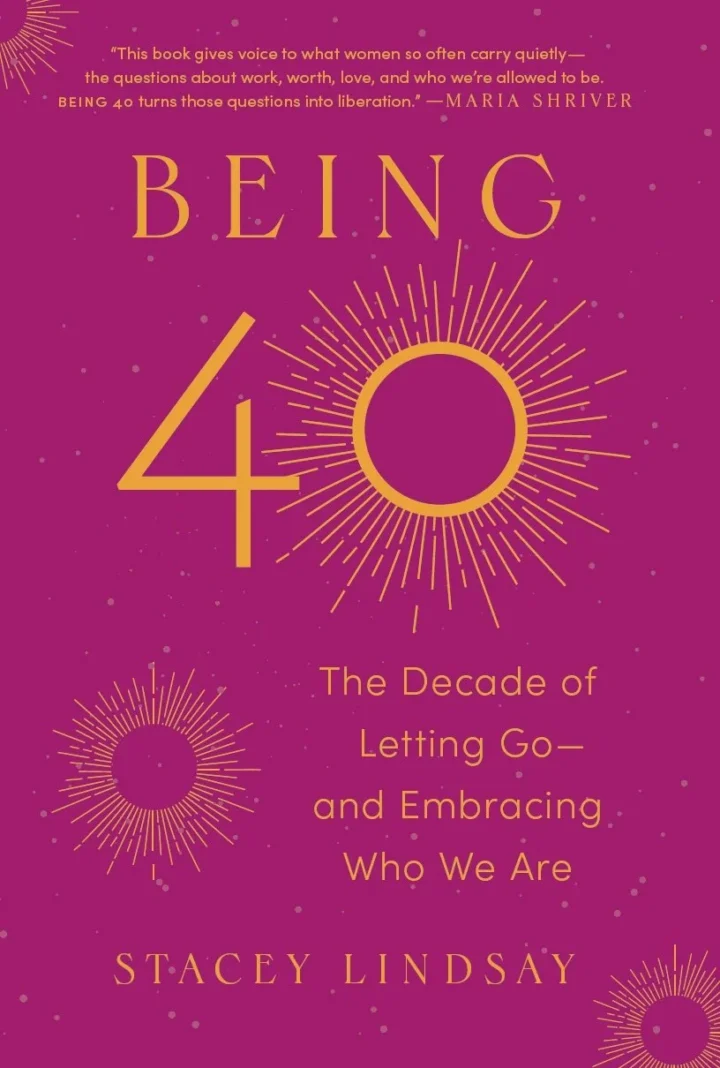
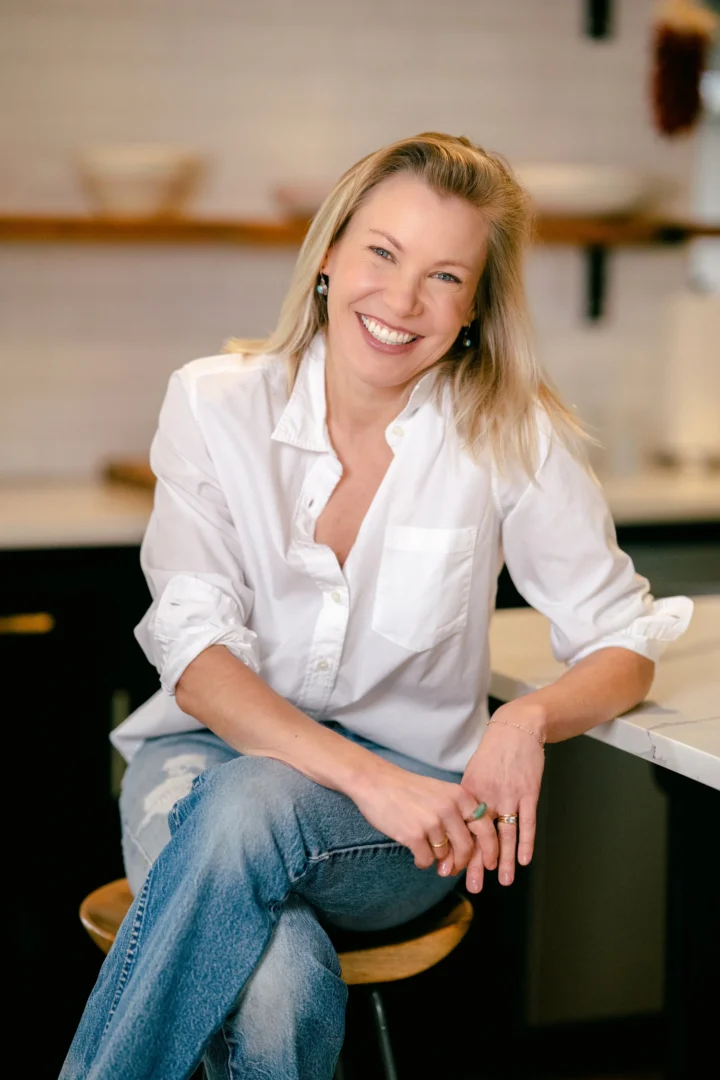
Writer, editor and former TV news anchor, Stacey Lindsay, is the founder and editor-in-chief of SAL Creative, a boutique firm that offers editorial counsel to mission-driven brands. She’s the longtime senior editor of Maria Shriver’s Sunday Paper. In her career, she has interviewed hundreds of public figures and civilians on spirituality, health, civics, politics, identity, art, sexuality, women’s equality, and work, including Ken Burns, Gillian Anderson, Erin Brockovich, Sharon Salzberg, Savannah Guthrie, Reese Witherspoon, Mitch Albom, Martha Beck, and Liam Neeson. Now, she is the author of the new book, Being 40: The Decade of Letting Go—and Embracing Who We Are, just out from The Open Field. Listen in as she and I talk about how finding the territory your book will cover, and so much more.
Powered by RedCircle
Stacey Lindsay: Marion, I am smiling right now. I am so thrilled to be in the company of you. Thank you for having me.
Marion Roach Smith: Well, I love when you can hear somebody when they’re smiling, when they’re talking, and we could hear that smile. That’s just the loveliest thing, isn’t it? Just great.
Stacey: It is.
Marion: We can feel it through the sound waves. We can feel it off the page too. It is a lovely thing. It’s a good thing, yeah. So Maria Shriver’s Sunday Paper is a powerful digital newsletter with a large scope that encompasses aging culture, spirituality, and aims to “move humanity forward and rise above the noise.” It’s one of the things we love about it. And it’s well-read among the writers I work with at The Memoir Project. And they’ve even had some publication success there as well. So your role there as a longtime senior editor and senior reporter is, includes both production responsibilities as well as providing you access to one of your great strengths, which is interviewing.
In fact, one of my favorite interviews of yours is with a former Memoir Project student, Jessica Waite, author of the fabulously titled book, The Widow’s Guide to Dead Bastards, as you and I laughed about when we talked previously.
And it was written after her husband died and she discovers that he had a whole other life. So I wanted to mention that because it’s really a standout interview. But let’s talk about interviewing because it’s a standout interviewer because of your ability to get in there. And in the opener, I listed some of the more famous people you’ve interviewed. But in your book, Being 40: The Decade of Letting Go and Embracing Who You Are, you interview many women from all aspects of life. And at its most basic an interview is driven by curiosity.
So speak, if you will, to the listeners listening about the value and byproducts of being curious.
Stacey: Well, every single one of us is curious, right? So do we allow ourselves the agency to express that curiosity? That’s really the question. And I’m one of the lucky ones. I get to express my curiosity every day in my work as a journalist. But it’s interesting, Marion, as you ask this question, I’m thinking about when I first started as a journalist and what got in my way. And what got in my way when I started interviewing people was trying to sound or come off a certain way.
And I think this goes kind of with being a woman in this world, right? We try to sort of perform, we try to do all the right things and this whole process of unlearning and getting to know ourselves as we grow older, which I’m sure we’ll talk about. But I noticed that in my work I was trying to ask the quote-unquote smart questions.
I was trying to come off a certain way. And then I realized I’m not doing… any service to myself as the interviewer or the person I’m interviewing by doing this. So I started to really work on letting that go and let my genuine innate curiosity drive me. And now I’ve interviewed, I would say, it’s thousands of people, I want to count someday if I can, but I’ve interviewed so many people from so many walks of life in so many different professions. And now when I go and stand in front of them and put the mic in front of their face, if you will, or I’m across them over Zoom, I really listen intuitively to my gut.
What is driving me? What do I want to know? Because I know by listening to that intuitive gut instinct, that’s going to mirror other people’s curiosity and what they want to know too. Not trying to come off as smart, but really listening to the questions inside me.
I don’t know this. So I want you to try and help me understand.
Marion: I love that answer. And I agree. I think curiosity is the highest human value. I think, I’m not sure everybody is curious. I think that we have to remind people of the benefits of it. And when we’re writing, of course, whether you’re writing fiction or nonfiction, You need to be able to ask people questions because maybe you’re writing a novel and you want to know how a flower shop works because one of your characters owns one. Or maybe you’re a memoirist and you need to interview all of your mother’s friends for a memoir that includes the critical years of her life before you were born.
And I think that a lot of writers don’t understand that you can and should go do this. As a young journalist, I was taught, and you were talking about the obstacles and it popped into my head, I was taught never to go into an interview with intent, specifically with a pre-planned idea of who this person is or what role they play in any aspect of life.
And maybe that’s an old-fashioned idea in these tremendously partisan times. But what do you think about going in with intent? And what do you think is the purpose of of a good interview, once we delve into and allow our curiosity to be our superpower, what are we looking for at that point?
Stacey: We’re looking to feel validated as humans, ultimately. And to go back to what you said about never going into a story with intent, I was taught that as well, and I still stand by that. One of my first professors in graduate school, one of my first journalism professors said something very similar. And she also said, when you’re there doing the story, reporting on the story in the field, always remember to physically turn around and look behind you. Now, there may not be something behind you, but that stands for something so much more, right?
You’re going in to interview this person, to tell this story, but the story evolves as you’re in conversation, as you’re gathering facts, as you’re gathering anecdotes. So look around, look behind you, what’s there too? And that actually really helped me let go of that wanting to go in because this is the story I’m going to tell because I only have so much time.
I mean, that kills a really good story, of course. So that perspective really helped to open my mind. And it’s interesting, I’m going to want to go back a few minutes too when we’re talking about curiosity and whether or not all people are curious. And I have to say, Marian, curiosity requires bravery. So maybe some of us are more outwardly curious than others. But I think sometimes some of us don’t allow our curiosity to be expressed because that can be really scary. We can go down a rabbit hole of thinking, oh my gosh, I’m going down this path but I’m curious about this and maybe I actually want to be going down that way too.
So curiosity I think requires a lot of bravery from people. And going back to interviewing, I think a huge part of talking with people is finding solace in the unknown is yes, we want to gather facts, we want to understand, we want to know the who, what, when, where, why in traditional journalism speak, but we also want to know we’re not alone in our questions, we’re not alone in our searching.
And any really good story, any really good book, in my opinion, will deliver facts and will deliver things that open my mind to new facts and new things I didn’t know before. But it will also leave me feeling more in the company of my curiosity and in others’ curiosity. And it will also leave me with more questions.
Marion Yes, it does. It always points out what we don’t know. And you have to be comfortable with that, right? It just opens things up. And I think that’s a wonderful… unresolved experience if you’re willing to live like that. It’s not going to be resolved. Recently, I realized, you know, when I die, I’m going to be in the middle of something. It’s not that I’m going to have it all neatly tied up with a bow. I hope to be right smack in the middle of something when this life comes to an end.
And I think that there’s something about curiosity that’s the same. It’s not going to all get answered. It’s just going to provoke more inquiry. And so you provoke a great deal of inquiry in this book. In Being 40: The Decade of Letting Go and Embracing Who We Are, you take on topics such as spirituality, health, beauty, work, and perhaps the trickiest topic of all, which is what you call our maternal unfolding.
And in a deeply enriching section of that chapter, you write about conversations you’ve had with women who choose not to have children and state that one theme consistently emerges, that they feel they are letting people down. Oof. I read that several times and got teary each time. And you go on to remind us of the childbearing binary that divides women into those who have children and those who do not, and how we rarely consider, quote, the constellation of reasons, emotions, and obstacles around this issue. And I think it’s here that I can best express to the people listening why they need to read this book, because of its diversity of thought and coverage.
At no point do I think that women are your topic. As in, what are women up to as they turn 40? You don’t go in with that intent of assuming we are one homogenous population.
So let’s talk about that. Let’s talk about finding your territory, finding your point of view and perspective. I find it helpful when writing to ask myself, Where are you shooting from for this piece, Marion? Are we hovering above, down on the field, off to the side? So long before this book existed, you needed to figure out where you were going to shoot from. So give the listeners here a bit of an education on how one looks out over the landscape of life in these times and decides what the territory of a book will be and where you place yourself in that territory.
Stacey: The territory of this book came from my yearning And my yearning was to feel in the company of others who were experiencing what I was experiencing. So this book came about, I would say, probably more than five years ago. I’m in my mid 40s now. And I started really thinking about this, not in book form necessarily, but the curiosity behind. I’m in my late 30s. I’m going to be entering 40. What does this all mean? Who am I in the context of what the world expects of me?
What does the decade of our 40s even stand for? You know, there’s so many conventional storytelling around saying that this decade is the midpoint and then suddenly everything after is decline or stale or you’re old or over the hill. All these things that have been told to women. And it was interesting at the time because I started doing a lot of reporting around around the topic of aging with power.
I was doing a lot of interviews with incredibly bold women who were in their 60s, 70s, who were declaring themselves and saying, aging is an utter gorgeous privilege. And I’m still discovering myself. And as you say, Marion, I’m still in the middle of so many things. This is not an ending. So that was really speaking to me. And in tandem with that, In tandem with that, I saw in the zeitgeist this growing conversation around women declaring themselves in midlife.
But then I entered 40 and I thought, okay, there’s a lot here. This is weird, this is wild, this is different. I was feeling changes in my desires, changes in my body. And… though there was this growing conversation about women declaring themselves a midlife, I wasn’t reading anything about our 40s.
I wasn’t reading anything about that really specific age that you’re either in front of or behind, four, zero. And so I craved that. And that’s what led me to start investigating this and asking other women. And I really was yearning to put these old, stale stories down. I wanted to interrogate these stories of, okay, I am now a woman in her 40s, that means I’m fill in the blank, all these things, old, over the hill, whatnot. But I was looking around, I was saying, that’s not true.
That is not true. but I was craving the stories. And I laugh, Marion, I say the 40s deserve their own Broadway show because they really do. Like this is the time and God willing I make it to my 50s and my 60s. You know, I’m aiming for that. But this is a time where women do at some point in this decade start to say, this is me.
I’m not doing this anymore. Like, this is me. So it came from my just yearning, you could say.
Marion: I love the words yearning and interrogating. And I think that they provide such direction for anyone listening. If you have a yearning, interrogate it. And I find that writers have yearnings and they want to investigate it, but they talk themselves out of it all the time. And I talk to writers all day long, all day, every day. And my friends are mostly writers. And I hear these ideas come and go. And sometimes I’ll grab somebody by the shoulders and I’ll say, no, that’s really good. So now I’m going to use the word interrogate.
Go interrogate that idea. So would you say that that word interrogate came to you at the beginning? It’s such a good, muscular phrase. What role did it play in your initial ideas?
Stacey: I didn’t have that exact word until I started putting other words to this wild journey.
And again, I laugh, right? Because this being this yearning, this desire to talk with other women and to go even deeper in myself about what does it mean to be a woman of a certain age today? You know, what does it mean to be a woman in her 40s? And ultimately, what does it mean to be a woman today who is growing older? in wanting to put down things she’s been carrying that she never wanted to carry. So interrogate, I would say, came to me early on in the process, but it wasn’t until after I started really writing.
So I would say maybe in the first third of working on this book, that word came to be.
Marion: It’s a great word. It’s a terrific word. It just says, get ready, go in there and find it all out. So I think this book is the perfect hybrid of memoir, inquiry, and help. So let’s talk about the memoir aspect. I would argue that all good memoir exists in the tension between vulnerability and authority. You’ve got to show us both, though they must be equals. So let’s take on vulnerability first. You have a long and storied career of asking questions. How did you turn on the vulnerability to write about yourself?
Stacey: With the support of an absolutely brilliant editor. I will scream my editor’s name, Cassidy, from the rooftops forever. Because as you said, for so long I was the one asking the questions. I was the one pointing my curiosity to somebody else and they were the ones that had to be vulnerable. Even though I do believe as an interviewer you have to show vulnerability as well. But it was different and so I got this book deal And quite honestly, I spent the first month and a half petrified, Marian.
I thought, first of all, did they make a mistake? And second of all, you know me, I kept looking over my shoulder. And this is years and years and years of crafting sentences and writing for a living. And I still thought, me? Did they get this right? But the reason why I was so petrified was that need for more vulnerability.
And I was asked to share parts of my story and I thought, I don’t know if I can do this. And that’s where my editor came in, that’s where drafts came in, that’s where sharing the deepest, darkest, hardest parts of weaving in my story, that’s where she was gently prodding me along the way as I sent her chapters and I sent her manuscript drafts. She would go, okay, you’re kind of close, you’re not there, or what are you really saying here? So it’s that companionship. that can really, really, really be helpful.
But it took, it was a process for me. It was physically, spiritually, mentally challenging to weave in the truths of my story and to weave in that vulnerability. And as I said, it took several drafts.
Marion: As it should, right? It should take several drafts. I think that when people start out to write a book and they think they’re gonna be one and done, they’re kidding themselves in ways that are really treacherous. Because… It is about the rewrite, and it is about community. It is about having someone who’s invested in your success pulling those stories from you, talking to you, and asking you the kind of questions. And in the case of this book, the vulnerability of memoir combined with the provocation of the interviews and the service pieces really heightens the questions and topics you raise.
And I say this all the time in interviews with memoirists, but I’ll say it again, that vulnerability is how we build authority. We trust you after reading memoirs. your own thoughts on aging, spirituality, mothering, and more. And then in turn, we trust you to ask others the kinds of questions we want answers to. And then you write with real authority, never lecturing, hectoring, or preaching to us.
So for me, vulnerability begets authority. So what other tips can you give on maintaining authority as an author without preaching, hectoring, or lecturing?
Stacey: Well, it does take several drafts, of course. So if we are telling a story from our past that is… hard to tell for whatever reason, there’s a lot of pain there, there’s a lot of grief, or many times it maybe involves another person that you’re angry toward or somebody who hurt you or left you or whatnot. Understand that it does take many drafts. Trust yourself. It requires trust too. Sometimes it requires just letting it all rip and it’s messy and it’s gnarly and it’s really just for your own personal journal.
Maybe nobody else needs to read that first draft. But allow yourself the catharsis of letting it out. Take a break. And for me, sometimes that’s a couple of days if you have that time. I would love to take a break from it and then go back to it and read it.
And you’ll know intuitively, okay, there was some anger here I needed to get out that maybe doesn’t all need to stay on the page. Let’s comb through this. Let’s rework this. Let’s go to draft two. And just trust yourself in that process. And that self-trust… buoys authority, it naturally does. An interesting thing I’ll say, something I really had to unlearn, and I’m curious if you’ve come across this, Marian, something I had to unlearn in my career was an editor a long time ago told me that you have to really earn the eye.
And that stuck with me in a way that it scared me a lot. And for a long time, I actually misconstrued that, or maybe I didn’t misconstrue it, but I thought that meant if you write something from your perspective, that means that it’s self-indulgent, it’s selfish, or you got to wait until you’re of a certain age to be able to offer that.
I had to really unlearn that for a long time. And it was interesting because I even saw that tendency creep up as I was working on this book. I love weaving together this quilt of my perspective and facts and other women’s perspectives and insight from counselors and therapists. But for many, many, many moments throughout it, I found myself going toward my default of asking what others thought, what other women think, when I really wanted to share something of myself. And that was a really fascinating process.
So I looked at… the threads and I follow the patterns of some of these questions I kept asking. And that’s when it helped me realize this is a moment here, Stacey, to trust yourself and to weave in your own perspective on this and your own story. And again, all of that really helped to buoy my authority.
But self-trust, knowing, you know, you have time, you have drafts, work through it. And then again, trust somebody else too that you can work in tandem, a great editor, to help pull even the more important threads out of it.
Marion: It’s a lovely answer. And earn the eye is a great phrase. I get it. I get it both ways. You’ve got to earn the eye of the reader, but you’ve got to earn the eye of the looker. And, you know, your own eye, you have to work on it and you have to believe in it. You know, my… Husband will tell you that if we’re in a restaurant and if 19 tables down, someone’s breaking up with someone, I can feel it. I can barely pay attention to my dinner.
He’ll be like, Marion, we’re having dinner right here. You’ve got to stop feeling everything that’s going on in the room. So the I is a curious thing to have. And you have to be respectful of the fact that you feel things deeply and you see things. And then you have to be hospitable. That’s the phrase I use with everybody. Be hospitable to your talent. keep a notebook with you. Don’t expect yourself to remember it because earning the eye of the reader requires the kinds of details that make sense in the story, are not just big, purpley, glossy things to distract them, but actually contextualize and move the story, the argument along.
So I think earn the eye is gorgeous and I see it both ways. You’ve got to earn the the one you’ve got and respect it and use it only as needed. And you’ve got to earn the eye of the reader. So that’s lovely. I think that’s lifelong advice, isn’t it?
Stacey: It is. And actually as you’ve been saying that, it makes me think it’s this beautiful tension point. It’s almost like a checkpoint too to keep us in check where we’re exactly looking within and then also looking outward. and honoring the story and honoring the reader, honoring all the parts that go into a holistic picture of why we write in the first place. So, yeah, it’s this beautiful checkpoint, if you will. I like it. I like that we brought it. Maybe I’ll bring it back more. Yeah, I think it’s great. I’m going to think about it a lot.
Marion: And I think focusing the eye, working on the eye, feeding the eye is so important. But we all know when we’re reading somebody’s piece when they’re showing off. You just feel it. It’s uncomfortable reading it, right? They haven’t earned my eye. They’re just showing off. And I call those the grand piano sentences. They’ve just got to go, right, when I talk to writers. But I think the earn the eye is something. I think I’m going to put it on a piece of paper and put it up on my wall, Stacey, I’m telling you.
This one is contemplative. I like it a lot. That’s a gift for everybody. So, thank you.
Stacey: What would people think if we walked around with that on a t-shirt, though? That might be a little overkill.
Marion: I think they might think we’re mystics or something. Maybe they just cut us a wide swath. Who knows in this day and age? Maybe someone will hand us a dollar. I just don’t know. Right. But let’s try it. I think I’ll start with like a needle-pointed pillow, you know, earn the eye and go from there. That works. So there’s lots of provocation and help in this beautiful book. At the end of each chapter, you have a lovely device titled Consider This. And I was really drawn to this.
And you give us, at the end of each chapter, several provocations to consider on the topic after the chapter we’ve just read. It’s not a bullet point. It’s much more spiritual. It’s much more considered than that. But tell me about this device and your intent. You got a lot of things going on in this book and they all work together.
This one settles the reader down at the end of each chapter and prepares us to go on. What was your intent?
Stacey: I really appreciate this question because this was so purposeful in hopefully giving the reader a moment to pause. And dare I say, even a nervous system reset, if you will. I find… memoir and nonfiction books to be incredible. It’s my favorite, favorite, of course. This is my life’s work. And also I find them to be sometimes hard to read in really beautiful ways. Some of the most well-written ones, because this is real. There’s something about fiction that you can still kind of hide behind a little bit, similar to watching a movie that’s based on history, but still there’s a softness there, a little bit of a soft landing that fiction offers or a It can be heavy. It can be a lot to digest.
And particularly for this book, I mean, we are going there in terms of the patriarchy and women’s oppression and again, interrogating these stories and this conditioning that has kind of put us or attempted to put us in these boxes. So it can be a lot to digest. And I was hoping that at the end of each chapter, it was just a moment that you could just reset And you could consider, again, I don’t want to tell readers to feel a certain way. I don’t want to tell readers to do anything.
Of course, I’m learning in real time with all of us. But I wanted to present an opportunity to just consider what we just talked about in this very dense chapter. And as you brought up the mothering chapter earlier, that’s a lot, that’s heavy. talking about a constellation of feelings around having and not having children and all the reasons women do and do not have them.
And then again, all the world’s expectations placed on us. So let’s take a minute at the end of this chapter just to consider how we’re feeling and consider some of these reflections that hopefully the chapter elicits in readers. So I hope it is an exhale.
Marion: Yeah, it works so well. You know, so many times those end of chapter devices… are like the last two lines in a Shakespeare sonnet that basically say, so if you missed the point of this, let me see if I can explain it to you here in these last two lines. And I love the Shakespeare sonnets, but some of them really are a little heavy handed that way. You think, well, let’s just skip to the last two lines then. You don’t do that with this book. It did feel like a palate cleanser.
It felt like a rest place. It felt like a meditative experience. It allowed me to consider. I stopped. I closed the book, I thought about them. I went on with the book after considering what I had just learned. So I thought it was a lovely device. And I think everybody looking for devices should definitely look at this and see it’s the nice light touch that you bring to it too, that I think is, it works so well.
It really works really, really well. So the book was just published by The Open Field, and that’s a publishing imprint with the mission, quote, to publish best-selling and award-winning books that rise above the noise and move humanity forward. Nice. Founded in 2021 by Peabody and Emmy award-winning journalist and New York Times best-selling author Maria Shriver, it’s got a partnership with Penguin Life, which is very important because that means the books get into the bookstores. It’s for nonfiction authors, and it reflects, it was inspired by the words of Rumi, quote, out beyond ideas of wrongdoing and right doing, there is a field.
I’ll meet you there. I love that. And it really defines, I think, the books that are published there. My audience is writers and they love knowing about where to approach. So this one produced a beautiful book and it’s distributed via Penguin Random House.
So talk to us about the open field and tell us a little bit more about it, if you would, please.
Stacey: Oh, it’s such a team of absolutely incredible minds and incredible souls. And I pinch myself truly that this is where my book was published. Maria Shriver founded The Open Field several years ago. And it’s probably common knowledge for those people, those many, many people who know of Maria. But in case you don’t, you know, she’s a longtime incredible journalist. And she’s a storyteller at heart. And she is a book writer, but ultimately she is a reader at heart. And this was a dream I would say that came from her soul of wanting to create this imprint.
And as you say, really create these books that rise above, that really offer you companionship and solace in this otherwise very beautiful but very hard and very noisy world.
And I have to say the titles that she has published under her imprint have done that. They’ve been titles that have spanned the oceans of grief and have helped us find ourselves in the world of work. Maria herself published a book last year, her own book of poetry. But they remind us of our humanity and they, if you will, hold our hands while also nudging us. And they do, they meet us out in the open field. And so the dream and the intention behind the imprint is incredible.
And then the team there. I mean, I mentioned my editor, Cassidy Graham, who I worked with. I miss her.
Marion: I miss that collaboration daily. That’s lovely.
Stacey: I’m like, where are you? I sent her a message just recently too. My days are darker not having you in them, you know, my weeks. And she’s incredible. But it’s a very, very small, mighty team. Cassidy, Meg Leder, heads editorial there. She is absolutely brilliant and also kind. Brian Tartt. I mean, I could go on and on about this collection of people at the open field. But ultimately, I would say they prove to me that somebody in such a high-powered position in the publishing world can contain clarity of thought, power and utter kindness all in one.
I didn’t think that was possible and it’s possible in these people. So I adore the open field.
Marion: Well, that’s wonderful. And it sounds like the perfect place. It obviously is the perfect place for the book. Thank you so much for spending time with me today. I so appreciate it, Stacey. The book is beautiful and I wish you all the best with it.
Stacey: Marion, thank you. Thank you for your thought-provoking questions. Thank you for this gorgeous podcast. And thank you for everything you continue to teach us about expressing ourselves. So this has been an honor.
Marion: Well, you’re so welcome. The author is Stacey Lindsay. See more on her at StaceyLindsay.com. The book is Being 40: A Decade of Letting Go and Embracing Who We Are just out from the open field. Get it wherever books are sold.
I’m Marion Roach Smith, and you’ve been listening to Qwerty. Qwerty is produced by Overit Studios in Albany, New York. Reach them at Overit Studios dot com. Our producer is Jacquelin Mignot. Our assistant is Sam Dembling. Want more on the art and work of writing? Visit Marion Roach dot com, the home of The Memoir Project, where writers get their needs met through online classes in how to write memoir. And thanks for listening. Don’t forget to follow QWERTY wherever you get your podcasts and listen to it wherever you go. And if you like what you hear, please leave us a review. It helps others to find their way to their writing lives.
And keep in mind that we are now registering names for the next Master Class. Live, once a month. Limited to six writers. Get a first draft of your memoir finished in six months.
Want more?
Start here to understand the breadth of all the classes we teach.
Want to jump right in? Here’s a sampling of our classes.
Memoirama: Live, 90 minutes. Everything you need to write what you know.
How to Write Opinion Pieces: Op-eds, Radio Essays and Digital Commentary: Live, 90 minutes. Get your voice out into the world.