

How to Write About Saving Yourself, with Virginia Eubanks
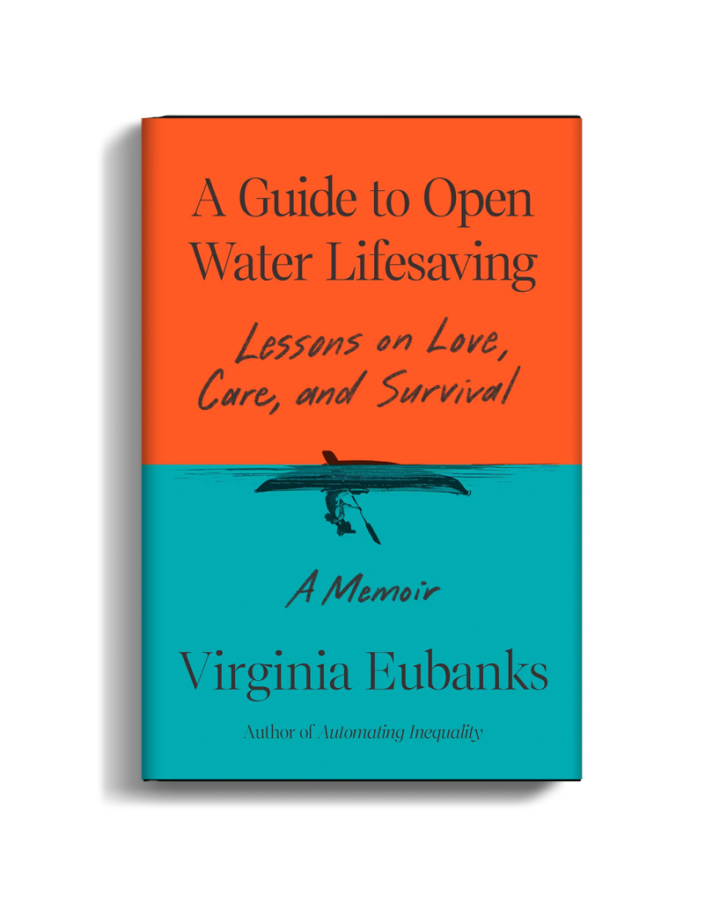
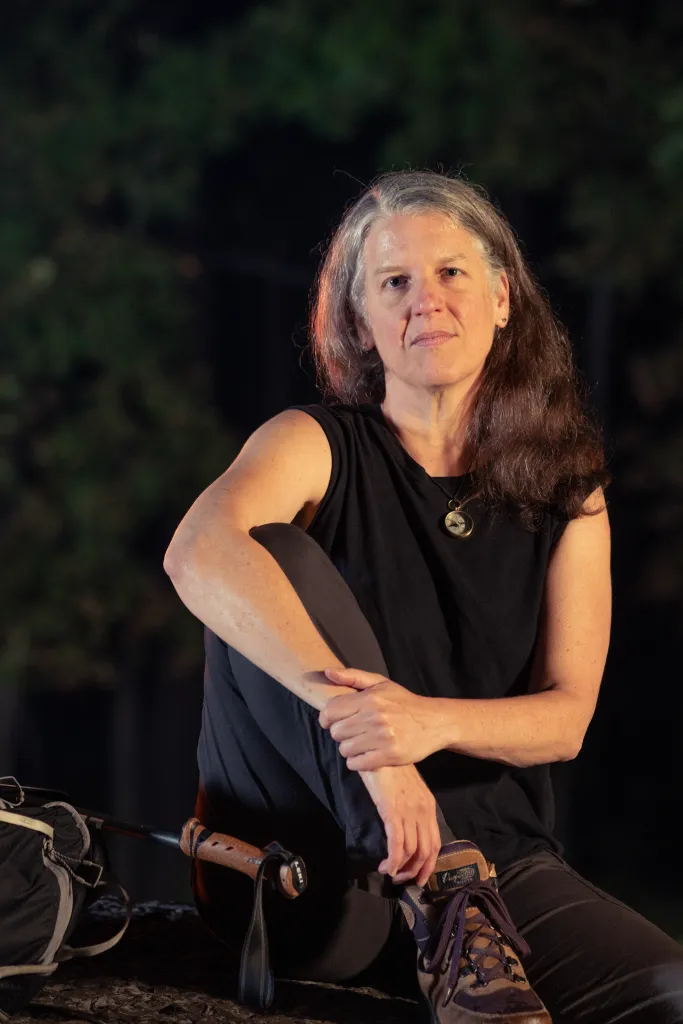
VIRGINIA EUBANKS is an investigative journalist whose work has appeared in The New York Times Magazine, Harper’s Magazine, The Guardian, Nature, and Scientific American. She is the author of the award-winning book Automating Inequality: How High-Tech Tools Profile, Police, and Punish the Poor. Her debut memoir is A Guide to Open Water Lifesaving: Lessons on Love, Care and Survival, just out from Farrar, Strauss and Giroux. Listen in as she and I discuss how to write about saving yourself, and so much more.
Powered by RedCircle
Virginia Eubanks: Thank you so much for having me. I’m really excited for this conversation, Marion.
Yeah, thrilled to be here. I wanted to talk to you for like an hour longer, and the bookstore and its patrons probably would not have stood for that. But I was excited to keep talking to you.
Marion: I’m really excited for this, too. We got to meet when I got to talk with you at a bookstore recently, and it just made me more determined to get you on the podcast as quickly as possible. So thank you for saying yes.
Virginia: Well, that’s lovely.
Marion: Thank you. And I have to say, and I said this live in the bookstore, that this is a perfect memoir. I literally mean that. It’s a perfect book. And I’ve rarely witnessed anyone jump into the deep end in life or in writing as you did. And this book combines a profile of caregiving a loved one, an explicitly reported condemnation of American medicine, our emergency response systems, and the American system of health insurance. It gives a word of perfect description of both post-traumatic stress disorder and collateral PTSD with a vivid story of saving oneself.
So let’s set this up for the listeners. You’re on a writer’s retreat deep in the woods in the Adirondacks when you get an email from your partner reporting that he has been brutally attacked just steps away from your Troy, New York home. You rush home and what follows is a long and nearly impossible series of challenges for you both that you meet with your skills as a When did you begin to think there was a story here?
Virginia: That is a fantastic question. It was many years into the process before I started turning to my skills as a reporter and a research and a writer to try to figure out what was happening to me and to us and to find some ways forward. So the first attack was in October 2015. There was a second attack in December. And it wasn’t until… quite close to the end of the year in 2019 that I even started taking notes about what was happening. So I have never written personal work before.
I never thought of myself as an essayist or a memoir writer. I am a long-form investigative reporter. I mostly have worked in the past in both academic research and journalism on issues around sort of technology and social justice, how big systems fail. My academic expertise is in bureaucracy, which I think is ironic and hilarious given what happened to us.
But it wasn’t until we hit, as you mentioned, this series of sort of cascading system failures over the course of about four years, where I had a moment where we tried to get Jay extra support in an inpatient behavioral health crisis unit, and we were turned away. And that was in August of 2019.
And it was at that moment that I really realized how much trouble we were really in. I think we had been skating on the fumes of denial for a really long time. And August 2019 was the moment that that denial got sort of completely punctured for me, definitively punctured for me. And I think I just fell back on the skills that I had, which was skills as a researcher and a writer. And so I started keeping a journal at around the end of 2019 and the journal over the next two or three years ballooned to something like a thousand single space type pages.
And it wasn’t just that I was writing down what I was experiencing each day, but I was doing that, but I was also really actively researching. So reading everything I could get my hands on, on PTSD, on relationships, on trauma, on neuroscience. And just trying to make sense of this experience for myself. And so that’s when I started writing, though I didn’t know I was writing something yet.
Marion: Yeah.
Virginia: It’s when I started reporting, but maybe not when I started writing.
Marion: Yeah, reporting. As I said earlier, I’ve never seen anyone dive in as you did. And the water metaphors just keep coming with this book for good reason. At some point during this research, you happen upon an old life-saving manual. So why don’t you tell people what happened then?
Virginia: Yeah, so a couple of years after that moment I was just describing in August 2019, I was diagnosed with my own quite mild but very real case of what’s known as collateral PTSD, which I believe that I developed in response in part to these catastrophic system failures that we were trying to manage while trying to keep my partner safe and as healthy as possible.
That moment, was the moment that in sort of total desperation, I began to look for something that would tell me what to do practically. So I had read memoir and I had read self-help and I had read the clinical research on PTSD and trauma and caregivers.
And I was not finding my experience reflected in any of that work. So in the self-help, I kept getting this really quite toxic advice of things like build a safe room in your house or love him the most when he deserves it the least. In the clinical research, there was all of this research that suggested that caregivers give themselves vicarious trauma by… neglecting themselves or by refusing to let go of control or like all of these sort of blame the caregiver sort of reasons for why we get sick.
In the memoirs, so many of the memoirs, though they were beautiful in so many ways, I ended up throwing across the room because they all ended in weddings.
And I knew that my relationship was suffering and I could not read a book that ended in a wedding. It just crushed me. And so in so many places, like I knew by that point because of my research that there were 13 million people diagnosed with PTSD in the country at that time. And there were 59 million kin caring for adult friends and family. So like a quarter of the adult population of the United States. And how in the world was I not finding something that could help?
And so I believe part of the history of this is lost to the mists of PTSD, but I believe what I ended up doing was just Googling, “I’m drowning.” And what came up was this book, which was the US Lifeguarding Association’s Manual of Open Water Lifesaving.
And I think I just hit buy and had it sent to my house. And I do recall really clearly opening the book for the first time and looking at the titles and it felt like every single title of every single chapter hit a chord with me where I was like, oh, lifeguards get it. Like lifeguards get it. And what I understood that they got later in this process was that the understanding that you are in jeopardy when you are. trying to support someone who is in crisis and you don’t have sufficient training tools or team.
And so that moment is the moment where I decided to write, to actually write something. As I was like, this is crazy that my most useful resource in this thing that millions of people are doing right now is a lifeguarding manual.
Like that, I just won’t stand for that. And I think my fury at that moment really, made me decide to take the risk of sharing the story with strangers.
Marion: I think it’s a genius response. I think it’s a wonderful story. And sticking with that water theme, you open this book with a remarkable kayak self-rescue scene, which is one of the many trainings you undergo along the way to self-preservation amid trauma. You learn wilderness first aid, kayak self-rescue, winter survival 101, map and compass navigation, bushwhacking, and as you mentioned, lifeguarding, reporting on each and taking lessons from each. So we used to call this participatory journalism, where someone would go off and do things and report on them.
But this is… Totally different. You stood this whole thing on its head for me, which I love. So let’s talk about reporting on ourselves. These are not necessarily the standard responses most people have to being a caregiver, which leads me to think you had some explaining to do when you pitched this book.
You did all these things. And everyone listening, my audience as writers, they’re listening and they’re thinking, she did all these amazing things. She didn’t do them so she could write about them. She did them to save herself. And then she’s got to go pitch this book to somebody. So talk to me a little bit about pitching this book and the responses you got knowing this story now.
Virginia: Okay, so what’s interesting is I pitched the book before I found the classes. Ah. And I was writing, I think, initially a quite different book than I ended up writing.
Marion: Talk about that.
Virginia: Yeah, so I wrote a proposal for this book right around the time that an essay that I wrote The New York Times Magazine about my experience came out. And both the response to that essay, which led me to believe that there were other people who could really use this story, both folks who had experienced it and needed to feel less isolated, but honestly also a lot of the comments on that essay showed a level of ignorance and judgment that I really wanted to help people correct is maybe a nice way to say it, that I felt like as a journalist, I’ve always been interested in these moments that Adrian Nicole LeBlanc calls “open secrets,” where we all know something is happening, but we’re all not talking about it for some reason.
It’s always been the thing that gets my journalist spidey senses tingling the fastest is these moments of like, openly denying a thing we know to be true.
Marion: Yes.
Virginia: And this very much felt like one of those moments when the essay came out and basically a huge, there was some great responses, some very heartening responses to the essay. But there was also two threads of responses to that essay that led me to believe that there was more work to be done. And one was, we got a lot of unsolicited medical advice that were very clearly saying, there is a silver bullet solution to this. You just haven’t done it yet. So you’re doing it wrong.
The other one was the unsolicited relationship advice that was quite pointedly directed at me. That was like, how could you possibly be staying with this person? And you should read that as how could you possibly be interested in a love relationship with someone with a disability? And that people would not see the value in this person who I loved beyond anyone else in the world.
Absolutely infuriated me. And that people would think that we hadn’t thought of all of the many, many ridiculous things that people were suggesting we do also infuriated me. So like, I can’t tell me how many times we’ve been told, like, try bone broth, right, for severe and chronic PTSD. And I was like, well, if only, that’d be great. But no, that doesn’t actually work. And so I felt like I was speaking into this, I was trying to speak into into this very deeply held and protected consensual ignorance. It’s an ignorance that we have agreed that we will continue to protect.
Deliberate ignorance. Deliberate ignorance, yeah. And the response to that essay led me to believe that there was more to be done. And so I wrote a proposal for a book about my experience that I honestly am very lucky to have landed a publisher for because I think the book I was initially writing was just like a 300-word screed of fury about what had happened to us, how the systems had failed us, how I had been left on the hook to shoulder as an individual all of these responsibilities that are collective social responsibilities, not individual responsibilities, and also what we could do to change the system.
Yes. And at one point, I have this great, incredible developmental editor here locally named Nick Matoulis. And at one point, he asked me, “Virginia, is the only emotional register of this book going to be incandescent rage?”
And I said, “yes.”
And he was like, okay, okay. But like let’s take a minute and think about the readers of this book, which is like the primary audience you’re trying to reach is caregivers. And I had had an editor, one of the publishers that said no to the book. The reason they said no, very kind letter back to me, but the reason they said no is we don’t think that there’s an audience for this book because caregivers are too tired to read.
Marion: Right.
Virginia: And also, again, another source of fury for me at the time. There was a lot of rage at this time. And the rage gave me a lot of energy. So I’m grateful for it in some ways.
Marion: I’m so glad you’re saying that because I think so many writers think they’ve got to wait till the rage subsides to write. And I think, no, no, type with your elbows. Fuel, baby, fuel.
Virginia: Fuel, right?
Marion: Type with your elbows if you have to.
Virginia: It’s fuel that can burn you up and you have to be really careful with it. But I think it can be fuel for sure. I agree. Yeah, so I was writing this very different book. So this editor said, you know, caregivers are too tired to read. I disagreed with her, but the thing that stuck with me from that was I need to not erect any unnecessary barriers between this story and the people who need it. And one of the unnecessary barriers would be a tone that was just constant, sadness, depression, and fury.
Though that’s a totally legitimate response to what happened to us. It is not the story that my readers needed. And so over time, we were really struggling with the structure of the book, making me the protagonist instead of J, my beloved partner, whose trauma was so much more dramatic than mine.
And also figuring out what to do about how close to the present we wanted to be in writing the book. Was I reflecting back in kind of a more traditional memoir sense? Or did I want people to be with me as I was figuring it out, which was more of my journalistic impulse? And that’s when I ended up going on this kayak self-rescue class. I did not understand what I was doing at the time. I… obsessively, even compulsively looked for this self-rescue class. I ended up driving 600 miles round trip to go to one six hour class.
And it wasn’t until I was driving home from Maine back to Troy that I realized, oh, it’s a self-rescue class. And that just made me laugh like insanely in my car while I was driving back.
Like, oh my God, I’m so like not self-aware about what I’m doing right now. That I, for months, looked for a self-rescue class and ended up driving 600 miles to get one and didn’t realize what I was doing. And I think the next day I called my developmental editor, Nick, back and I was like, I have an idea. Like, this is going to solve the structural problems of the book. I have $1,500 left in my reporting fund for this book. And rather than going and doing the interviews with neuroscientists I thought I was going to do, I’m going to sign up for wilderness survival classes. And we’re just gonna see what happens.
Marion: And that’s how that happened.
Virginia: And it ended up being, I mean, really the thing that’s, I think, saved the book as a good experience for readers was that quite instinctive, quite scattershot. It’s just, I wanted to do it.
Marion: Yeah, and it makes a great structure because we get to go on those adventures with you. And we get to go on the adventure tale too. It is an adventure tale. And that seems like a… a bit too happy a term for it, but it is an adventure tale to survival. And so my audience is writers, and they want to know about how to report and write on their own lives and the lives of others. Writing about others is deeply difficult, especially when there’s trauma to them, to yourself.
This story would not exist without the person you refer to in the book as J. So what arrangement did you make with J in terms of telling his story? What access did he have to the manuscript? And what input did you allow?
Virginia: Yeah. So… I came up with a really clear rule at the beginning of this process for myself because I think a big part of the caregiver dilemma is feeling like telling your story is a betrayal of the person you love. Because we live under a system that requires caregivers to both be structurally necessary to the survival and healing of our loved ones and at the same time erase ourselves. We have to be there all the time, but we have to also be mopping up our footprints behind us, right? We can’t appear to be doing anything. We just have to do it all.
Marion: Oh, yeah.
Virginia: And so anytime you try to tell your story, it feels like a betrayal because, of course, like what happened to me is so much less bad than what happened to J. And I think that is what. sticks us in this world of feeling like our stories aren’t important, our stories aren’t valid, this leads to isolation, this leads to worse care for our loved ones, and it leads to illness and even death for caregivers as well. And so it felt really important to me to continue to center the truth that this is my story.
It of course very much involves J in so many ways, but this was my story. So the rule I came up with for myself was no permission, no surprises. No permission, which is I don’t believe I require permission to tell the story of my own life, no surprises, and that everyone who’s involved in the story, whether they’re named or not, whether they’re as intimate to me as Jay was or somebody I just spoke to, like my physical therapist, they’re not gonna be surprised that they’re in the book.
They’re not gonna be surprised how they show up. So I don’t ask permission, but I also don’t wanna avoid the difficult conversations that I might have to have in order to tell this story ethically. And the conversation with J about the level of interaction he wanted with the book was a really difficult conversation. He, in the long run, chose not to read the book. And that was difficult for me because, selfishly, I really wanted him to read the story. I really wanted him to understand what my side of the experience was.
Something I had always wanted. I mean, this book started out as a love letter to him. And I really wanted him to read this love letter.
But he felt like he was not well enough at the time that I was finishing the manuscript. And for his own health and well-being, he said, I think it’s best that I don’t engage it. And I respect his autonomy. And… I wanted there to be no surprises. And so what we chose to do, which is suggested to me by my wonderful editor at FSG, Jenna Johnson, was that we asked a very good friend of J’s, someone who, if it came down to a fight between J and me, would always choose J’s side.
We asked that person to do a proxy read of the book. So they read the whole thing. And then J had several long conversations with them where he was able to ask anything he wanted. He was able to make some decisions. For example, for a long time, he was named with his full name.
And through that process, he chose to go anonymous. And I respect that choice in the book and in all the talking I do about it. And that’s how I also felt comfortable that he knew what he wanted to know about the book before we went public with it. And so it’s an imperfect solution in some ways, because in a perfect world, we would all be healthy and happy and be able to hear the depths of everyone we love’s stories, but we’re not always there. And that’s how we chose to navigate that. And I’m comfortable with it.
Marion: I think it’s so helpful to those listening who have that space to navigate and who, as you say, their footprints are, you know, by definition, I was a caregiver for 15 years for my mother. And by definition, our footprints are supposed to disappear. And yet I chose to write about it. And I chose to house the story on me, a very flawed person trying to easy to make that decision about oneself to put yourself first when the person is suffering. He was certainly suffering. And I think it’s very helpful to people to think about this proxy read.
That’s lovely. And in many cases, there isn’t someone there to read it, depending on the level of trauma.
Virginia: And also, I just want to say that J is just the most generous human being. And so one is he’s been enormously supportive of me. You know, we were talking about the book just a couple of days ago. And, you know, I don’t tell him things that are in the book, but I talk about the experience about the book with him a lot. And he’s been enormously supportive, which is really generous of him. But also he’s really generous in that he wants other people not to go through what we went through.
Yeah. And I think I’ll speak for myself here. I believe that there’s a good chance that he and I would still be in a romantic relationship if we had gotten better support from the systems we reached out to. And I don’t think it’s a spoiler to tell people that the nature of our relationship had to change over the course of this experience.
And I and he don’t want other people to have to suffer through that and feel like they’re alone. And so it has, I think, also been important as, like, he’s deeply uncomfortable about how he’s probably represented in the book. I’m deeply uncomfortable about how I’m represented in the book. But I made a, you know, a promise to tell the truth. So I am, as you said, like, a very imperfect person in this book and in my life. And so is he. And he was going through a really hard time.
And so… I think without his support and without his generous willingness to share some part of his story with the world, there’s no way I would have had the courage to write this book.
Marion: It’s a lovely, lovely tribute to him. The book is a lovely tribute to him. The book is a remarkable revelation for all of us. At one point in the book, you report that caregiving, that mass caregiving that’s going on in families in the United States is incredible. $600 billion worth of care annually, the equivalent of $600 billion of care that we give those 53 million people, that astonishing number of people. And I know what it costs, and I know the personal cost to it. So I think it’s just a wonder that you were able to produce that and that you’re able to make it such a tribute to caregivers and the walls that we hit when we do this.
And whenever I have a memoir writer on, I always ask them the same question. And I want to ask you, what are we asking a memoir writer to do when we ask her to go back and write about trauma?
Are we asking her to reanimate it, relive it, or stand coolly back from here and have a look at it? Hmm.
Virginia: Yeah, so can I say none of the above? Was that okay?
Marion: You can say anything you want.
Virginia: So I’d say reliving it is the thing that all of the trauma therapists tell you not to do.
So sensory motor, for example, is very clear. You do not have to relive your trauma to heal it. And in fact, it might be better to not. So I wasn’t looking to relive my own trauma. I wasn’t looking to trigger anyone else’s trauma. I was actually really thoughtful about how I wrote the book in a way that I think people who have been through similar situations can still read it and where I’m really honest without being gratuitous about sort of the details that I share. I did not stand coolly back from this though either.
I very much was an investigative journalist in the moment of my own life. It isn’t something I ever expected to do, but I did treat myself as a subject.
You know, I recorded all my therapy conversations. I recorded many of our couples therapy conversations. I have a thousand pages of notes, right, of my research into my own experience, into the world around it, and into the day-to-day, just reporter’s notes of what was happening. I then treated that like a social scientist. I went back and And I coded all of my notes, right? So I could find, so I knew I wasn’t making it up, right?
Like particularly with a brain that has now some degree of acquired neuro spiciness, I’m really aware of how much narrative, Framing happens around the story you tell about your own experience. And so I wanted to be really careful. The book is also professionally fact-checked. I spent a ton of money to professionally fact-check this book because getting it right is really important to me.
And I’m very aware now that I’ve done all this work around neuroscience of how much we make up. And that’s just normal. No fault of anyone. That’s just what we do. But I was, I think, a participatory journalist, right? I had to be a participatory journalist. I had to be engaging in my own life because it was my own life. But I did really try to use the tools of journalism to make sure I was getting the story right under the conditions that might lead me to tell a gentler story or a story that makes me look better or a story that has…
That has more of an ending that is like a happily ever after ending, right? I often say, I think this is a really, really hopeful book, but it’s not a happily ever after book. It’s a different, it’s a more complicated book than that.
And I think we can’t tell complicated true stories without being true in the details. And I think in order to be true in the details, like I was able, because I was writing a memoir about a moment that was happening to me right then, I was able to be a documentarian. Right? Thousands of pages of medical records and and journals and letters, and emails and texts between us and I treated all that as documentary evidence. And I double checked everything, and then I had someone else double check it all again.
And I really think that is it’s not right for every memoir. a lot of memoir is a work of memory and it should be, and that’s great, but that is, I think, what’s different. about this memoir is that it was being written in the moment and it was being written really as a journalist would write it.
Marion: It shows. And as we wrap this up, I really want to say that the book is getting wonderful reviews. The New York Times, The Wall Street Journal, Kirkus calls you “a beautiful prose stylist” and ended the review by stating that, “This eloquent, well-buttressed plea for improved support for trauma survivors is itself a significant contribution.” So congratulations on a wonderful book. It’s a joy to know you. It’s a joy to read it. And I thank you for caregivers everywhere for this terrific piece of work. Thank you, Virginia.
Virginia: And I want to thank you for Another Same for Madness. I read that book while I was writing this. It was in my bookshelf. And, you know, 50, is it 50 years later? It’s getting there. Close to 50 years later, it still really resonates. And yeah, I just appreciate everything you’ve done for memoir writers and for caregivers as well.
Marion: Thank you, Virginia. Write well.
Virginia: We’ll talk again. Thank you.
Marion: The author is Virginia Eubanks. See more on her at virginia-eubanks dot com. The book is A Guide to Open Water Lifesaving: Lessons on Love, Care, and Survival: A Memoir by Virginia Eubanks, just out from Farrar, Straus and Giroux. Get it wherever books are sold.
I’m Marion Roach Smith, and you’ve been listening to Qwerty. Qwerty is produced by Overit Studios in Albany, New York. Reach them at Overit Studios dot com. Our producer is Jacquelin Mignot. Our assistant is Sam Dembling. Want more on the art and work of writing? Visit Marion Roach dot com, the home of The Memoir Project, where writers get their needs met through online classes in how to write memoir. And thanks for listening. Don’t forget to follow QWERTY wherever you get your podcasts and listen to it wherever you go. And if you like what you hear, please leave us a review. It helps others to find their way to their writing lives.
And keep in mind that we are now registering names for the next Master Class. Live, once a month. Limited to six writers. Get a first draft of your memoir finished in six months.
Want more?
Start here to understand the breadth of all the classes we teach.
Want to jump right in? Here’s a sampling of our classes.
Memoirama: Live, 90 minutes. Everything you need to write what you know.
How to Write Opinion Pieces: Op-eds, Radio Essays and Digital Commentary: Live, 90 minutes. Get your voice out into the world.