

How to write a great biography, with Paul Grondahl
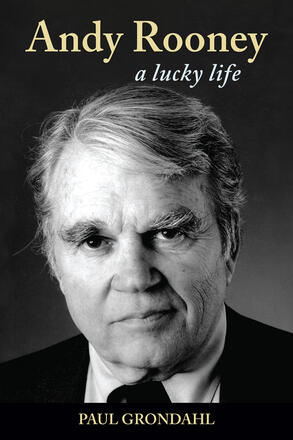
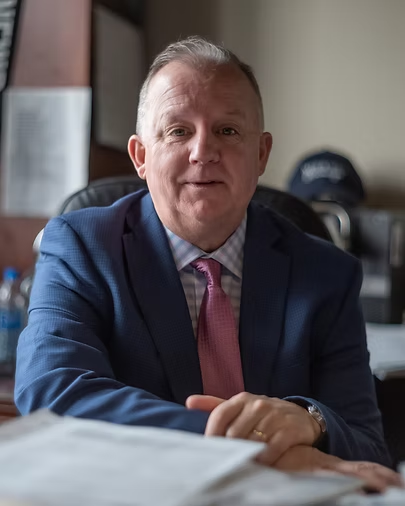
The books by writer and journalist Paul Grondahl include Mayor Corning: Albany Icon, Albany Enigma, and I Rose Like a Rocket: The Political Education of Theodore Roosevelt. A staff writer for the Albany Times Union from 1984 to 2017, he is the recipeiunt of numerous writing prizes. He serves as the Opalka Endowed Director of the New York State Writers Institute at the University at Albany, the nation’s premier literary series that brings dozens of acclaimed authors to Albany each year for lectures, discussions and readings. His new book is Andy Rooney, a Lucky Life, just out from the State University of New York Press. Listen in as he and I discuss how to write a great biography, and so much more.
Powered by RedCircle
Marion Roach Smith: Welcome to QWERTY, the podcast for writers on how to live the writing life. I’m Marion Roach Smith. Each episode, I talk to writers from all genres to discover what makes a good read. And along the way, we discuss their writing process, discover their tips, and talk about what matters most to writers. So step away from the computer or typewriter for a bit and join us.
Today, my guest is author, writer, and journalist Paul Grondahl, whose books include Mayor Corning: Albany Icon, Albany Enigma, and I Rose Like a Rocket: The Political Education of Theodore Roosevelt. A staff writer for the Albany Times Union from 1984 to 2017, he is the recipient of numerous writing prizes. He serves as the Opalka Endowed Director of the New York State Writers Institute at the University at Albany, the nation’s premier literary series that brings dozens of acclaimed authors to Albany each year for lectures, discussions, and readings.
His new book is Andy Rooney: A Lucky Life, just out from the State University of New York Press. Welcome, Paul.
Paul Grondahl: Thank you. So great to be here, Marion.
Marion: It’s wonderful to have you here. And I have to just start right in. I mentioned only a few of your books in the intro, but along with writing fine biographies of well-known historical figures, you’ve also co-written memoir and co-wrote one of my favorite books, Bootlegger of the Soul: The Literary Legacy of William Kennedy, who’s very much alive and well as an American writer. So let’s jump in and talk about living or dead. Is it easier to work with the living or the dead when it comes to writing about someone?
Paul: Well, the dead don’t usually complain. And you know you’re not on a tight deadline because they’re not going anywhere. But I’d be happy to write about living or dead as long as they’re interesting to me and hold my interest.
Marion: Yeah, so holding your interest. I suspect your interest was very well held with Andy Rooney. He’s arguably America’s most famous curmudgeon. journalist, SAS television personality. He’s best known for his closing commentaries on CBS 60 Minutes called A Few Minutes with Andy Rooney. We all remember them. I’ve certainly watched a million of them. Those commentaries were quirky observations from life. They began in, what, 1978 and lasted 33 years, totaling over a thousand of them. It’s quite a run. He amassed multiple Emmys and And you quote his friend Walter Cronkite as saying of him that Rooney “articulates all the frustrations with modern life that the rest of us, every men and every women, suffer with silence or mumbled oaths.” So that explains his enduring appeal as a writer and TV personality.
But what was the appeal for you as a writer?
Paul: So I knew him a little bit. I had done a long profile of him for the Albany Times Union. I had spent some time writing. with him in Rensselaerville. I moderated an amazing conversation with William Kennedy and Andy, two of our great Albany writers, probably two of our greatest Albany writers, or at least most popular. And I’d been invited to a couple parties he was at, so I knew he was interesting, he was difficult, he was always entertaining, and somebody that I knew I could get access to.
Marion: Yeah, getting access, I suspect, is great. really difficult for some people, but you got a great deal of access, it appears in this book. The research fascinates me. So for this book, you interviewed Rooney’s family members, childhood friends, 60-minute colleagues. and waded through archival research, including writings and letters. So how did you balance the research and the writing? Is it hard to turn away from research? Do you feel like you’re always just one data point away from knowing a person? Or at some point, do you just achieve a sense of having what you need?
Paul: I mean, I like Robert Caro’s Turn Every Page. You know, he started as a newspaper person, journalist, and writer. I had so many boxes. Rooney’s papers at University of Texas at Austin, the Briscoe Center, where Walter Cronkite was a student, where he first brought his papers. So I spent a lot of time in those boxes, and I went through so many letters. And at some point, you have to make selections. But I wanted a lot of his voice in there because he is a tremendous writer.
Every pitch, every angle, every style he can write in. And he’s been writing… He was writing for so many years, for so long. And what also amazed me was digging into the archives. A couple of things I discovered in the archives, including why he started at Albany Academy in the class of 1937, but finished in the class of 1938, something he never wrote about publicly.
And he wrote a lot about himself and his life. He flunked a grade. He was held back his senior year. He was very angry. His good friends had gone off to college and were enjoying being independent, and he had to sit in class and chapel and do military drills, all of which he complained about at Albany Academy. So I found that at the Colgate Archives. I found a lot of his early writing for the literary magazine called The Banter and in the school newspaper. So I could really see his development as a young writer.
And that curmudgeon that everyone loved, 20 million viewers every Sunday on 60 Minutes, was really evident in his early writing.
Marion: That’s lovely. And what… a surprise to find that he was a lifelong curmudgeon, I suspect. Or was it? Did you know that from his friends? Did you know that going in?
Paul: Oh, I knew that. I knew that from him. When I spent the day with him in Rensselaerville, he was like, oh, do you want to have lunch? I said, sure, Andy. And he was very proud. He made his own bread. I’m going to make you a BLT sandwich. Oh, great. Do you like a lot of mayonnaise? As much as you want to slather on, Andy. And then it got to like, well, do you want to have a cocktail? It’s in the afternoon. I said, sure. I never say no to a cocktail.
And I said, I saw in your little pantry there, you just have a couple of cases of Maker’s Mark. So I guess I’ll have a Maker’s Mark and diet. And he erupted. You don’t waste a good bourbon, blah, blah, blah, some F-bombs and things. And I was like, I don’t know. I’m not a big bourbon drinker. It’s like a Jack and Coke or something. And he was like, you will never see me put in and not even Diet Coke. If you’re going to drink Coke, drink real Coke. So he was screaming, lecturing at me.
And again… There was no restaurant between New York City and Albany where he had not screamed at the waiter, the chef. He was difficult. His own children told me how difficult he was. And they always said, what we got at the end of the dinner table was what you heard on 60 Minutes. So yeah, he was truly a curmudgeon, but could also be very generous and kind. So he was very complicated. Yeah.
Marion: He was complicated. And what a life. He was a World War II correspondent for Stars and Stripes, a radio entertainer, a gag writer, a screenwriter, essayist, columnist, and ultimately landed where we know him best on 16 Minutes. He worked at a desk he built himself on a series of Underwood typewriters that he continually used and cannibalized since World War II correspondent Days. He suffered from stage fright. He knew great failure as a writer, he could be very generous to young writers and nearly impossible with friends.
These and many other things are what we learn reading this book. And they make him out to be terribly, terribly human. Is that the goal of biography?
Paul: I think it is. I mean, I’m always looking for the the person behind all the accomplishments and behind the craft. And he was a complicated person. I mean, his own children had a very complicated relationship with him. He could be nasty to fellow writer friends. His son said he probably burned almost every bridge of longtime friends at one point or the other. Some came back, some never did. There was not a restaurant between New York City and Albany where he had not screamed at, dressed down, angrily complained to a waiter, to a chef.
So he had all those layers, but he was also very generous and kind and loyal to some of his longtime friends, like Walter Cronkite, who he met covering World War II.
So he was a difficult but also an interesting personality. I still have people come up to me. Just last night, we had a book event, and tell me a new Andy Rooney story. So people remembered their encounters with Andy Rooney. And it might have been 30 years ago, 40 years ago. He was a memorable person who left an impact.
Marion: And so is that the intent when you go in as a biographer, just to find out more? Or do you go in with an intent of ferreting out something specific about the person?
Paul: Yeah, I really sort of go in with a wide net. And I’m always trying to find the story, the story arc. And what I liked about Andy’s life compared to others, he did have some years of failure. He had setbacks sometimes. It wasn’t a straight line like Mayor Corning. It wasn’t as dramatic as Theodore Roosevelt, other biographies I’ve done, but it was a lot of conflict. He was always, always taking on CBS management. He got fired, suspended, he quit. He was a guy who stood up for journalistic principles, something that I think 60 Minutes needs to remember as it goes through its reconfiguring.
And he was somebody who never back down from what he believed was true. And that was really telling the truth, regardless of the outcomes.
He was a truth teller and he was a journalist of the old school.
Marion: Yeah, he certainly seems to be. So people who write fiction frequently talk about living with their characters in their head, listening to those characters, letting them come forward and tell their tales. Is there any of that when writing a biography? Do you get fused or integrated with your subject? Do they talk to you? And if so, when and how?
Paul: I’m not sure at that level, but I was always thinking about Andy Rooney. I mean, he did 1097 a few minutes with Andy Rooney on 60 minutes. And almost all of them you can listen to and watch. I mean, he did thousands of newspaper columns, I mean, as a writer yourself, imagine this deadline every week, three newspaper columns. And these were not just riffing off the news. He had to have an idea, he had to execute it, he had to be funny, he had to be sad, he had to be serious.
And then the 60 minutes. So four deadlines every week, every month, every year for more than 30 years. That would drive somebody to be a little cranky, but he kept it up and the quality was there. A Hall of Famer in baseball gets one out of three hits. Andy probably hit two out of three.
I’m not going to say he hit three out of three or three out of four every week, but probably a good two out of four every week. Yeah.
Marion: Yeah, well, talking about discipline and talking about time and writing, you are a full-time writer and you also have this full-time job as the director of the New York State Writers Institute. So my audience is writers and they wanna know how to whack up the work. They have jobs, they have lives, they have family, you have family. Talk to me a bit about the discipline of getting the work done. This is technically your freelance work, I guess. So how do you do it?
Paul: Well, you worked in a newsroom, I worked in a newsroom. It’s very noisy, it’s very busy, there’s a lot of distractions. But when you are writing, you have to shut everything out. And I work late at night after my day job, which was the newspaper, and now my job at the Writers Institute, I work late at night. And you shut everything out and you just work. And newspaper training helped me, it helped Andy Rooney, it helped a lot of former journalists to write books because we write fast.
We write pretty clean. I mean, I like to revise and do drafts, but the first draft is not terrible. And I think all that helps. But also all this incredible opportunity I have at the Writers Institute. The world’s greatest writers come in day in and day out, week in, week out. I’m coming up on 10 years, hundreds of writers.
I’m absorbing all that too. I’m reading their books. I’m filling up my gas tank with great writing every week. And that helps you write your own book.
Marion: I think that it’s really worth digging into that a little bit because the mission of the Institute is to, quote, explore and teach the writing craft, to celebrate diverse voices in all genres, to honor the power of literature as a force for individual growth and social good. and to foster a vibrant community of readers and writers who engage in meaningful dialogue. So you bring writers to Albany, New York. My goodness, over the years, I’ve gone to readings and talks with the greatest writers of our time.
You have a book festival, a summer institute, a consortium on the truth, a film festival, a lecture series. And these are tough times for the truth, for writers, for writing. So talk to me a bit about the importance of providing such community for both writers and the audiences right now.
Paul: Yeah, I mean, I think… We bring all those elements together, the people that write the books, the people that edit the books, the people that publish the books, and the people that sell the books. And as you mentioned, these are hard times for every part of that ecosystem. But we have this ability, and we’ve been going for 43 years. William Kennedy founded us where writers want to come because they want an audience. We have a very educated, literate audience, and we also have thousands of students.
So our writers love to engage with students. And there are events like the book festival, literally from age eight to 98. So it’s really beautiful when you get that cross-pollination of people And they don’t have to have read the book, but a lot of people have read the book of the writers coming through, or previous works from that writer, and you get these, you know, what do 21-year-olds think versus 81-year-olds?
And they’re talking about the same book, and writers love that exchange.
Marion: I think it’s really important, and as you said before, your experience there with writers, reading their books, hearing from their experience, lets you into some of the insights we need to be a good writer, to face some of this stuff that’s really tough. And for this book, for instance, you uncovered a number of things that were previously unknown or little known about Rooney, his long-term extramarital relationship, just what a bad student he was in school, as you mentioned before, and how that curmudgeon that you’ve so well portrayed on TV was not an act.
That could be, as you said, a little more than alienating to friends and colleagues. So how do you write into the dark stuff with assurance? I would think that would need some kind of education, some kind of support, something that you might’ve picked up along the way.
How do you write into that stuff that we think is dark?
Paul: Yeah, I mean, very carefully. Number one, as a journalist, you’ve gotta be on firm ground. You’ve gotta have multiple confirmations. And I was hearing whispers, kind of gossip, scuttlebutt about this extramarital affair. And, you know, until I really got his son to sit down with me and confirm all that and say that his mother knew, the children knew, he wasn’t going to go in great depth. I don’t know that he does. I don’t know the children know the private lives of their parents, what goes on behind closed doors.
But I was on firm ground that, yes, this had taken place. Now, his public story to me, when I did a profile on him to all the other people or when he wrote about it, He had met this woman, Beryl Fizer, when they were both on the Arthur Godfrey show in 1950.
And wasn’t it miraculous after his wife Marge of 59 years passed away that he just reconnected with Beryl Fizer in New York City? Turns out Andy had an apartment on the west side of the Central Park on West End Avenue. Beryl was almost directly across, both in about the 70s on the east side, and they never disconnected. So this went on for a long time. I can’t say what it was, but it was intimate. It was a relationship. And the children really respected Beryl because after Andy’s wife died, he started declining.
He had dementia. And she was his caregiver for seven years and was an amazing, amazing partner and caregiver to him. So I tried to include that as well. And his publisher, someone I really respect, Peter Osnos, who worked with my near friend and my late friend and colleague, Harry Rosenfeld.
He was a Washington Post reporter who covered the Vietnam War, and I sent him an early draft, and he gave me a good suggestion. He said, why do you have to put in the barrel Pfizer stuff? I said, two things. You’re a journalist. It’s the truth. Secondly, a biographer can’t just kind of redline things that are uncomfortable. And third, Andy Rooney held public officials, corporate CEOs to the highest standard. He would write really harsh and difficult things of people that he felt were lying or covering up or whatever.
I said, he held those people to those standards. I think he needs to be held to the same standard.
Marion: I think it’s a great standard. So you mentioned, and as we wrap this up, I’d love to talk a little bit about the work, getting back to the work you just mentioned that you sent a draft to someone. So how do you work? Do you send drafts? Do you read to your wife at night? Do you have beta readers? Do you get feedback? Talk to those listening about how to get this right.
Paul: Yeah, I mean, I do get feedback because SUNY Press amazingly publish 150 books a year with a staff that continues to be cut with state budget cuts and stuff. So they do not have the capacity to get the kind of editing that we all really need. So my friend Rob Brill, who was my editor for 30 years at all my big projects at the Times Union, I hired him separately. And he dug in and cut out over 20,000 words and made the book much better. As you know, squeezing repetition, wordiness really makes it better.
So one, he made that better towards the end. But I sent it to people that really were instrumental and people that were not just helpful. I wanted their feedback. Brian Rooney, I mean, his son was the family’s kind of spokesperson, gatekeeper on all this.
I wanted him to see it. I didn’t want anything that was going to freak him out. I mean, as journalists, and I’m not an investigative reporter, I’ve done some serious reporting and hard subjects, but we do live by this credo, first do no harm. I mean, I wasn’t trying to destroy the family. I wanted to be honest, and I think I handled it with sensitivity. But I think it’s important to those people that really went out of their way, gave you a lot of help, to let them read it.
And they had suggestions. And I will tell you, I pulled a few things back. Brian did not say anything about the barrel parts and things. He was fine with that. He did say… you need to have eight tons when my dad blew up in a restaurant. I said, you’re right, Brian. I said, let’s keep it to fours. That kind of little back and forth. You know, I mean, these people are, one, Brian was an ABC News correspondent who covered wars, who covered hot spots around the world.
I wanted his respect and I wanted his feedback. And I’m not afraid I’ll stand up to anything that I write. So I don’t mind sending it out. And sometimes we argued and I didn’t take all his suggestions, but… He really helped me, and so did Peter Osnos, who was his editor at Public Affairs Books for many years. And they were really generous, and they gave me good feedback, and a lot of it I took.
Marion: Well, it ends up being a very balanced and beautiful book, and I thank you for writing it, and thank you very much for coming along and talking about it today. I wish you all the best with it.
Paul: Thank you, Marion. It’s been great.
Marion: You’re so welcome. The author is Paul Grondahl. See more on him at paulgrondahl dot net. The book is Andy Rooney: A Lucky Life, just out from the State University of New York Press. Get it wherever books are sold.
I’m Marion Roach Smith, and you’ve been listening to Qwerty. Qwerty is produced by Overit Studios in Albany, New York. Reach them at Overit Studios dot com. Our producer is Jacquelin Mignot. Our assistant is Lorna Bailey. Want more on the art and work of writing? Visit Marion Roach dot com, the home of The Memoir Project, where writers get their needs met through online classes in how to write memoir. And thanks for listening. Don’t forget to follow QWERTY wherever you get your podcasts and listen to it wherever you go. And if you like what you hear, please leave us a review. It helps others to find their way to their writing lives.
And keep in mind that we are now registering names for the next Master Class. Live, once a month. Limited to six writers. Get a first draft of your memoir finished in six months
Want more?
Start here to understand the breadth of all the classes we teach.
Want to jump right in? Here’s a sampling of our classes.
Memoirama: Live, 90 minutes. Everything you need to write what you know.
Memoirama 2. Live, two hours. Limited to seven writers. What you need to know to structure a book.
How to Write Opinion Pieces: Op-eds, Radio Essays and Digital Commentary: Live, 90 minutes. Get your voice out into the world.